KALBAKKEN CLUB HOUSE
SOCIAL SEATING SCULPTURE
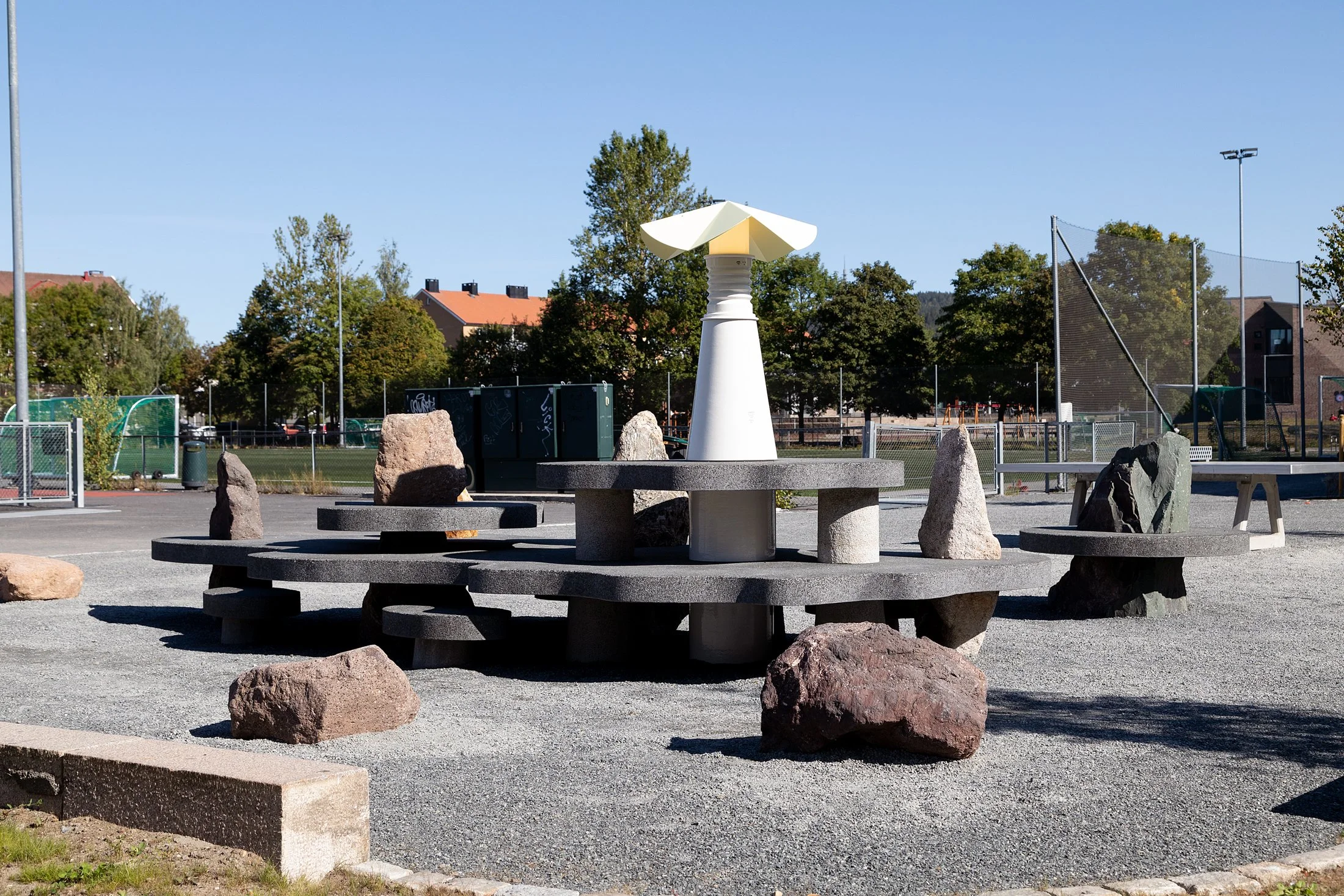
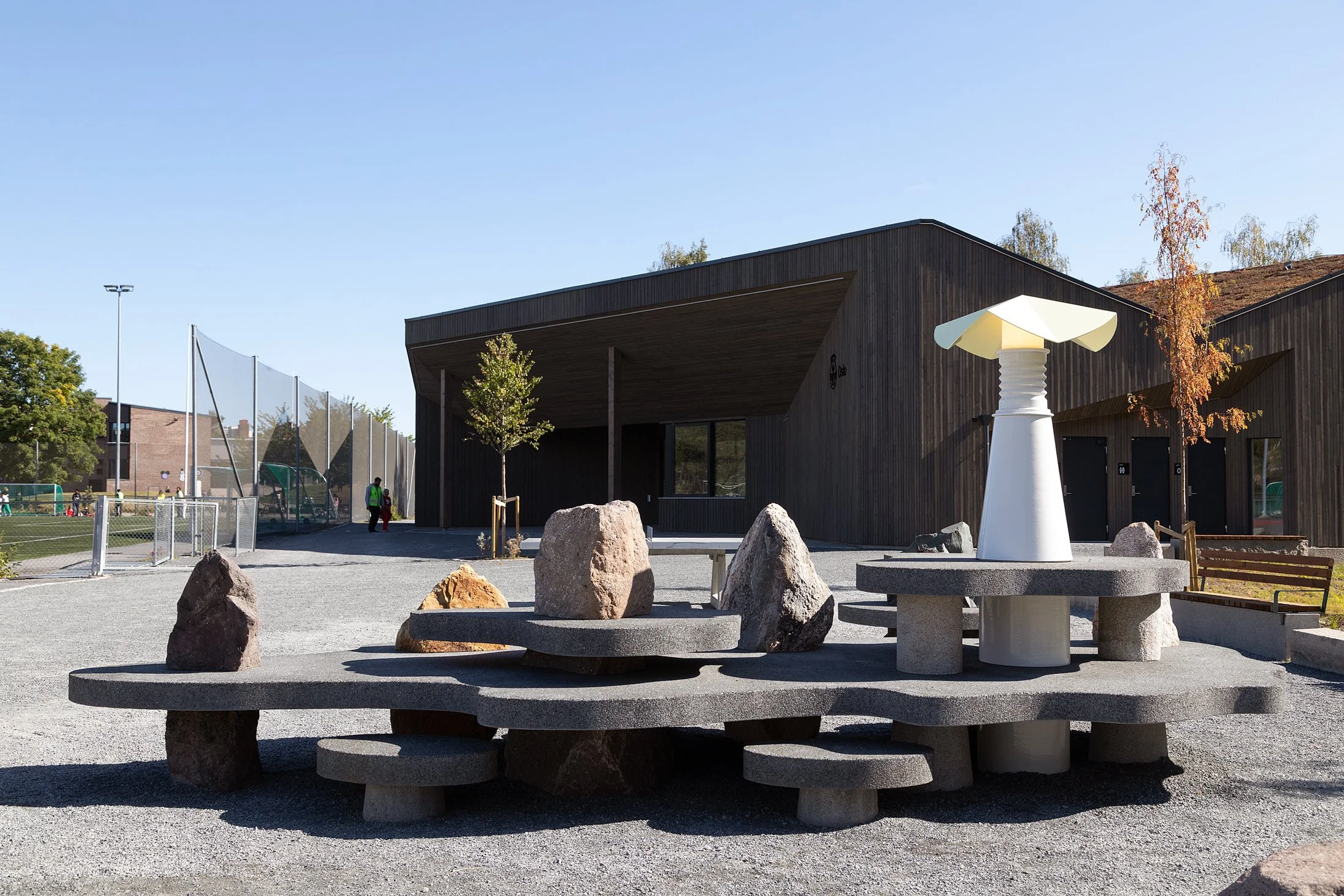
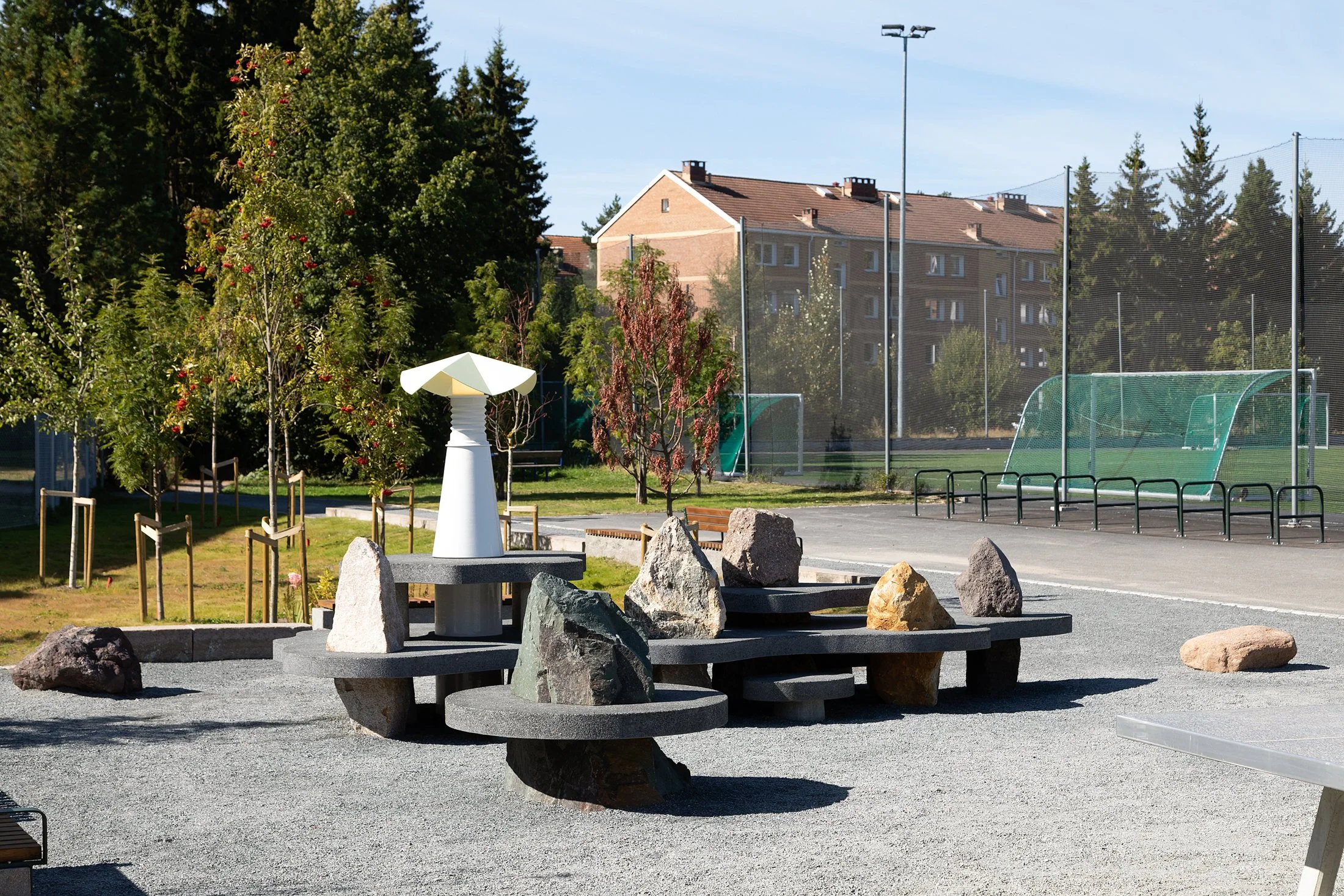
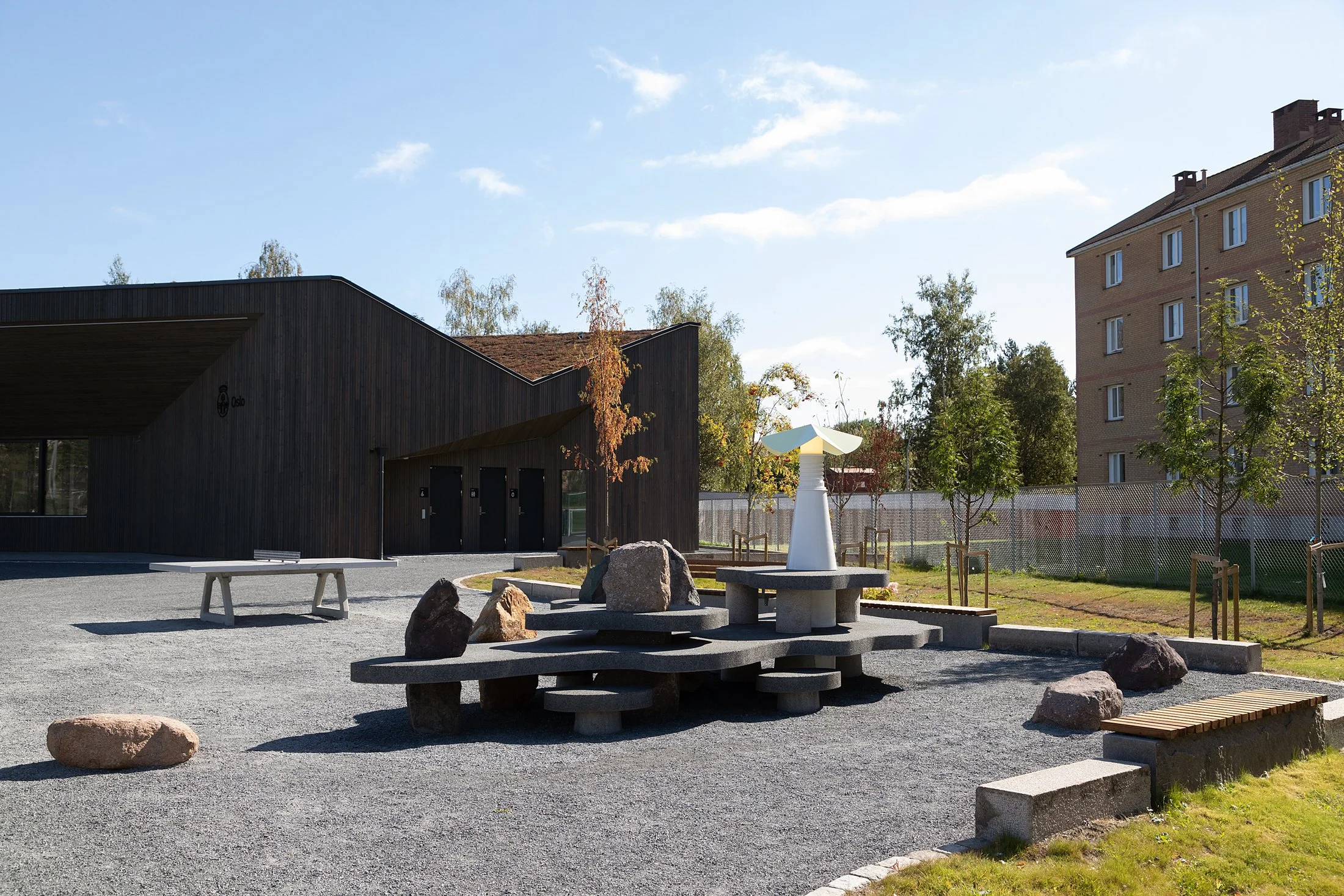
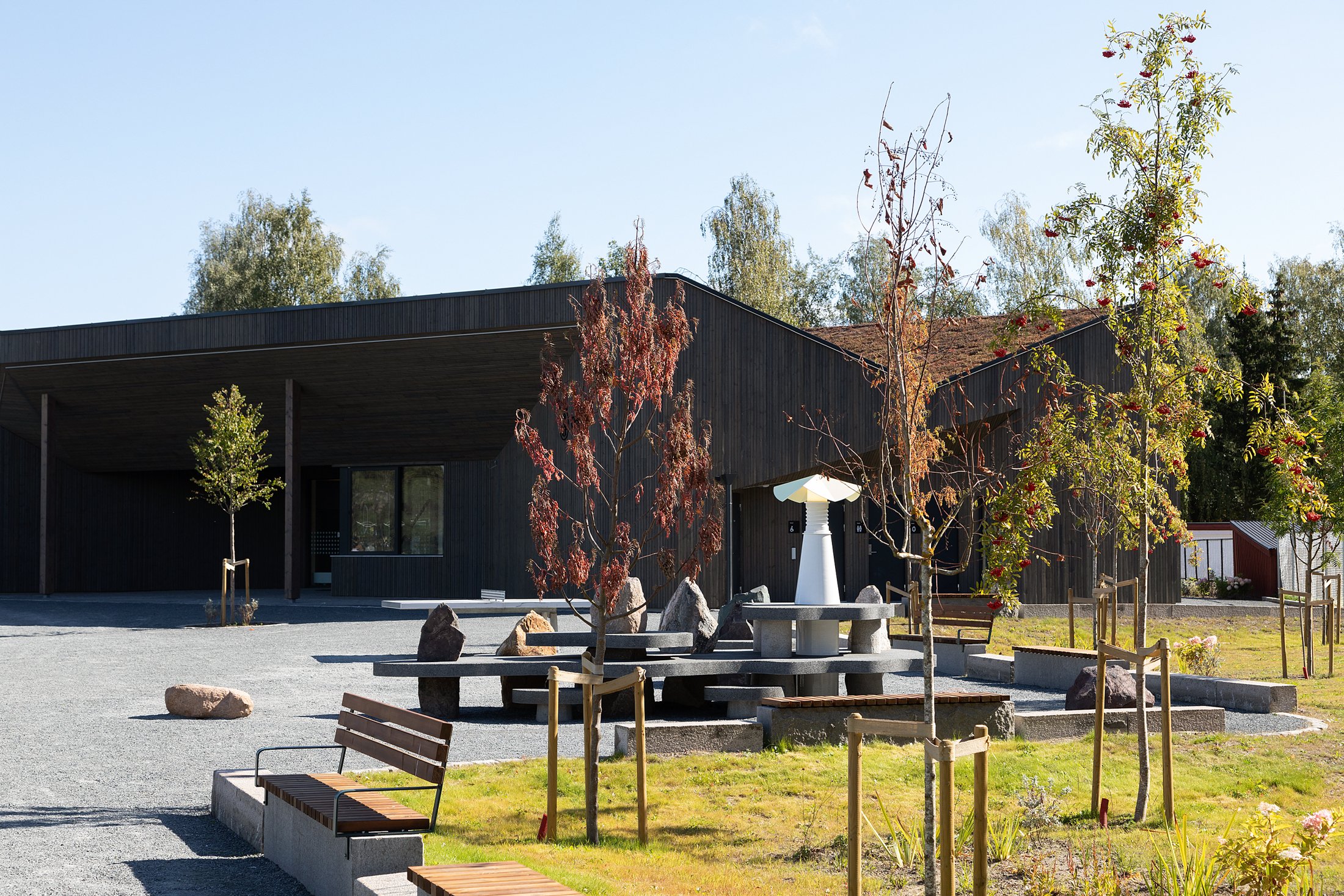
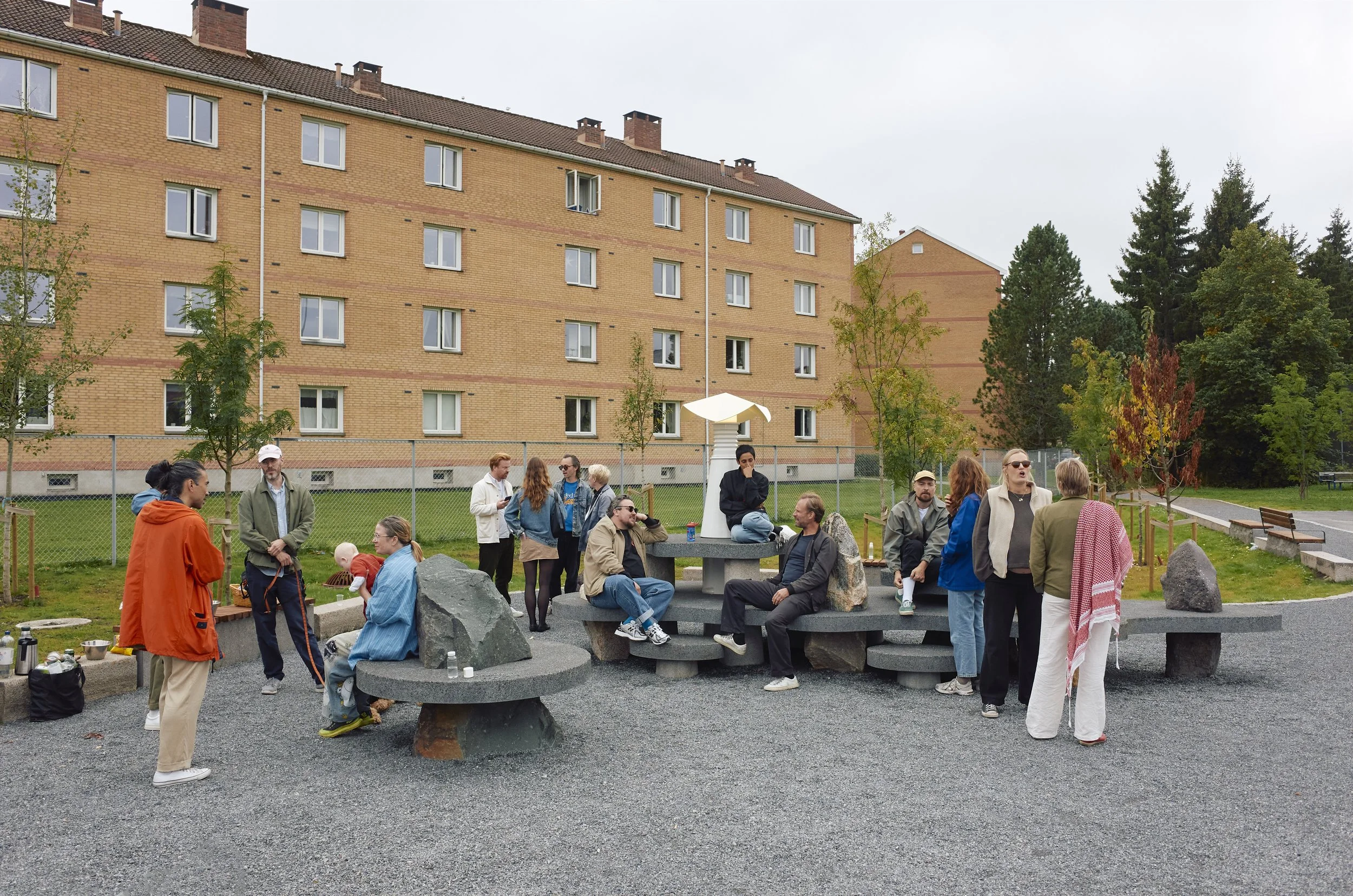
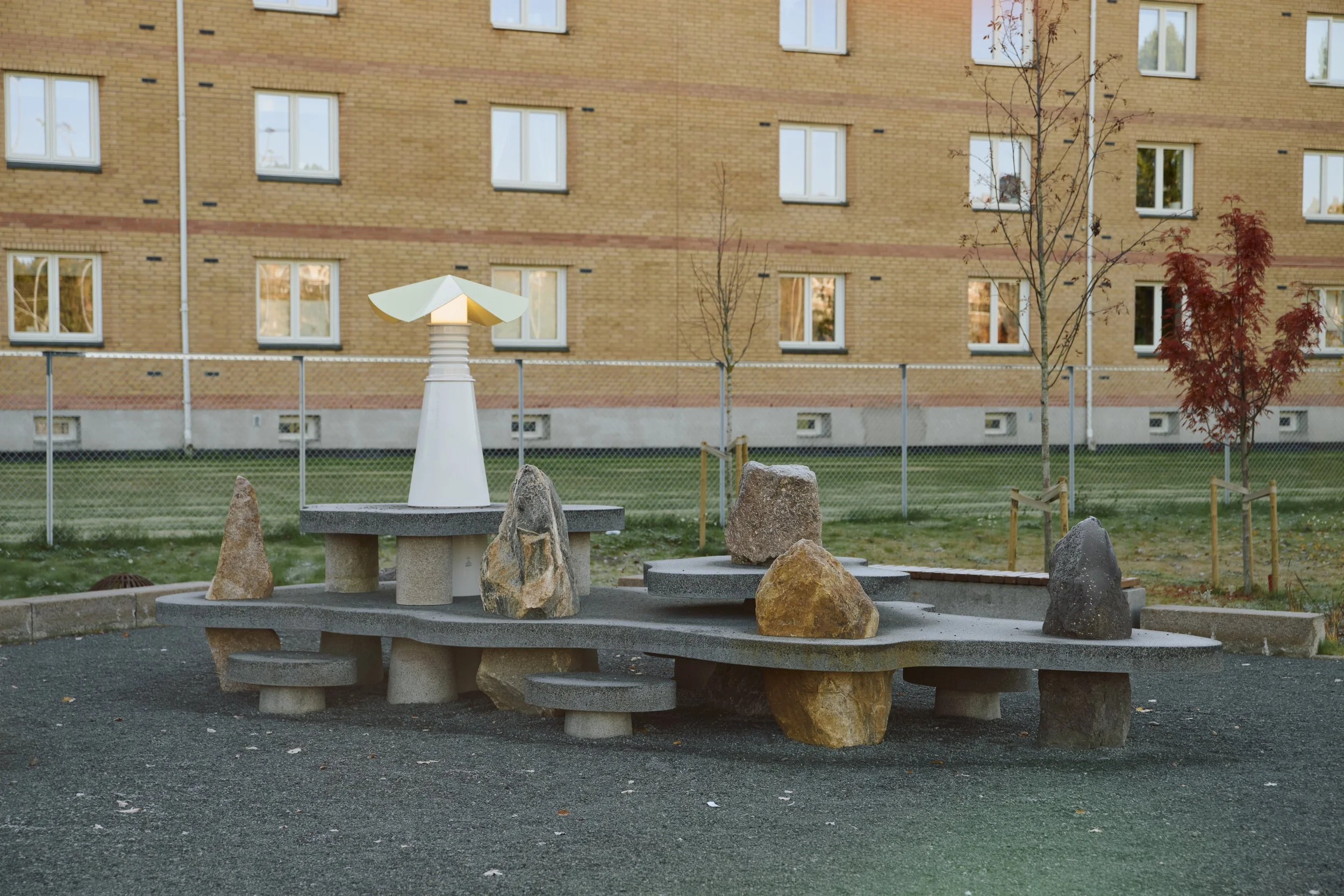
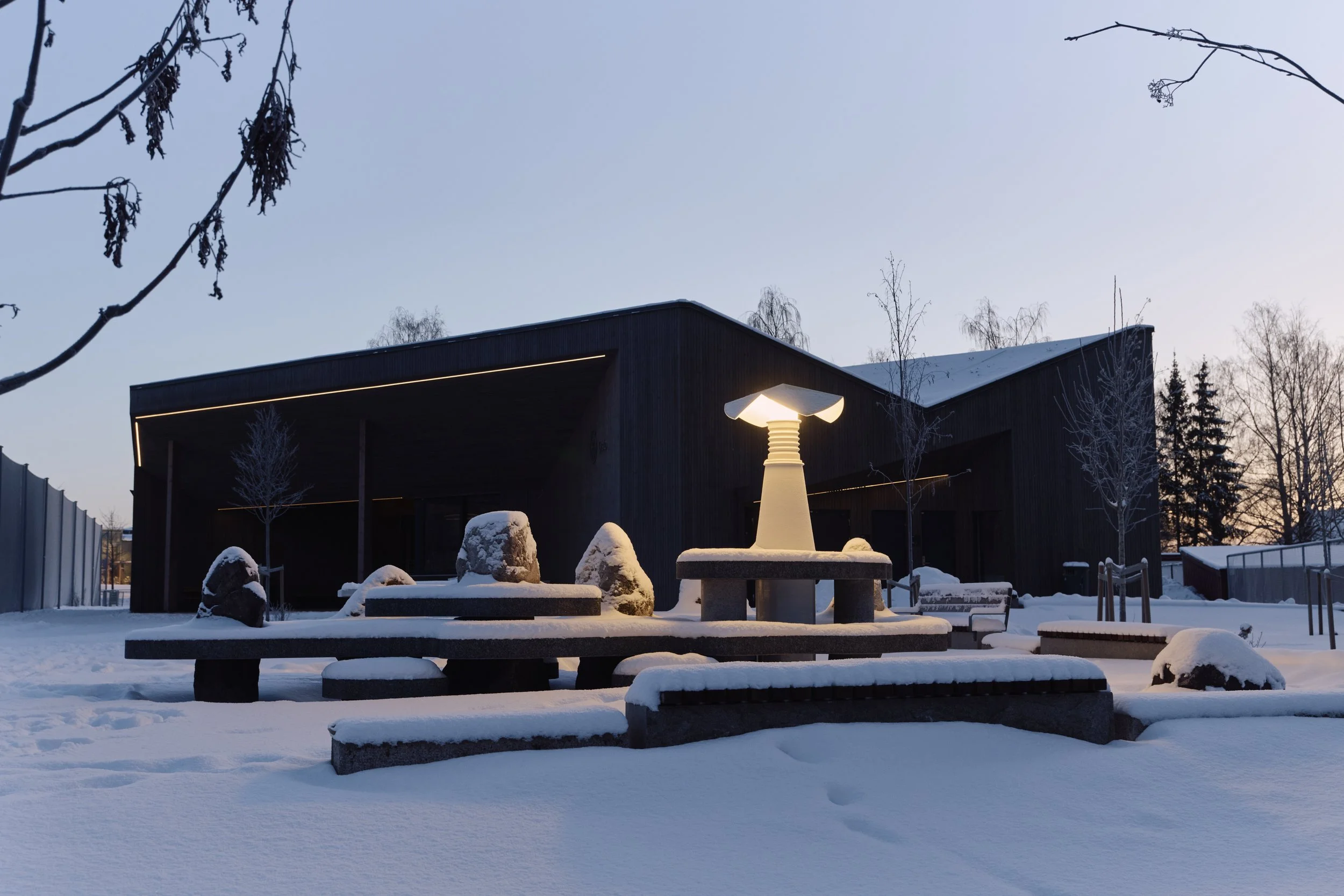
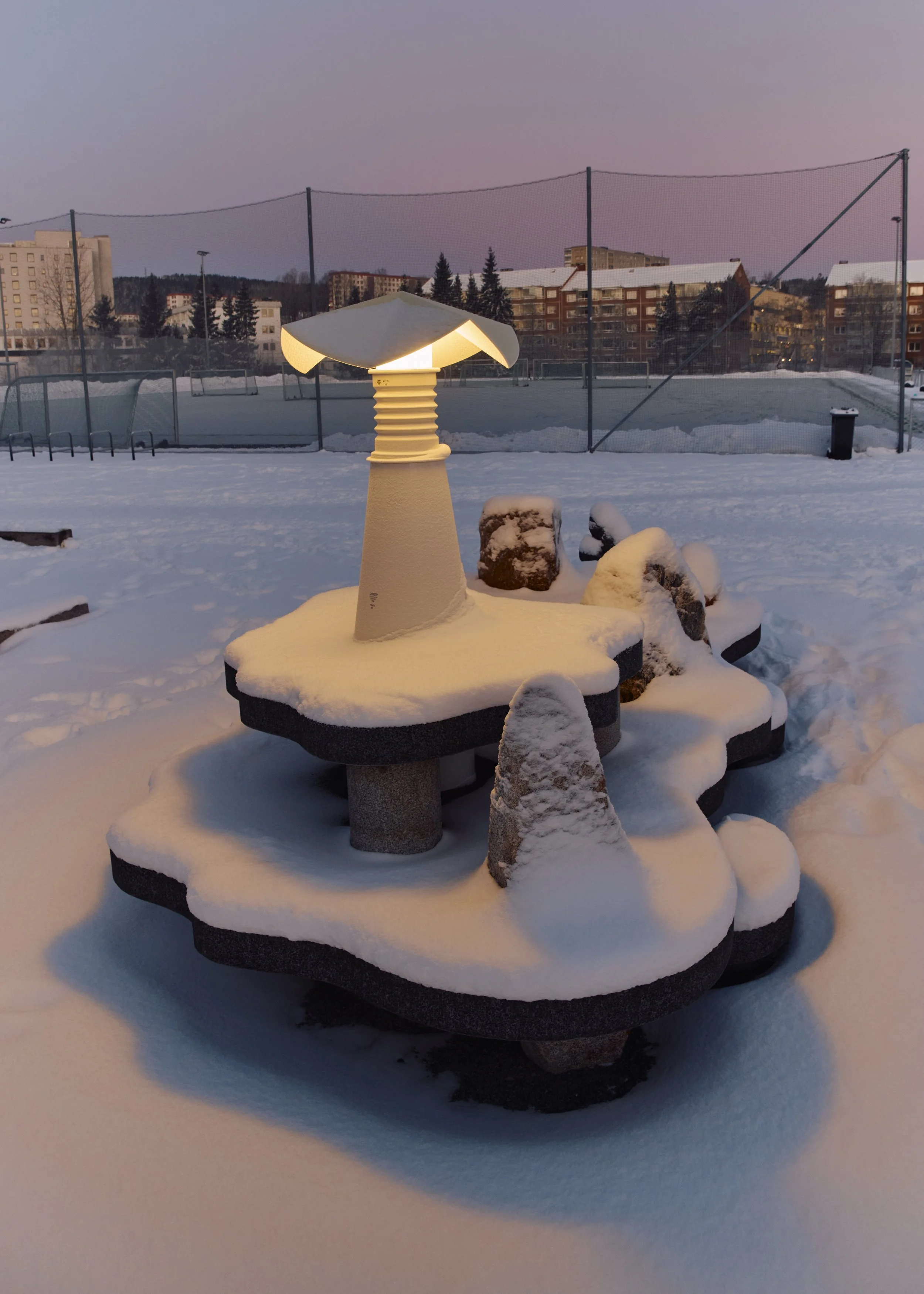
Alba is a functional sculpture made from concrete, stone and porcelain, crowned by a lamp shade in powder coated aluminum.
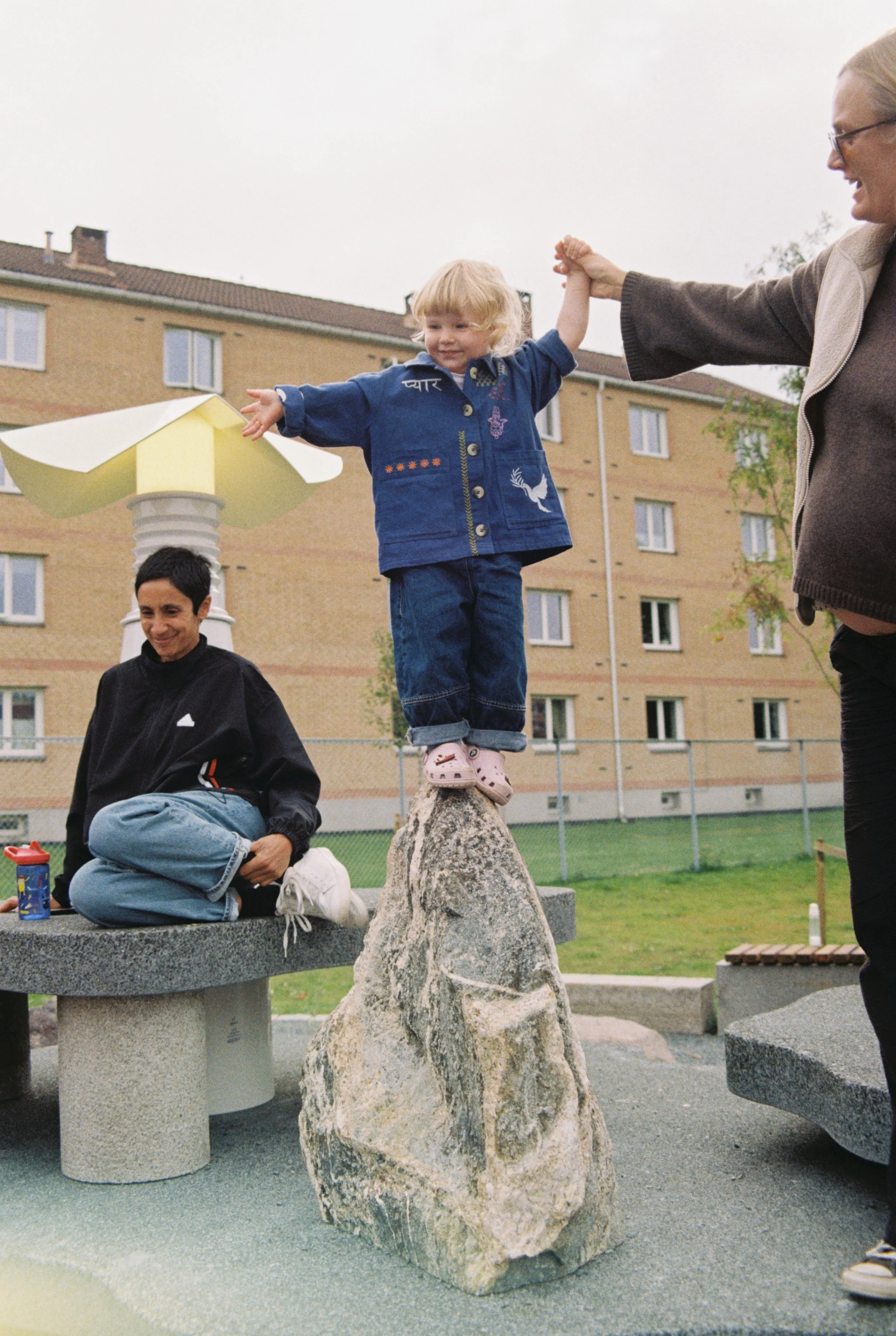
Made for a new club house in Kalbakken for Oslo Kommune in 2025, it sits between a sports field and a residential area, aiming to accommodate young and old, athletes and residents, in play and leisure.
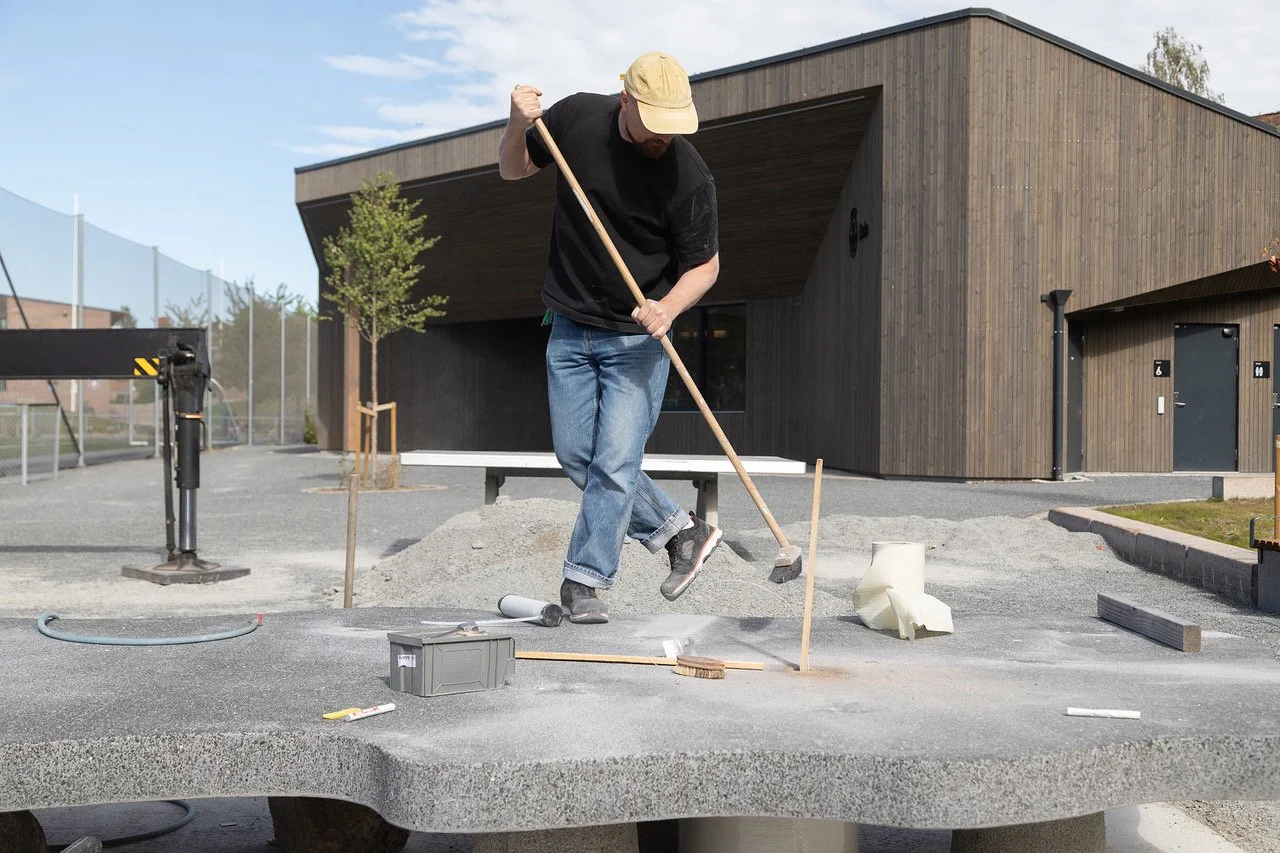
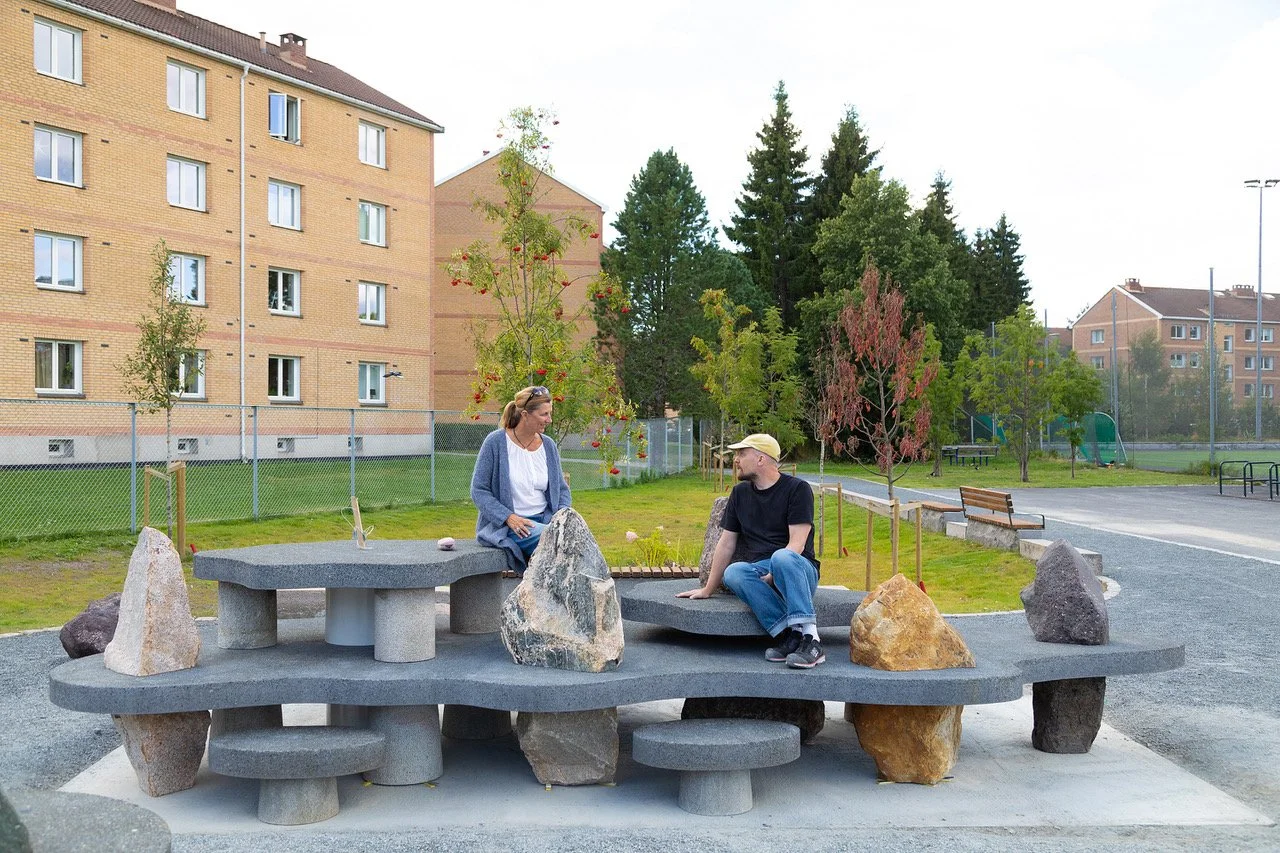
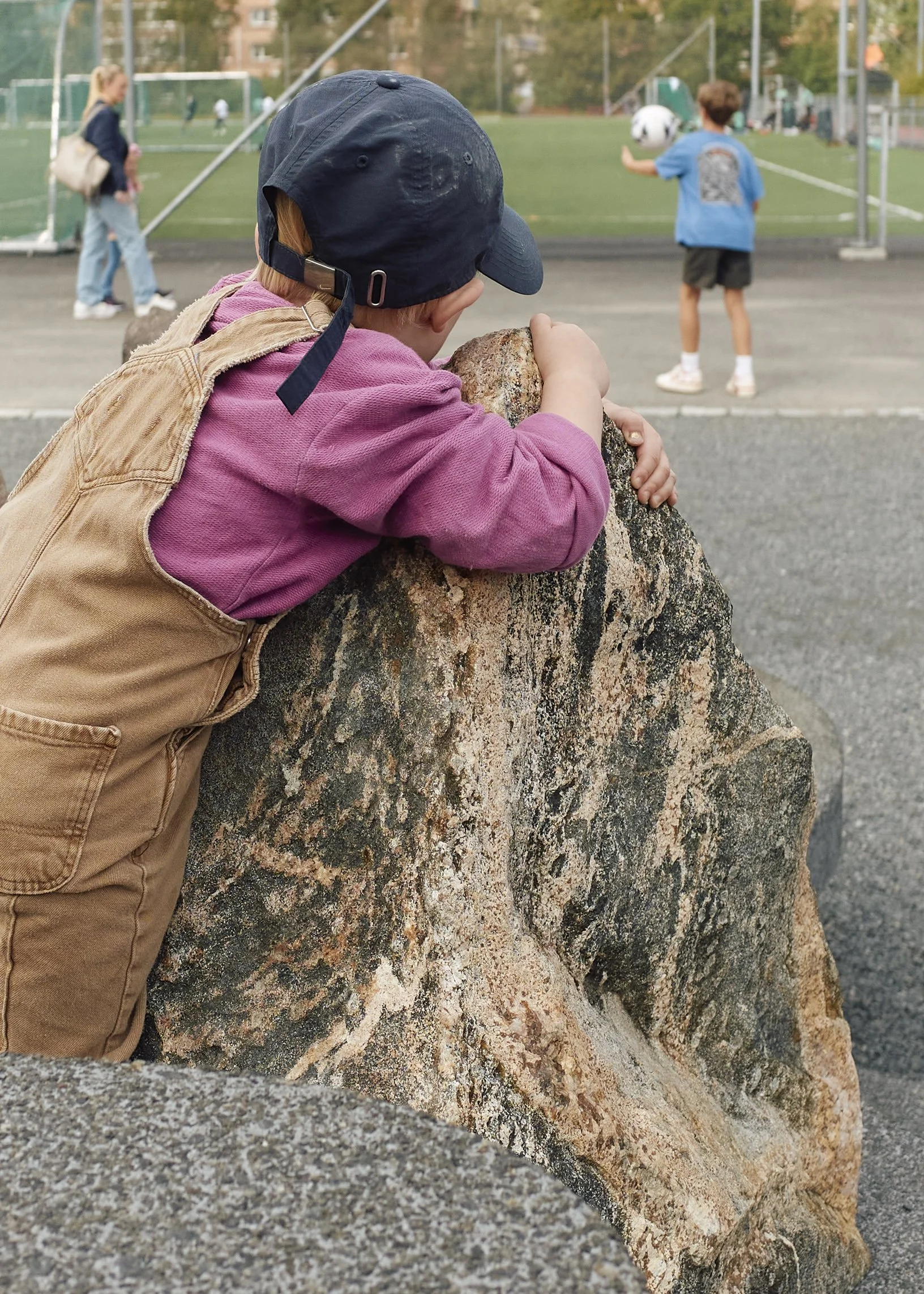
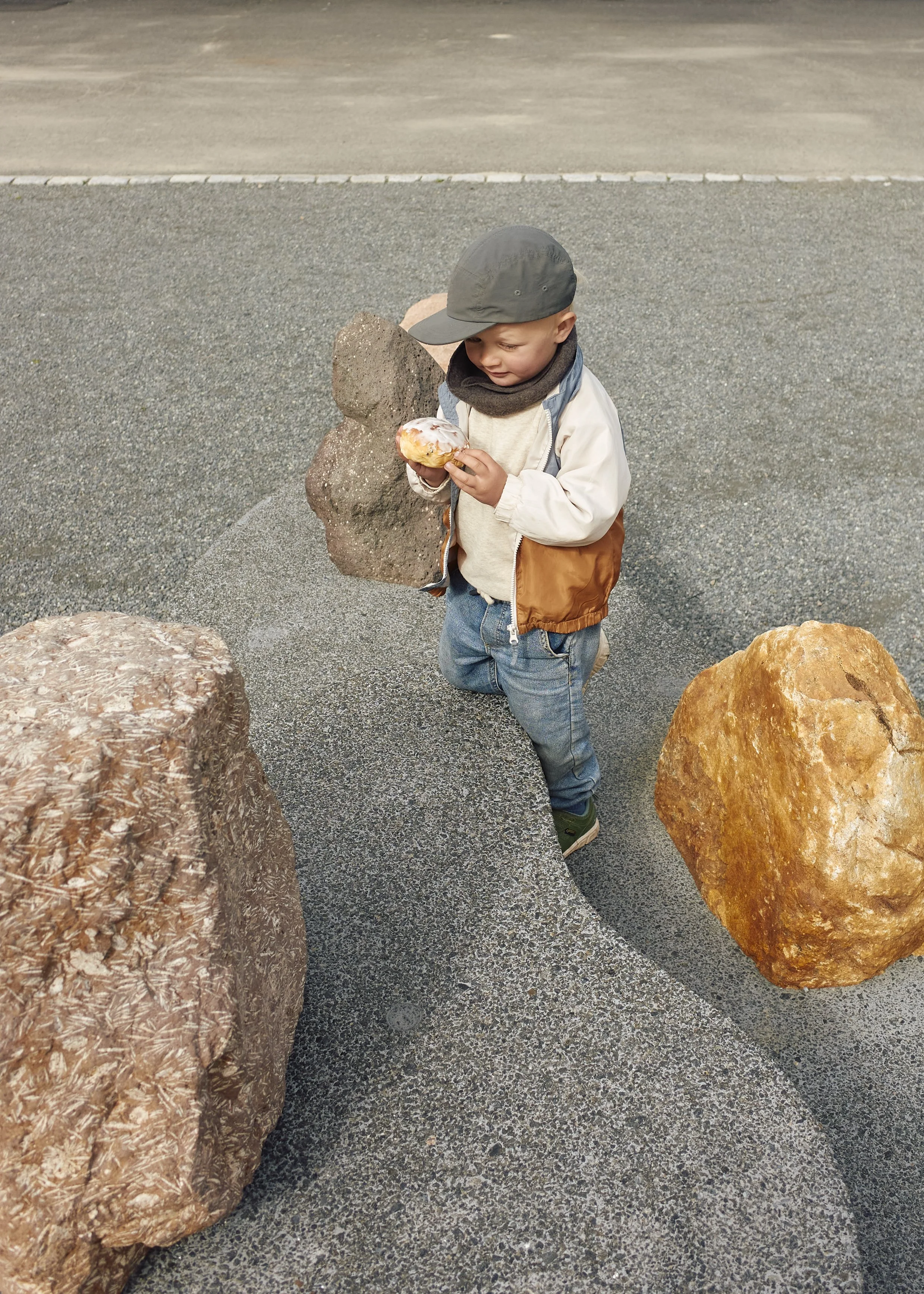
Appearing as something between a bleacher and a stylized miniature landscape, it can be approached from all sides and is easily climbed.
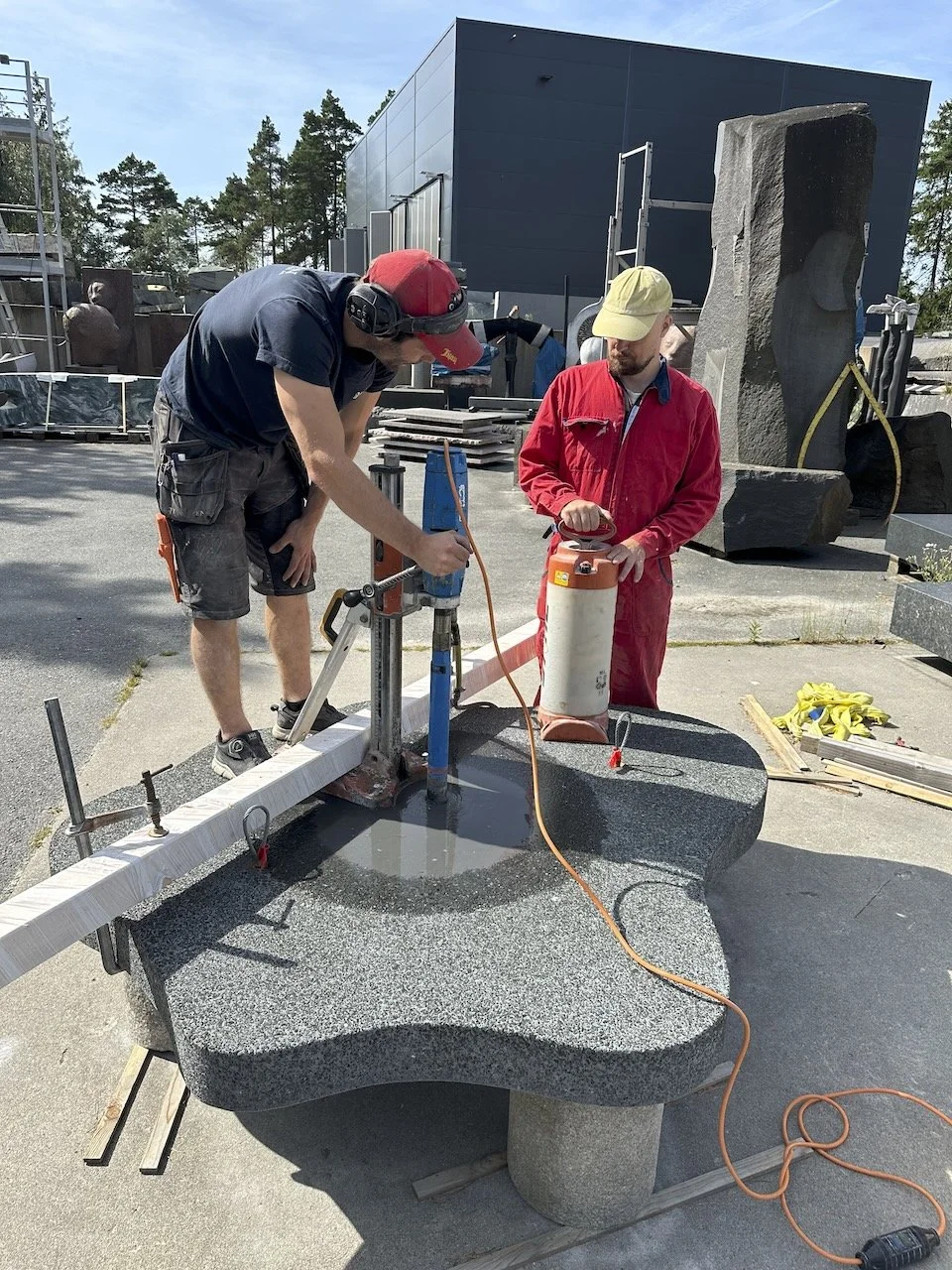
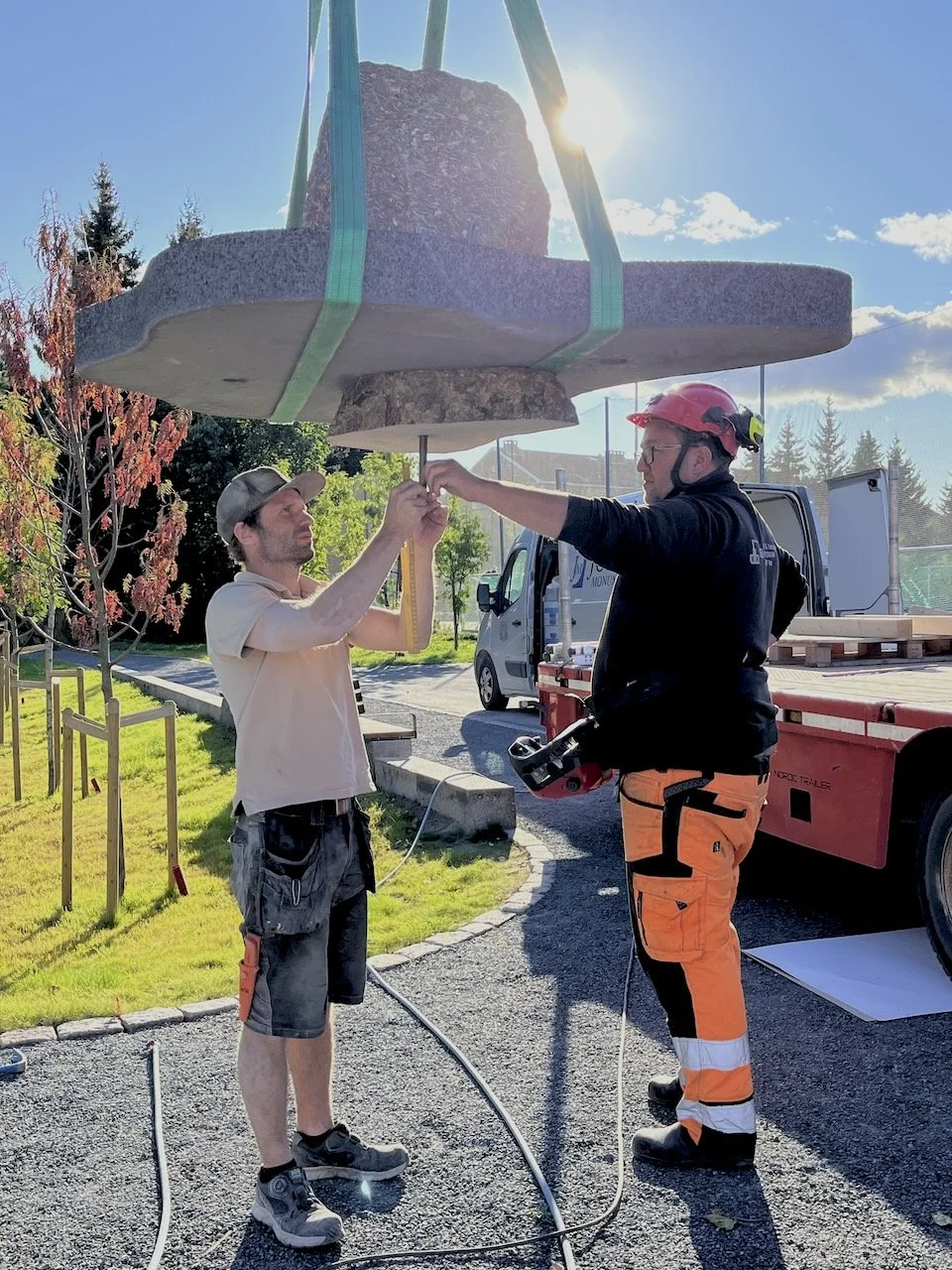
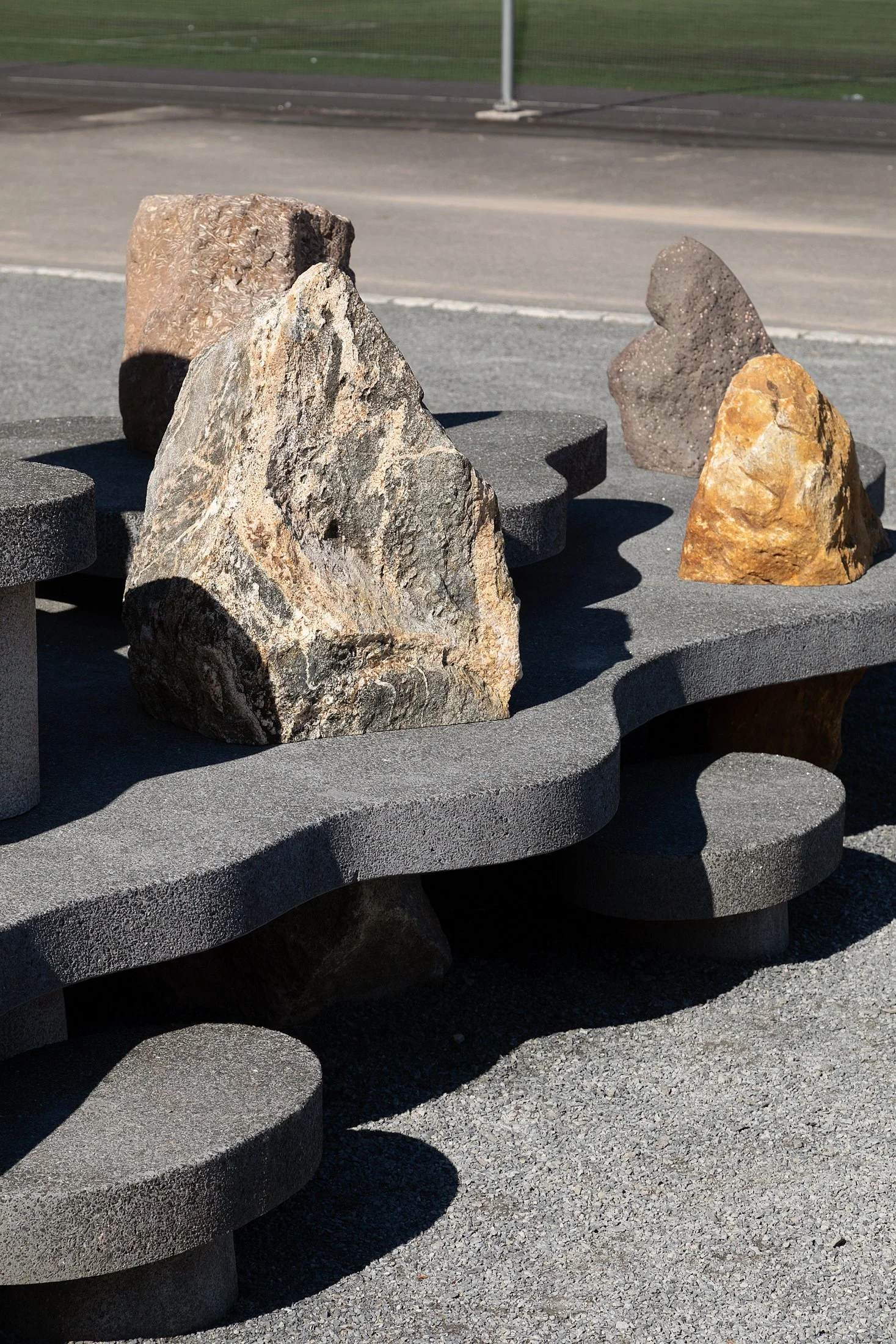
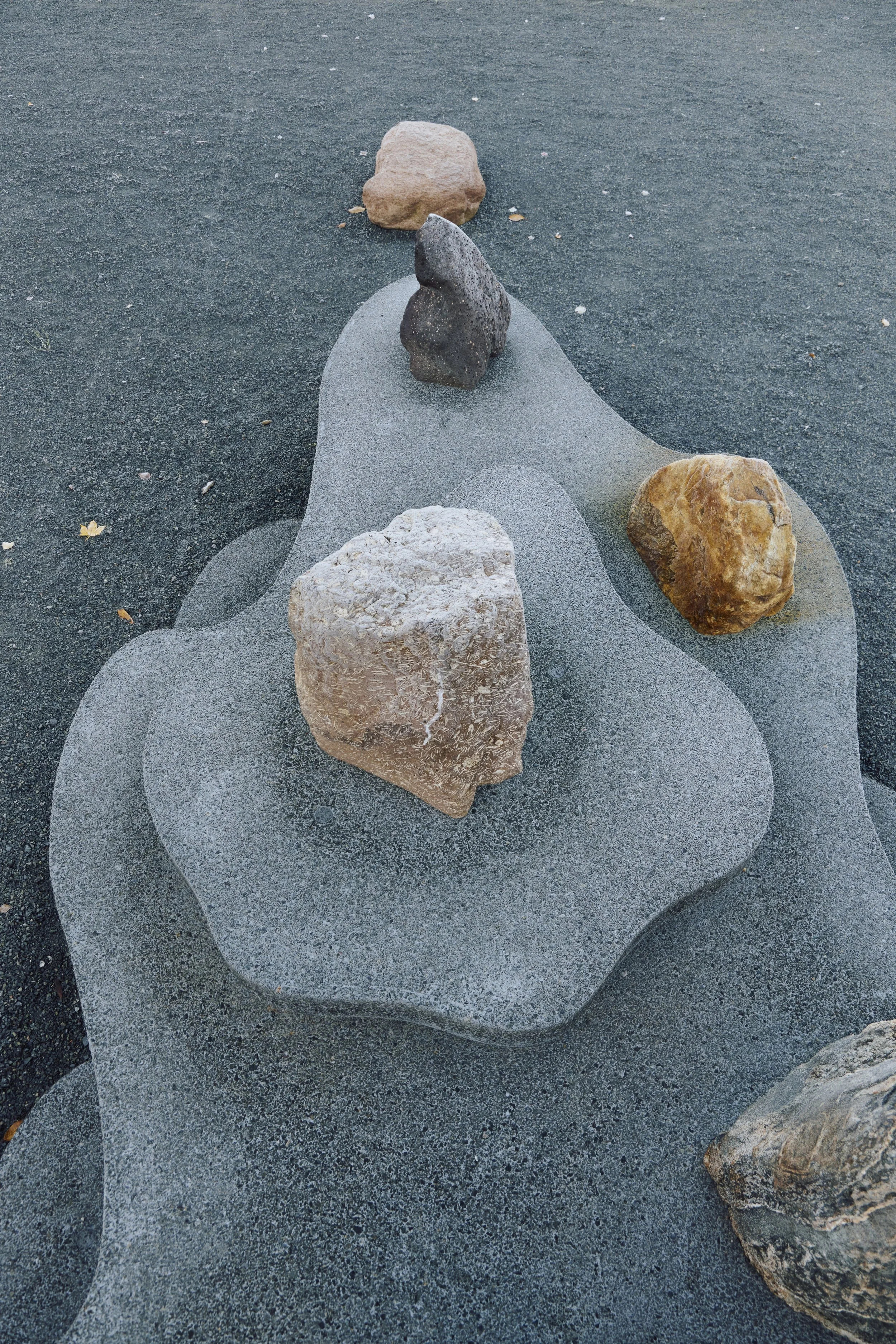
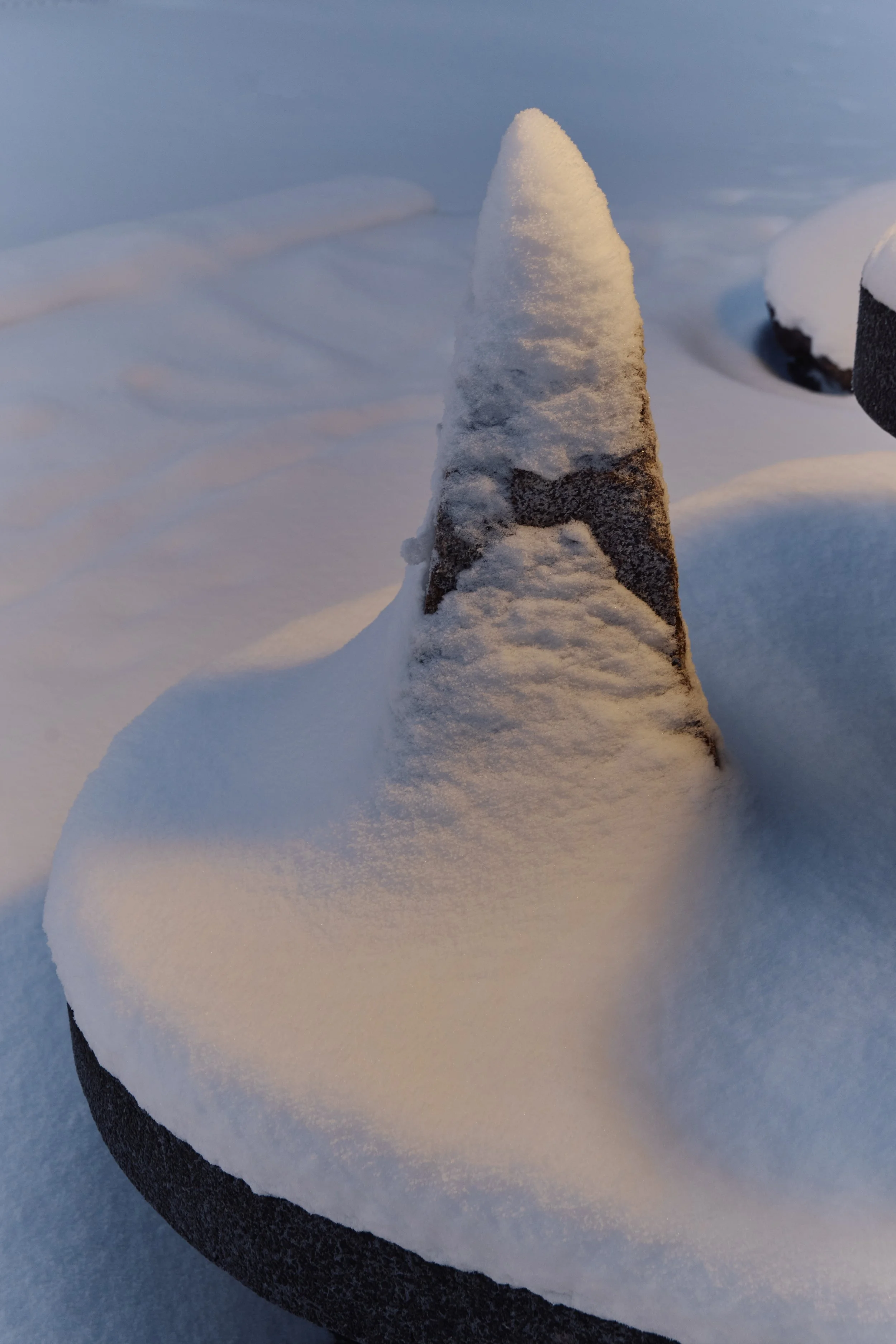
Horizontal, concrete slabs are stacked on spacers of sliced stone and porcelain columns. The exposed Larvikite aggregate of the concrete provides a good grip on wet days - and sparkles subtly on sunny ones.
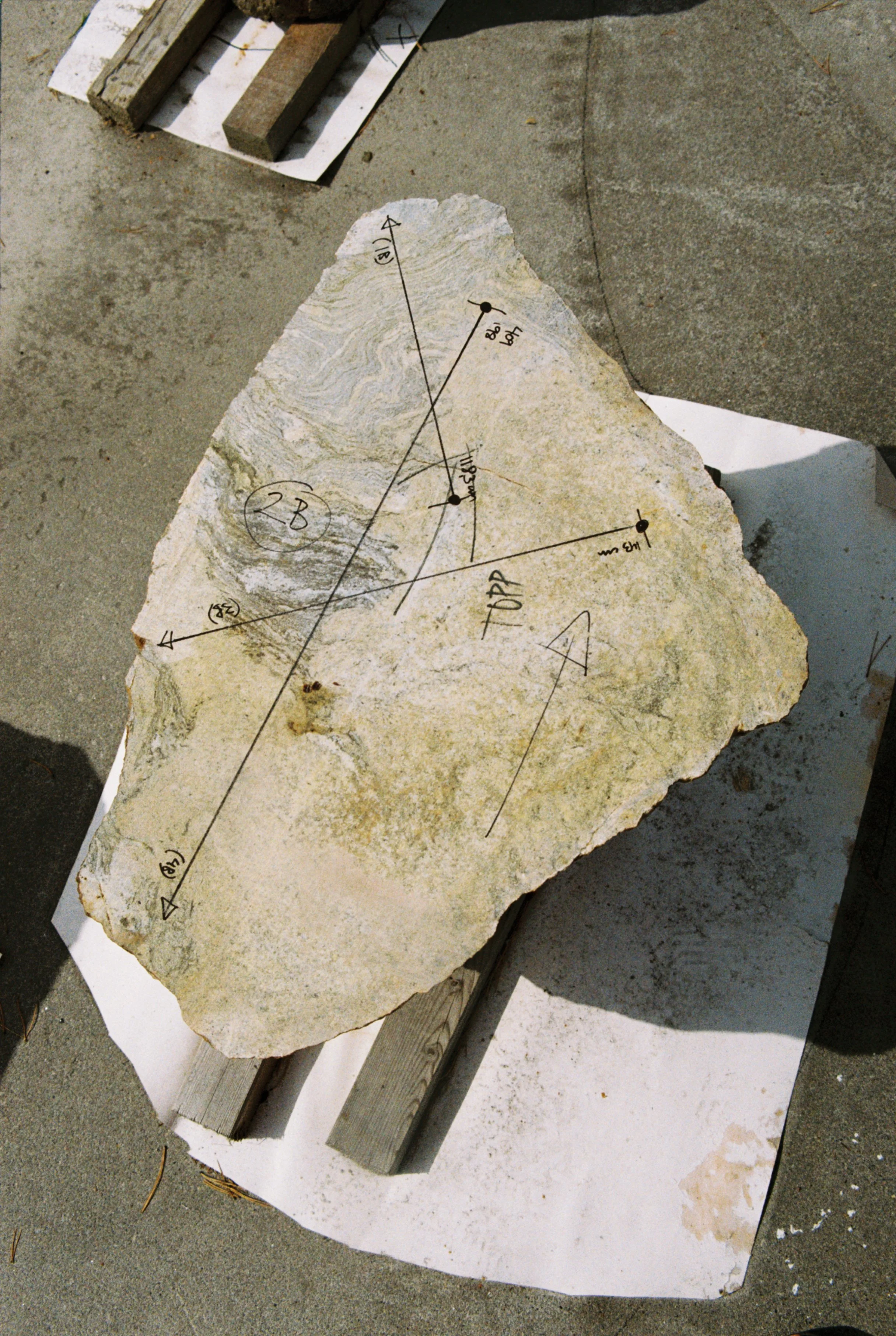
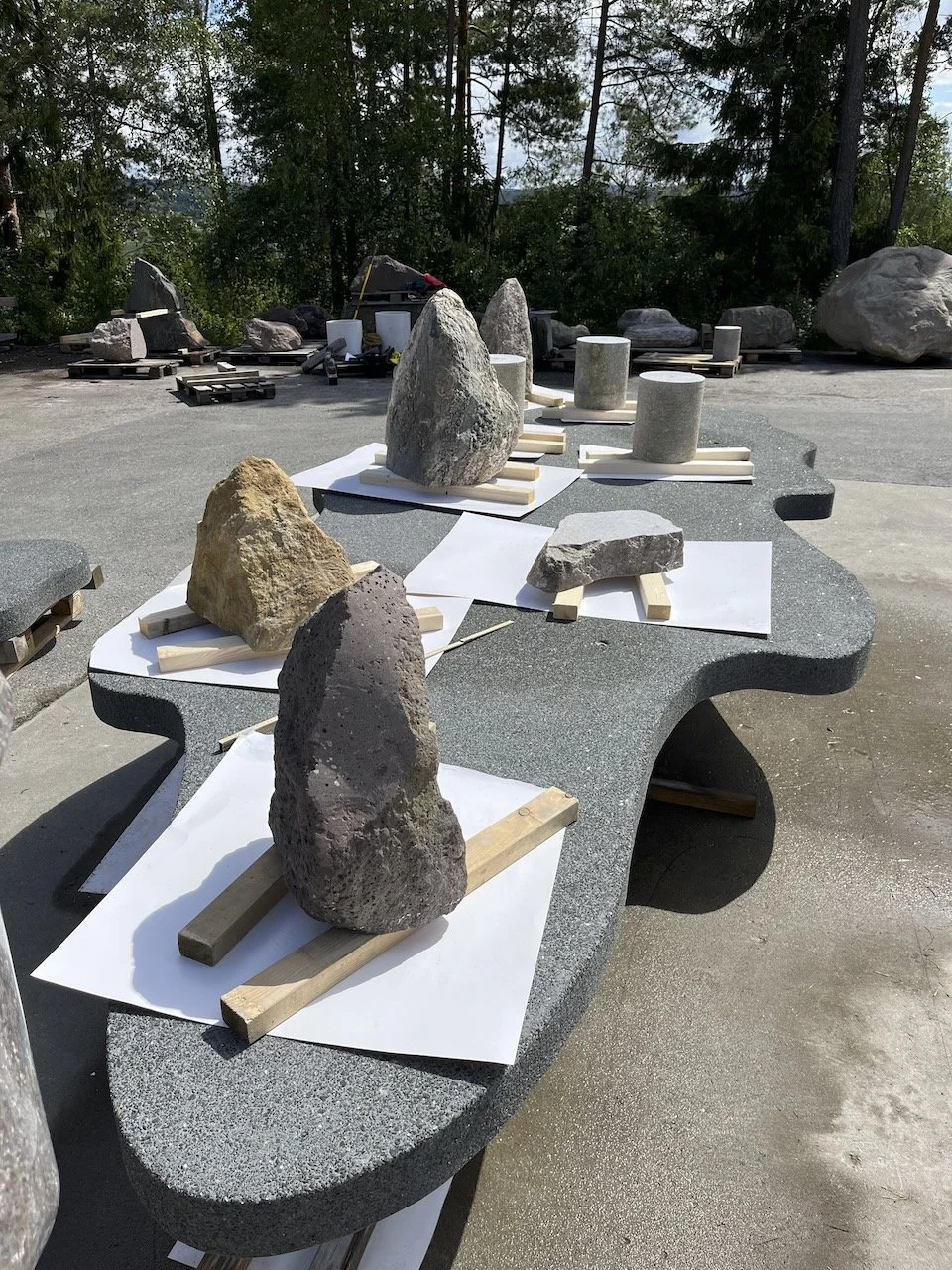
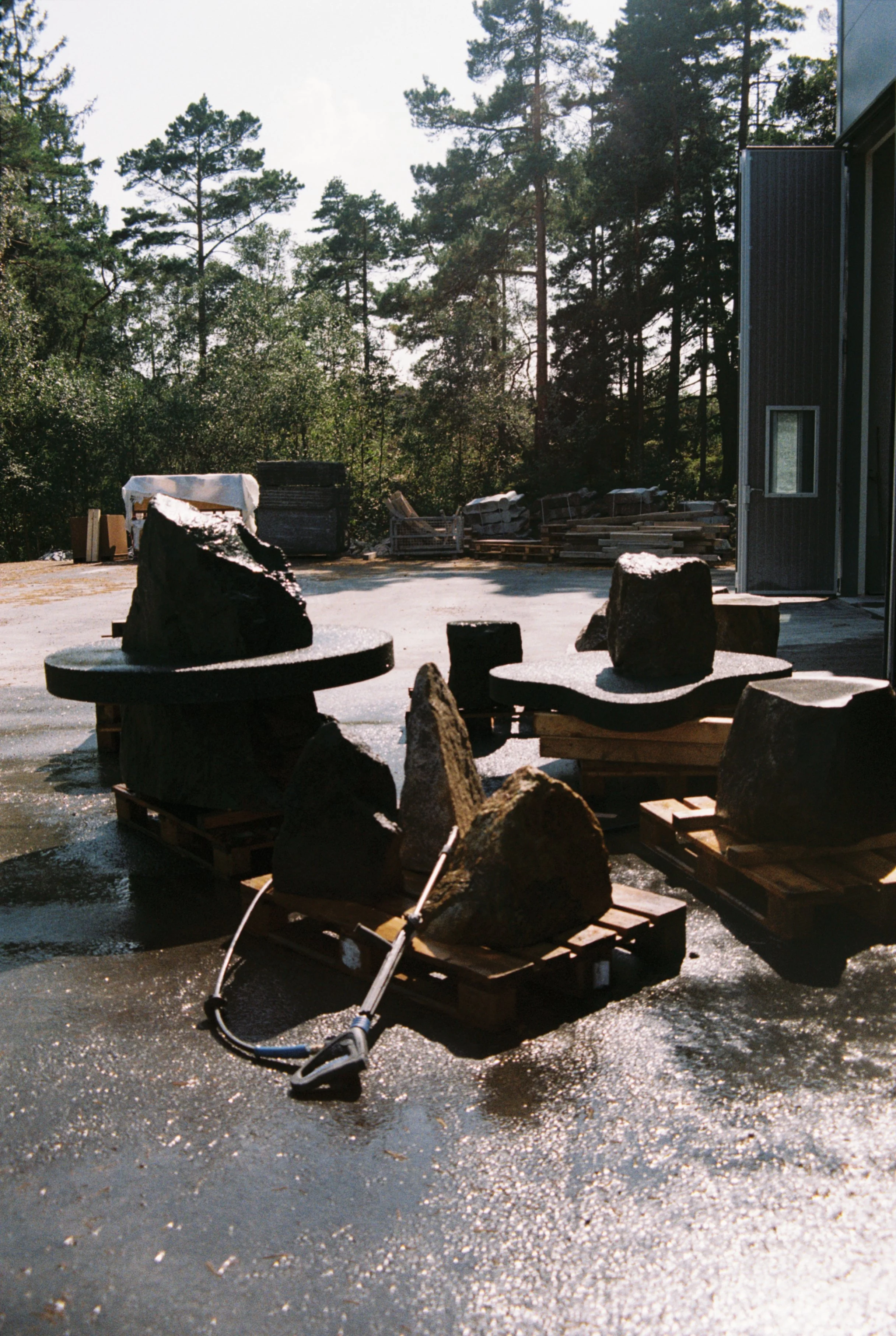
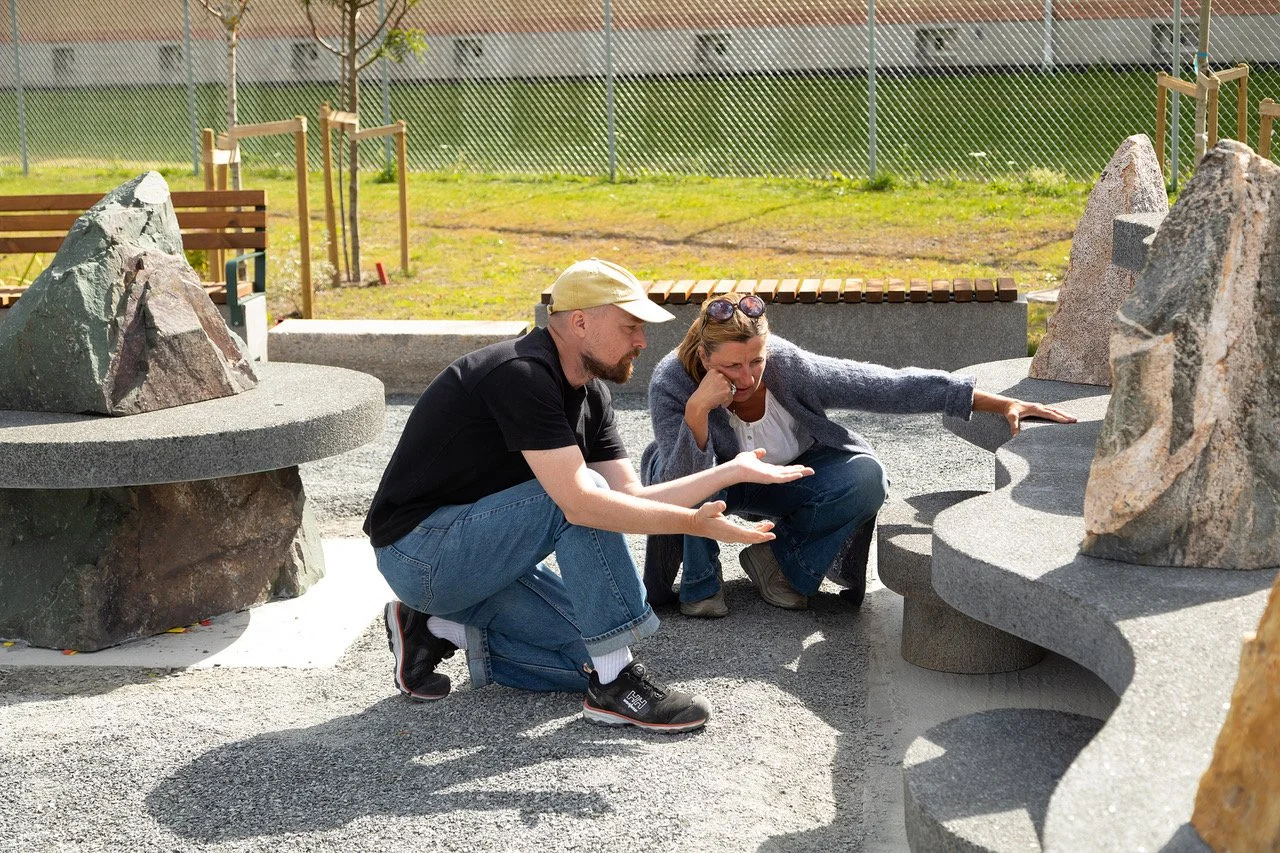
The tops of the natural stone boulders, picked from various sites in Eastern Norway, simultaneously serve as small sculptures, climbing challenges and back rests. In combination with the curvy-edged slabs, the sculpture is designed to offer plentiful seating combinations and spur social interaction.
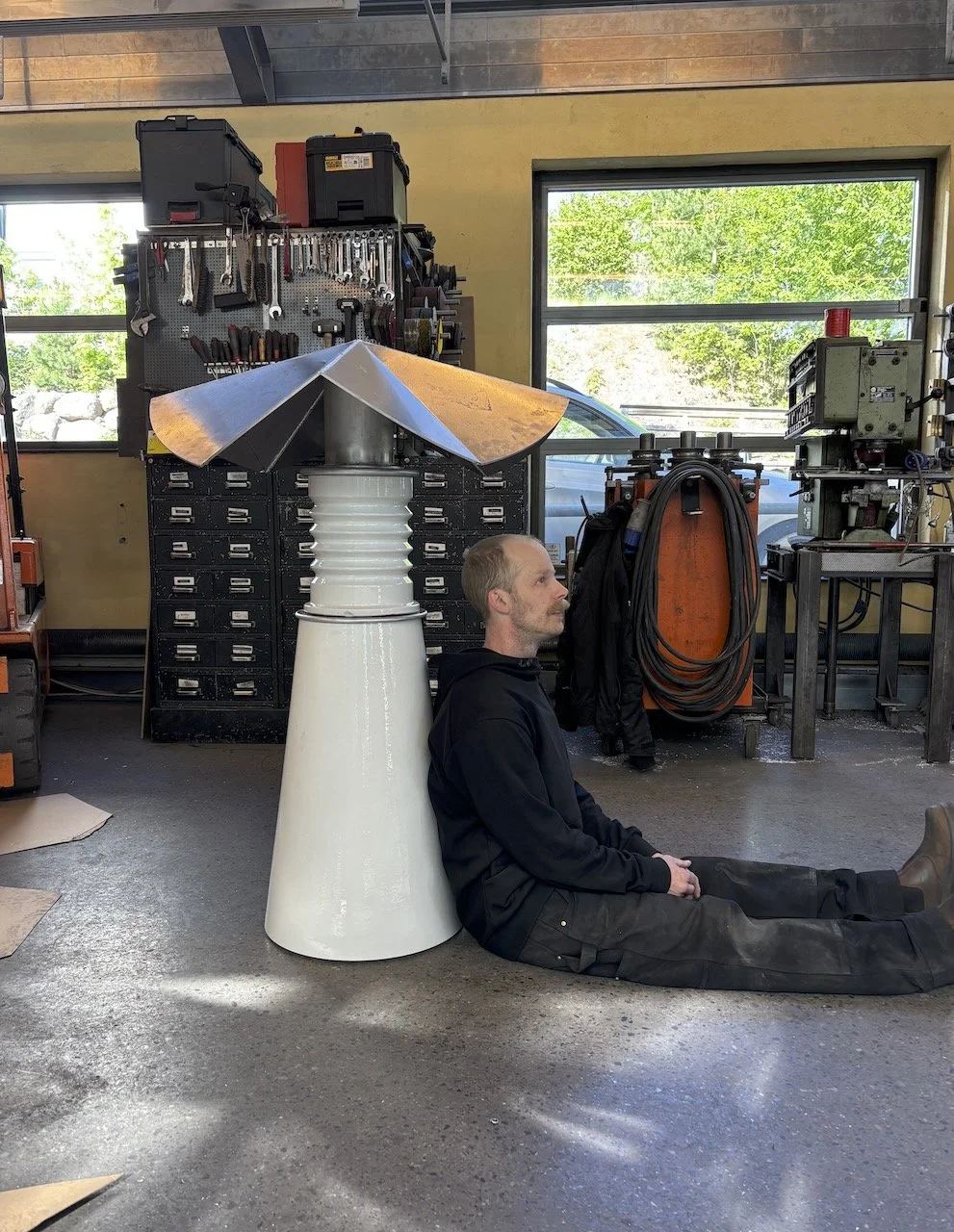
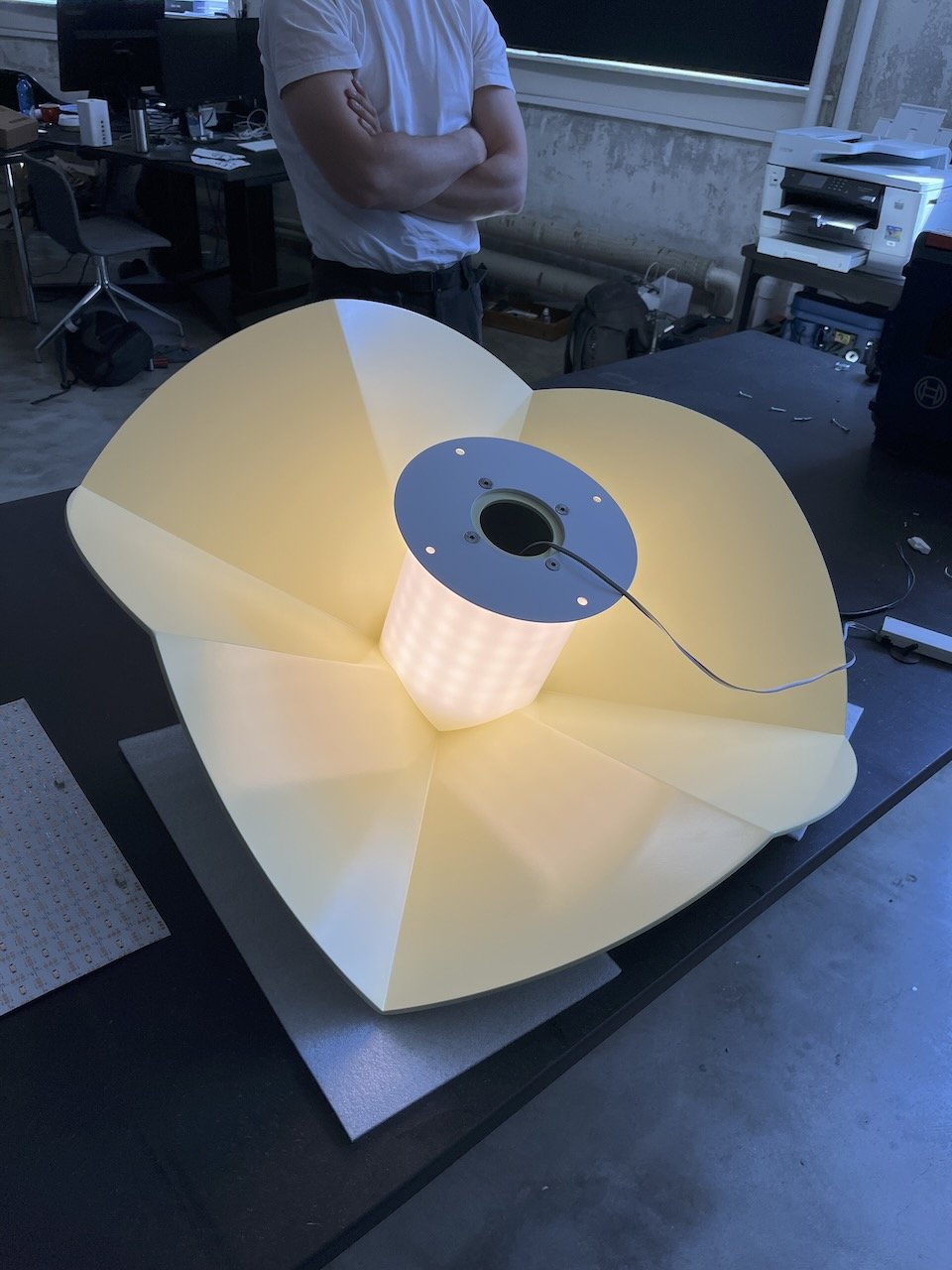
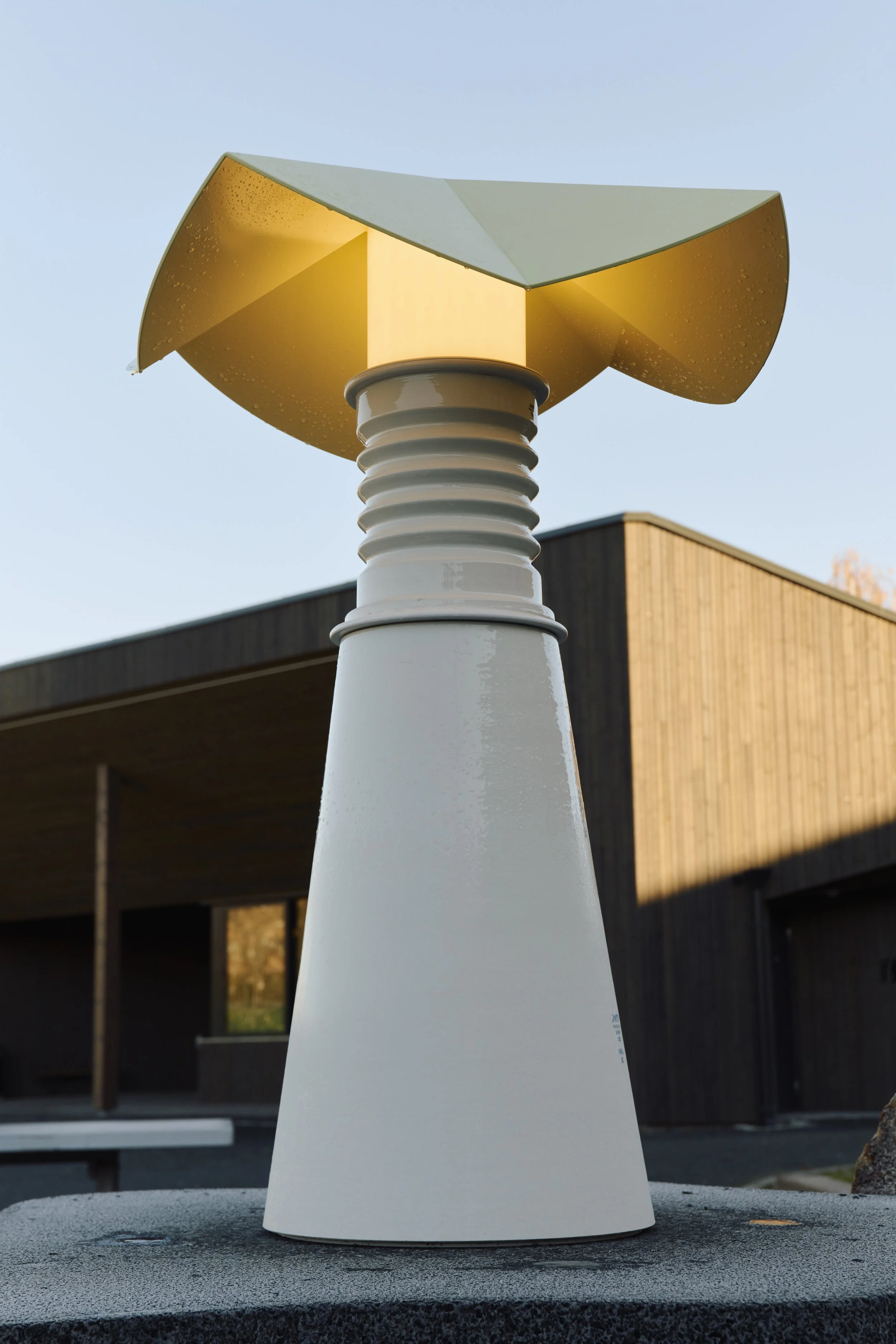
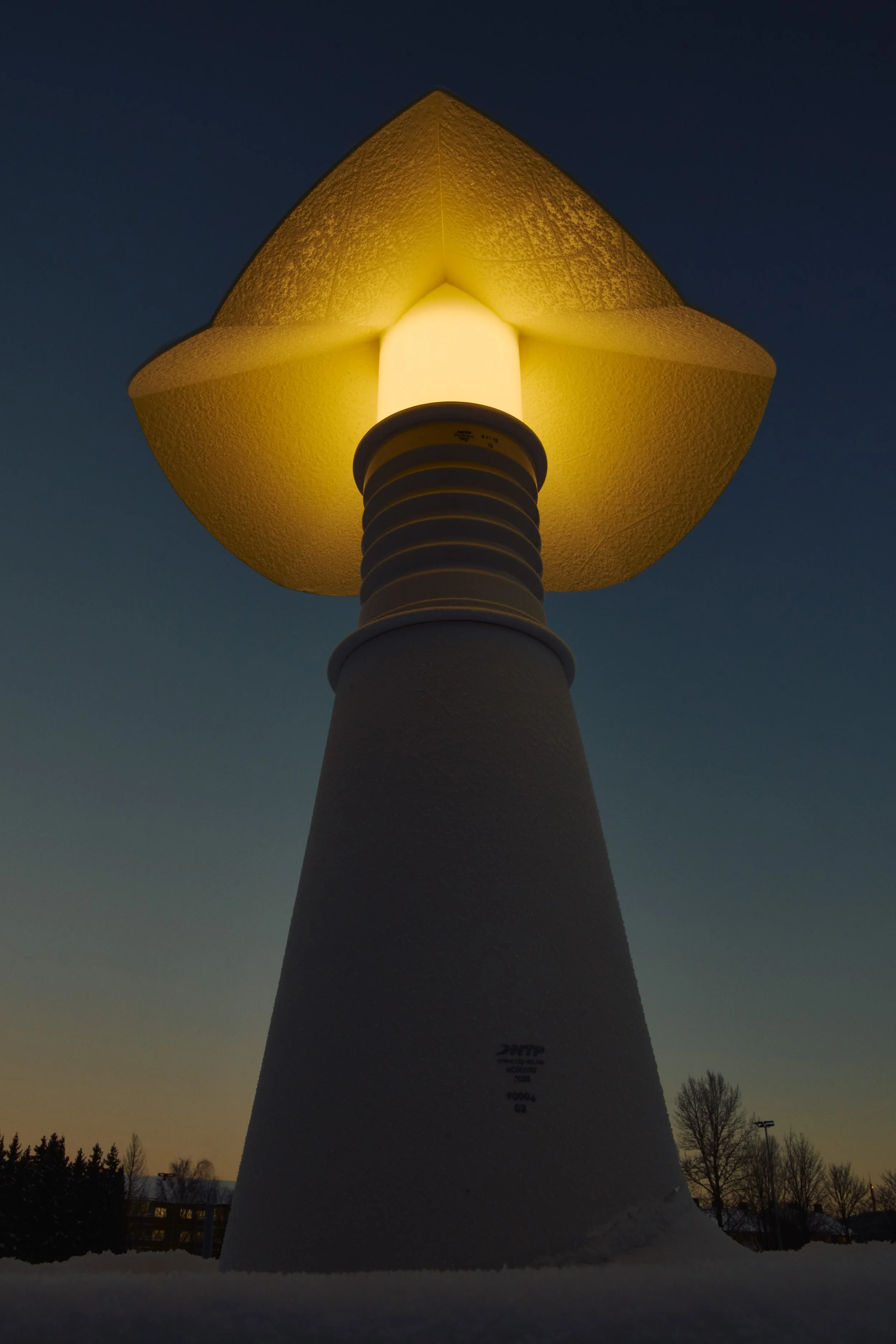
The design of the lamp shade is based on a folded, circular disk, peering into each of the four, cardinal directions. Its base is made from industrial porcelain modules. The stone columns, supporting the lamp tower and bottom steps, are made from repurposed bollards.
The lamp is on at all times, dimmed at night.
TEAM
Stone and assembly by Johansen Monumenthuggeri
Concrete by Tunge Ting
Lamp shade and assembly by Bolt Metall
Light design and assembly by Affix
Fundament by J.I. Bygg
Landscape by Maria Thøgersen Eide from In Situ Architects
Art consultants: Marianne Hall and Anders Valde
Photography by Anders Valde and Anne Valeur
SUMMER
FALL
WINTER

PROCESS
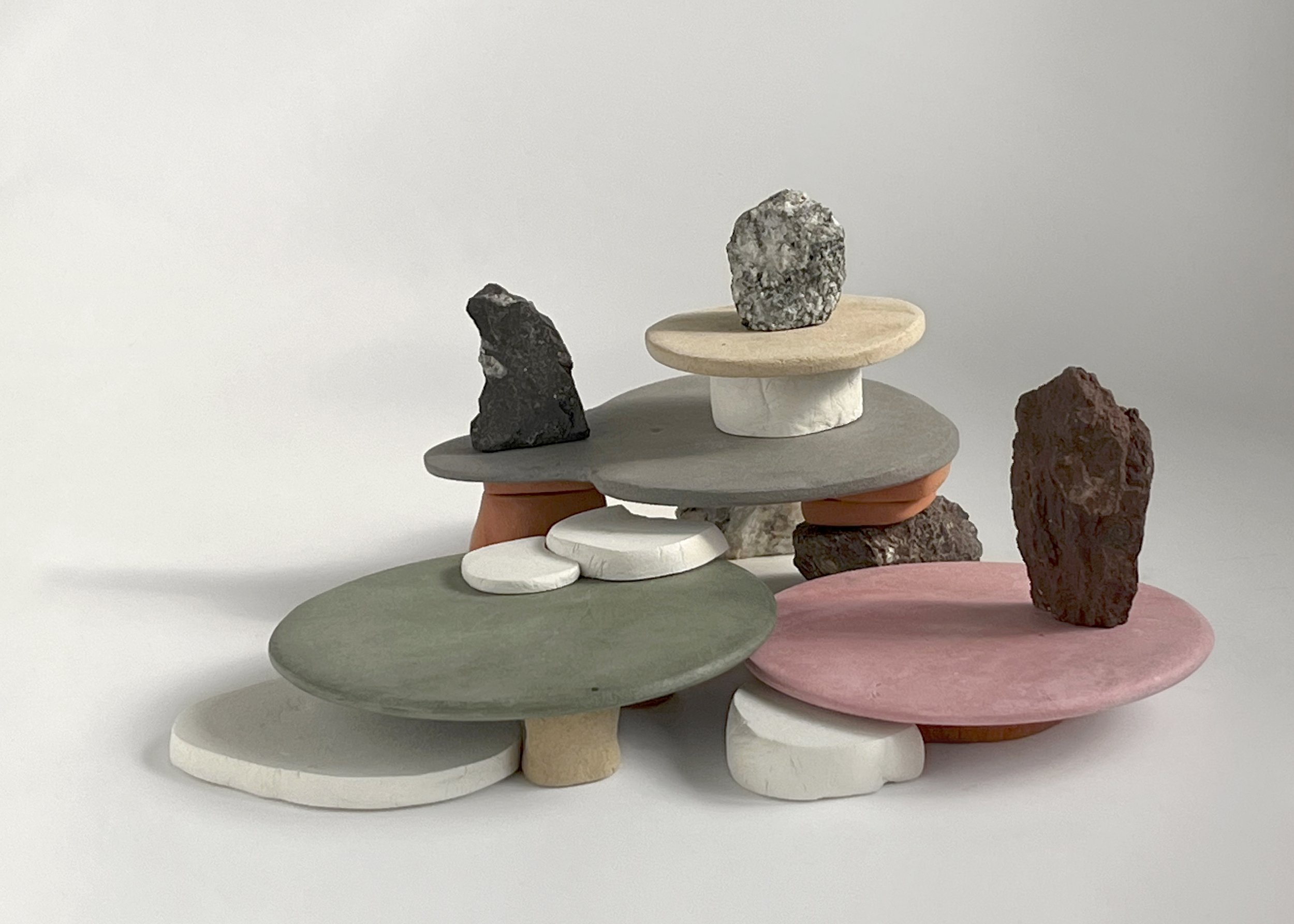
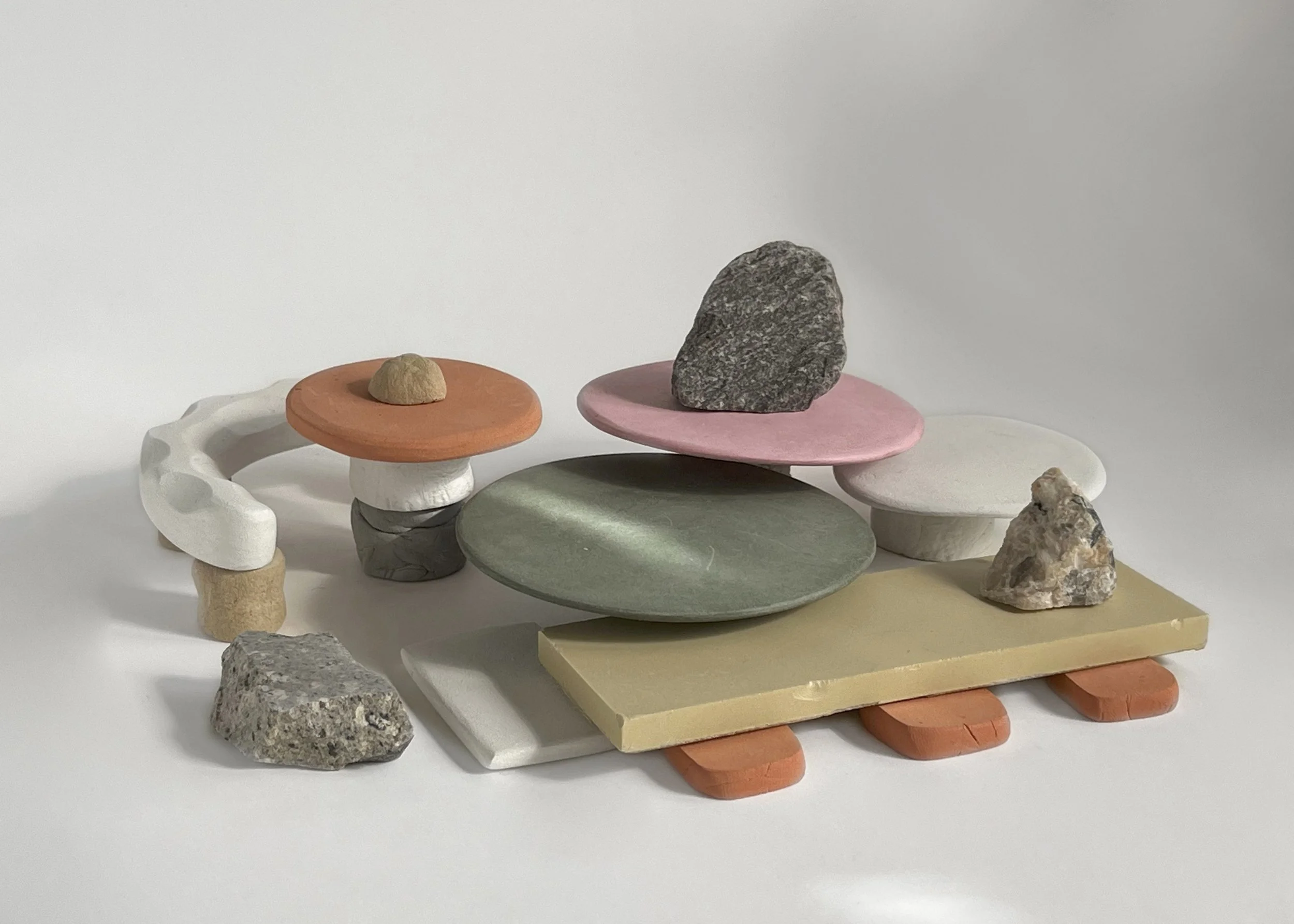
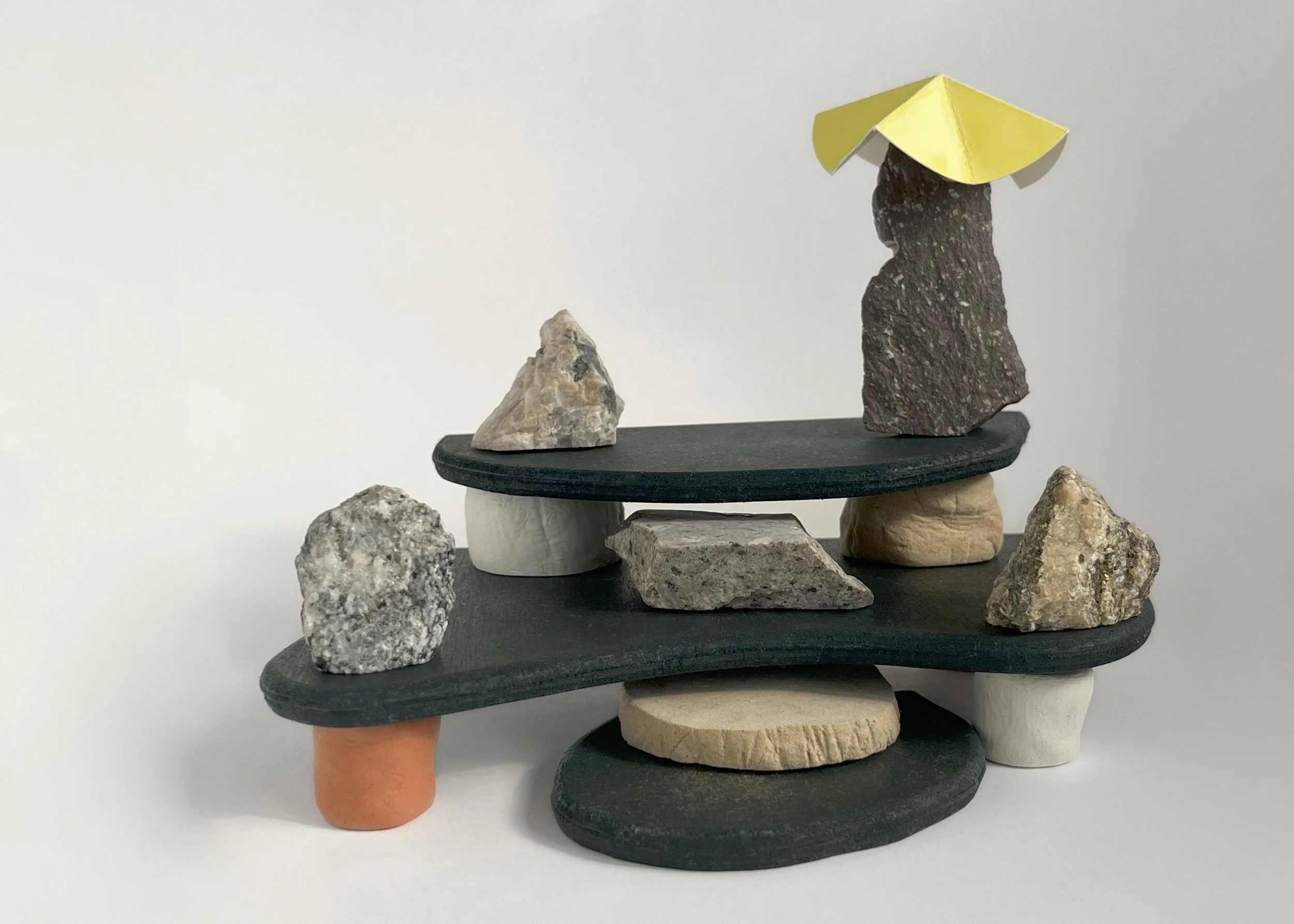
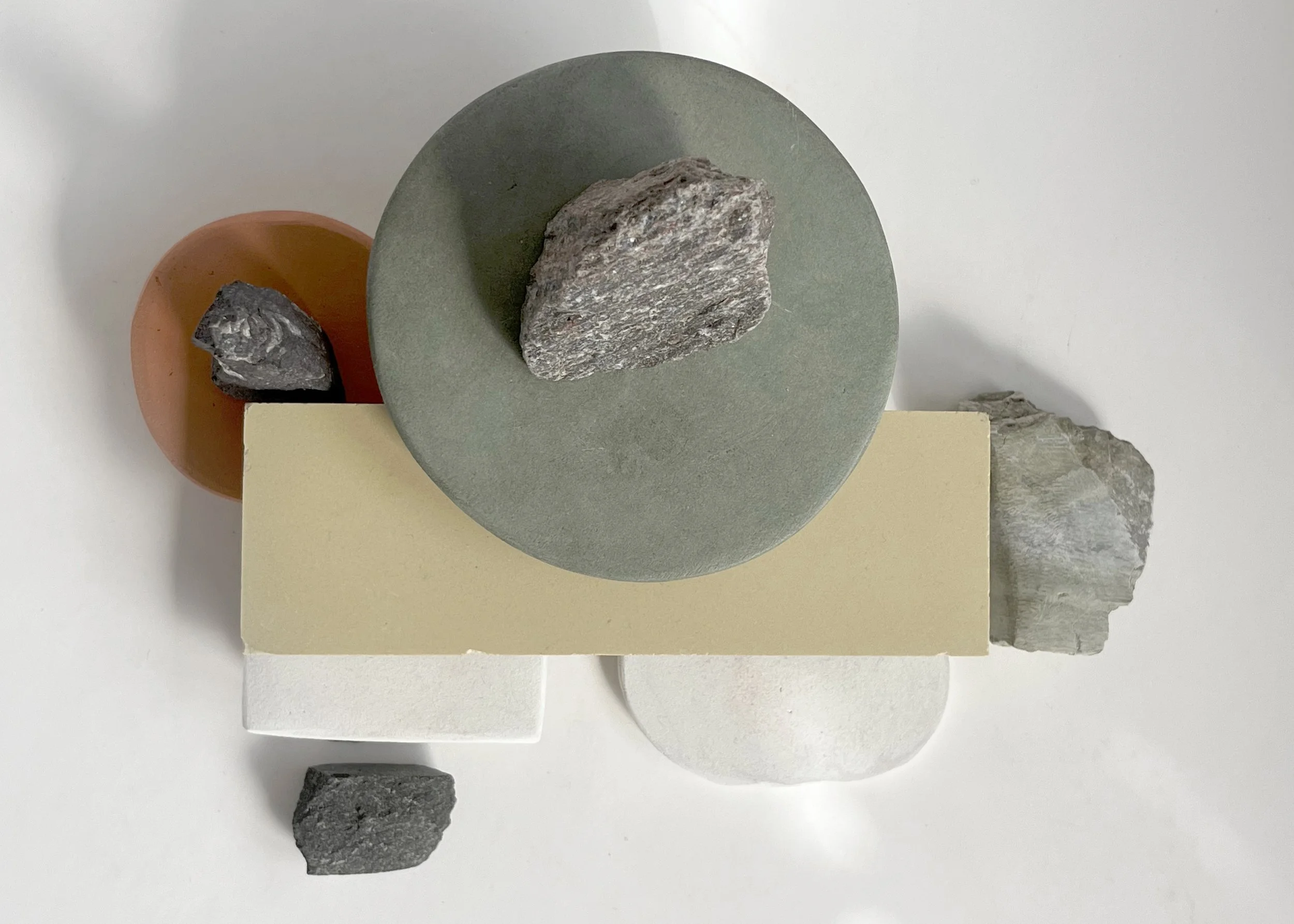
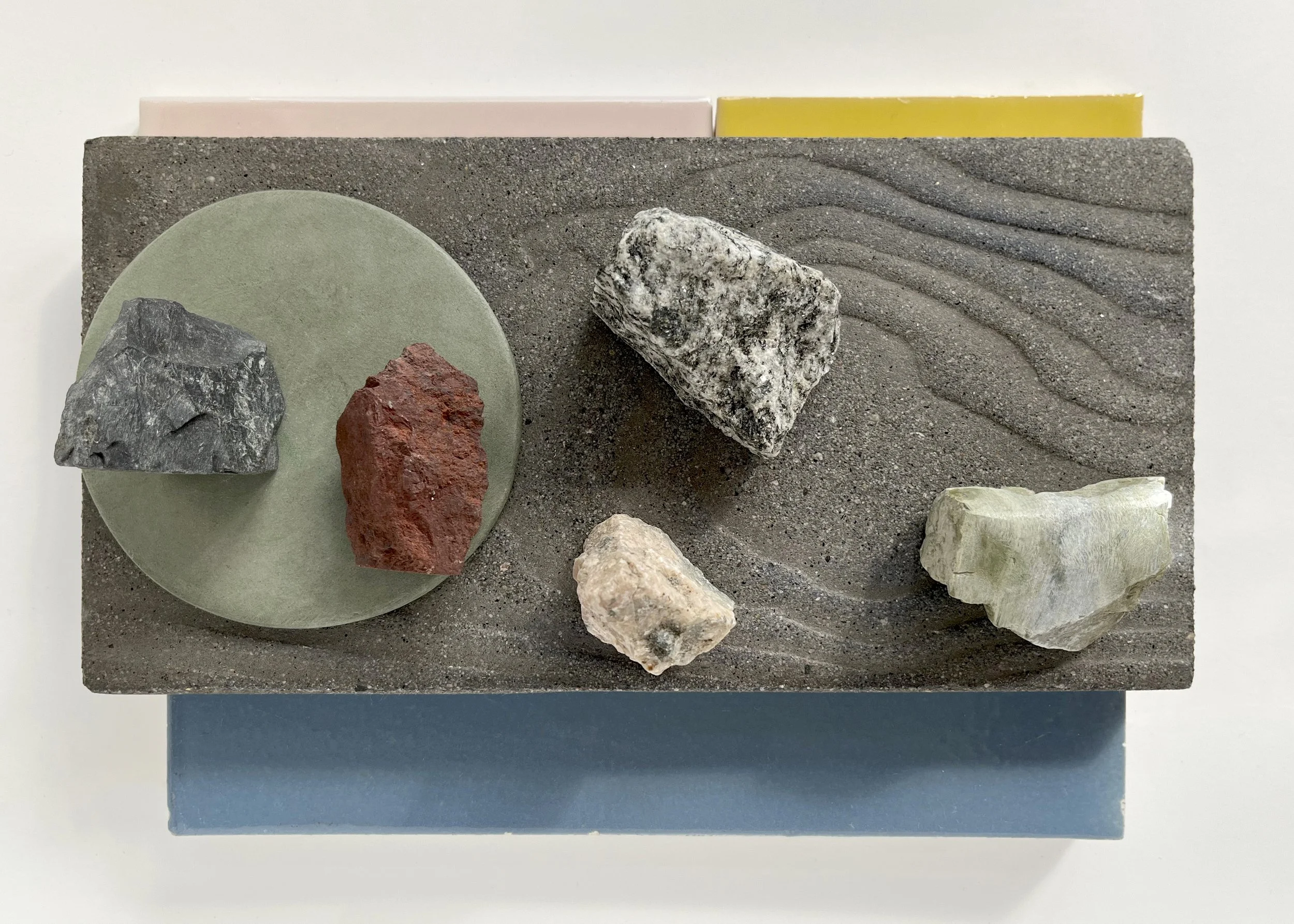
Model experiments with stones, clay, concrete and paper.
Alba was an opportunity to research the world of stone and concrete, and tap into the knowledge of those who work with it.
In the small town of Voss on the west coast, Tunge Ting specialize in casting concrete in innovative ways. Their input was crucial in finding the best recipe for the concrete, as well as getting the maximum surface area within budget, yet with a slender thinness. The book Betongoverflater released by Bygg Uten Grenser was a good primer for getting the basics and terminology right.
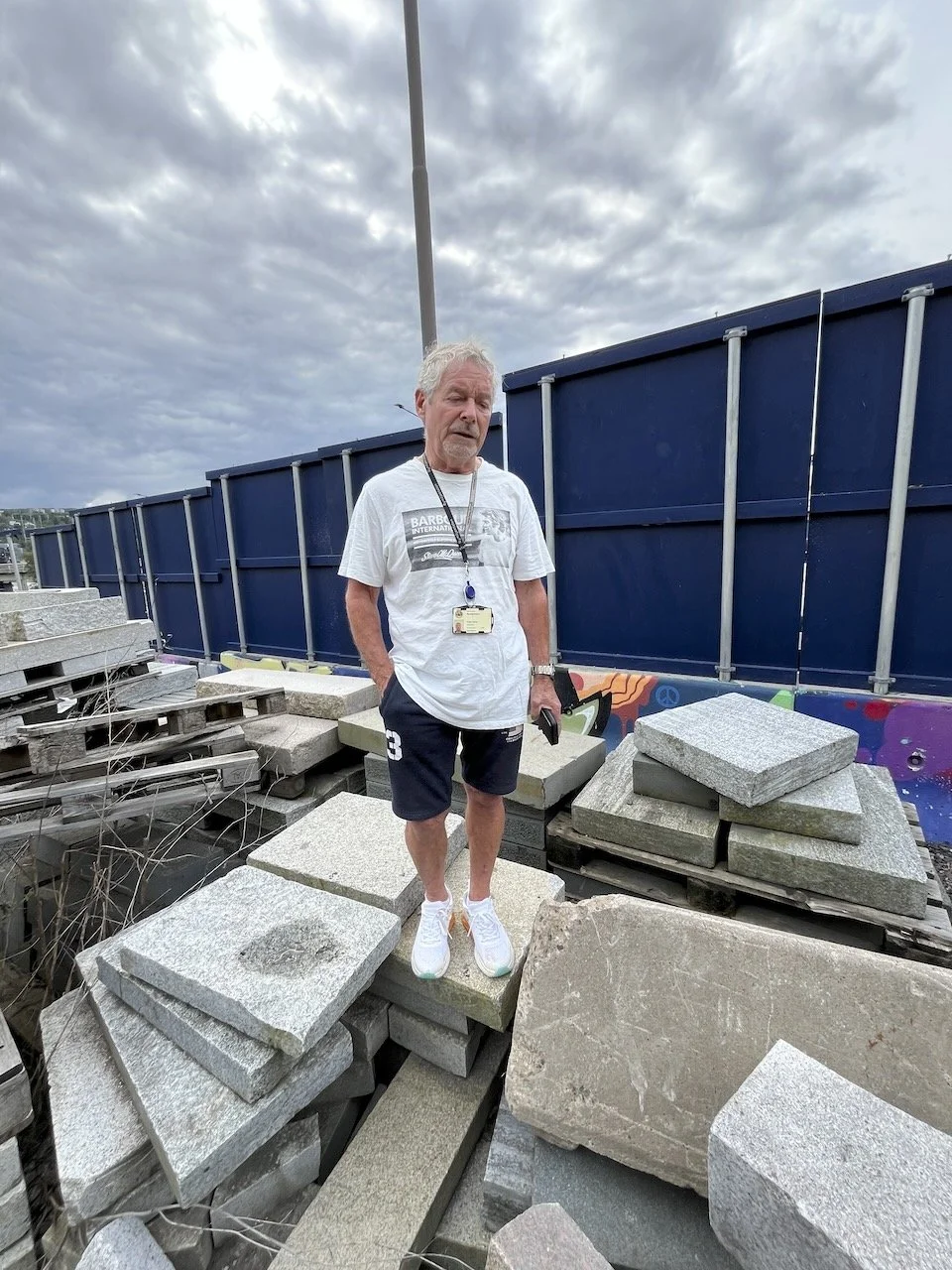
Recycling often boils down to personal effort, and this is also the case at Oslo Kommune, where for years Frank Liland has insisted on saving and organizing stones left over from building and renovation projects. It has become a rich resource for city architects to tap into, and I got to pick stone bollards for my project at no cost.
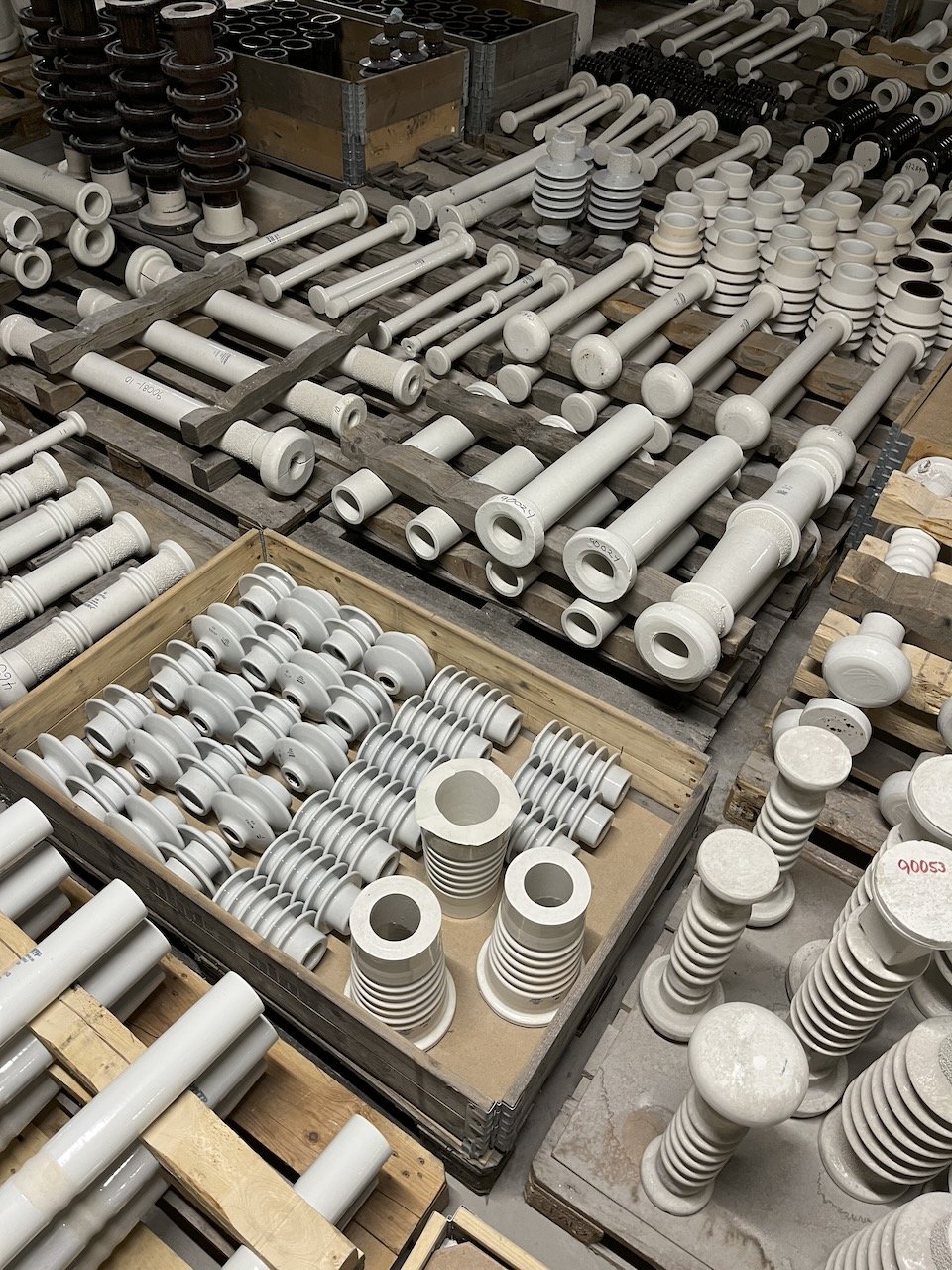
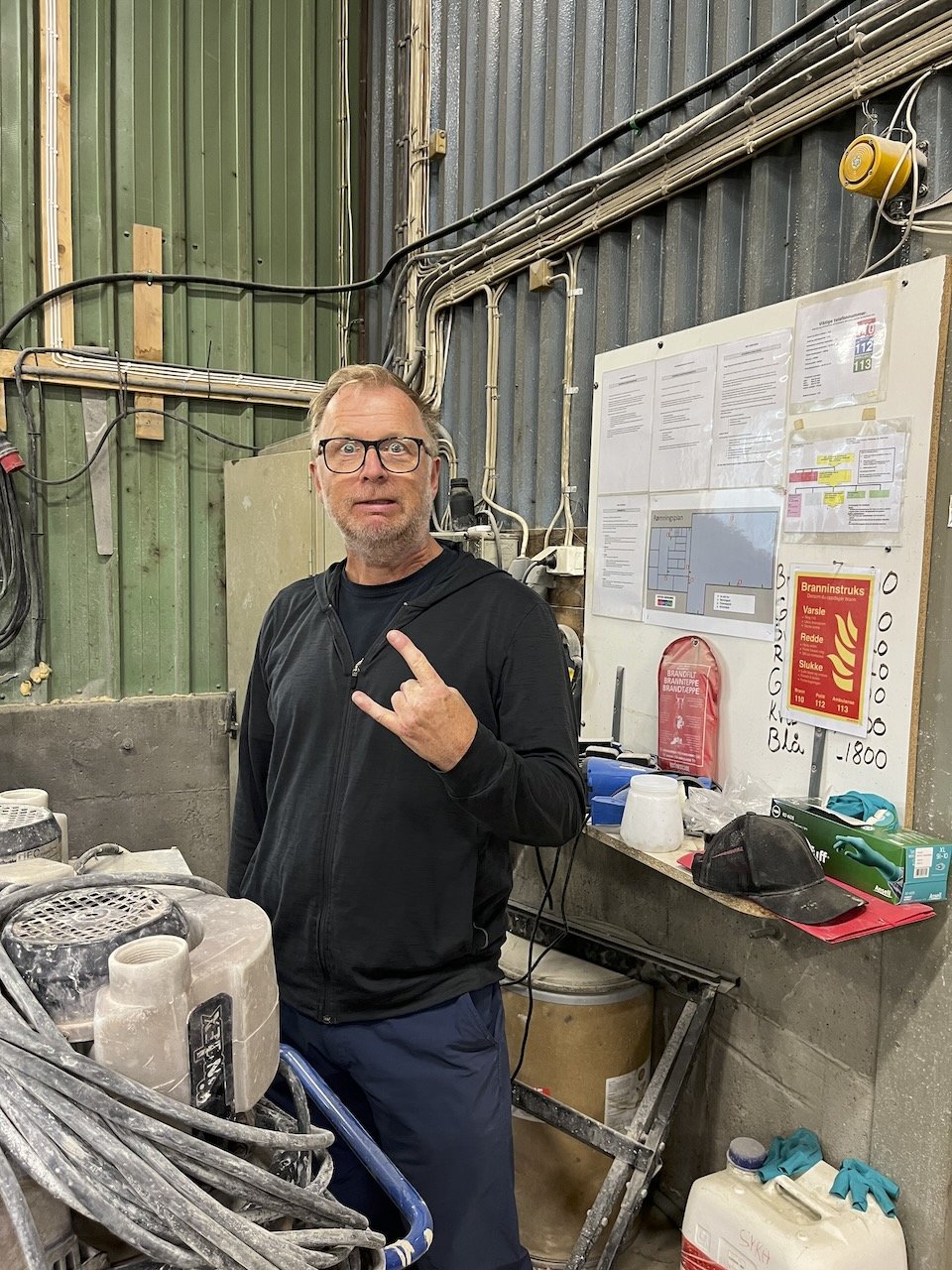
Personal effort was also the case at Norsk Teknisk Porselen, when manager Roger Thorvaldsen allowed me to visit the porcelain factory, offering some surplus porcelain modules for my lamp. Thanks to ceramic artists Marthe Johnslien, Halvor Digernes and Marthe Elise Stramrud for offering advice on the fraught nature of outdoors ceramics, persuading me to opt for an aluminium lamp shade instead.
The lamp shade, based on sketch I made from a folded paper disk, was designed and produced in a collaborative effort between Affix and Bolt Metall, who also made it fit seamlessly with the porcelain modules.
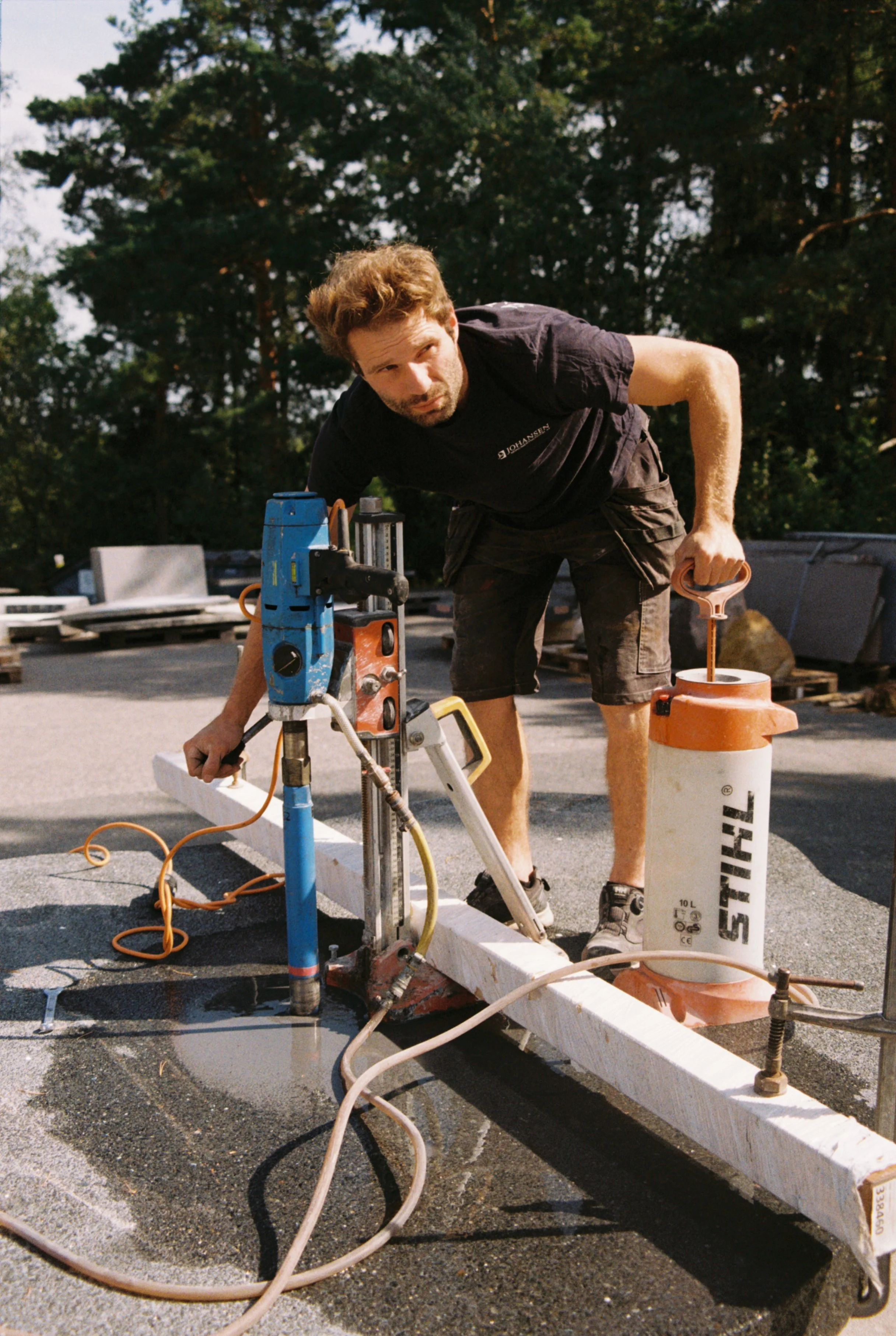
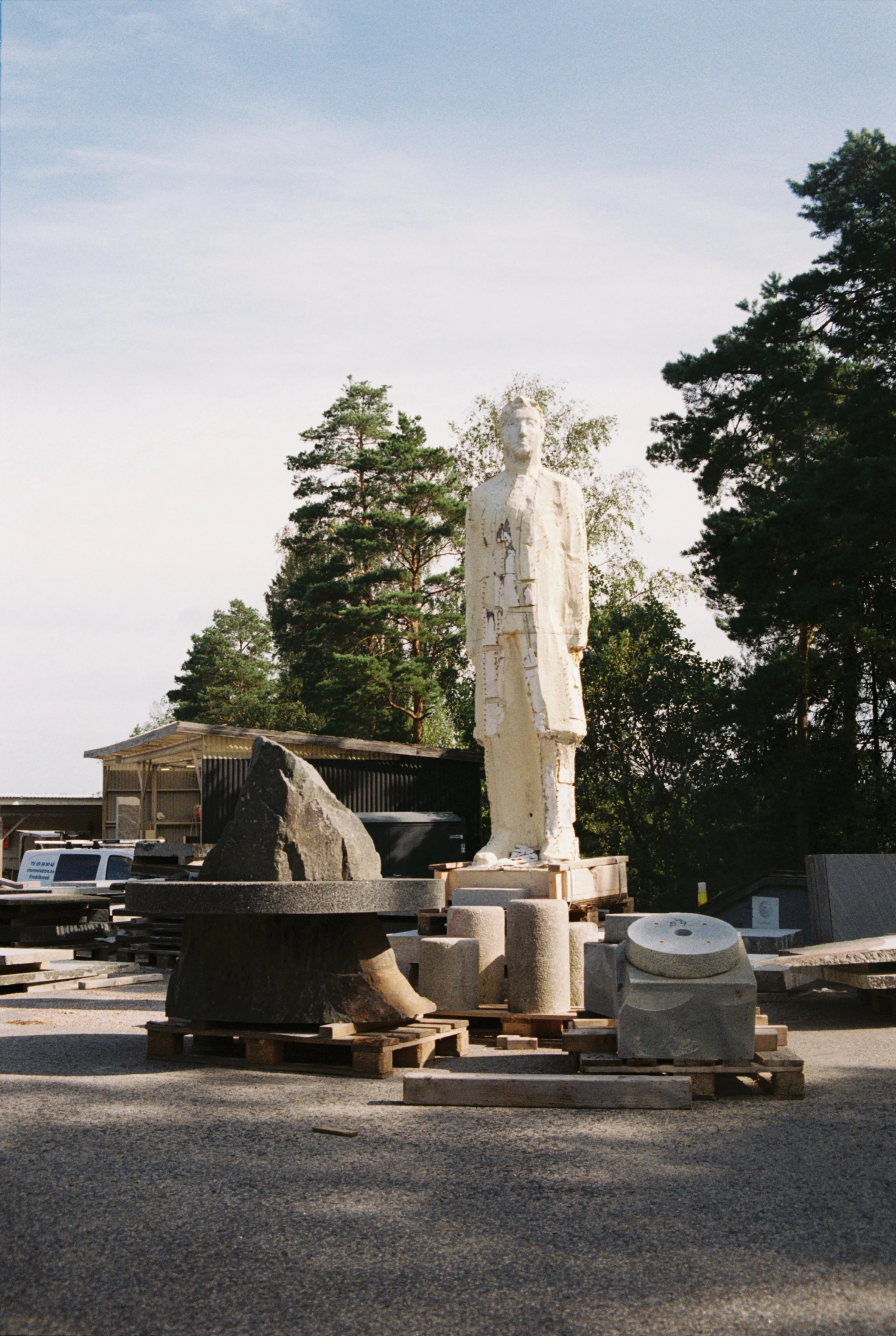
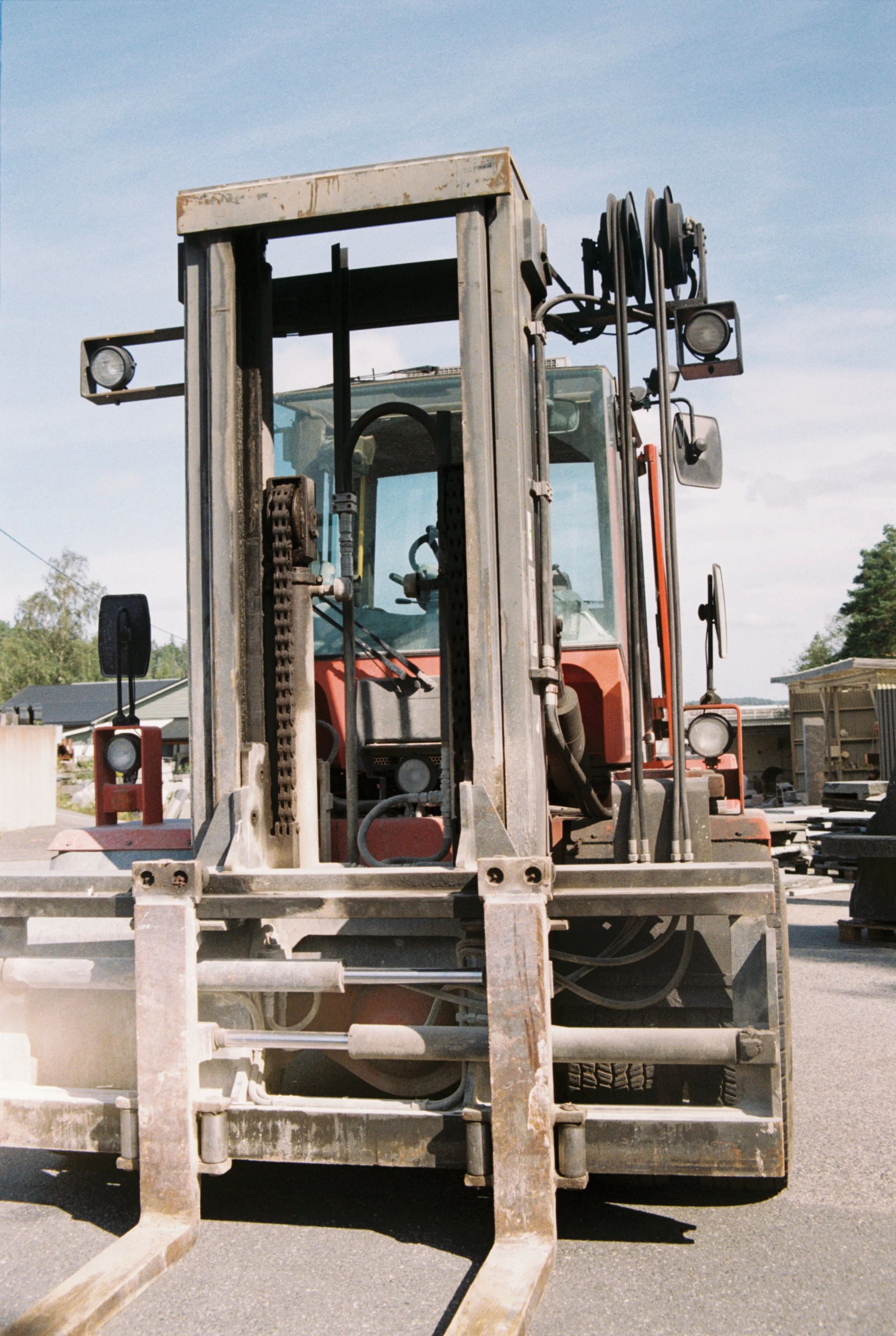
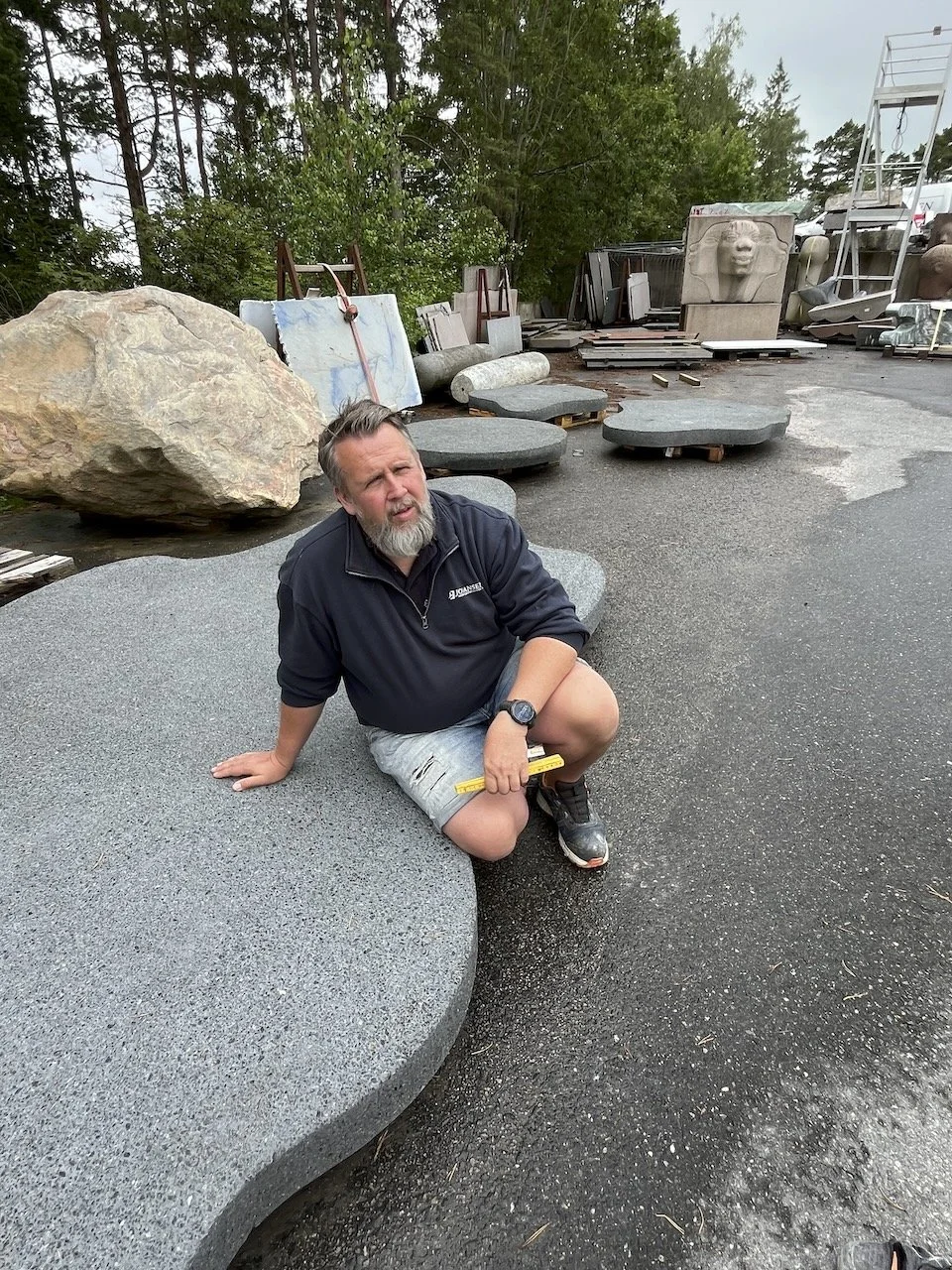
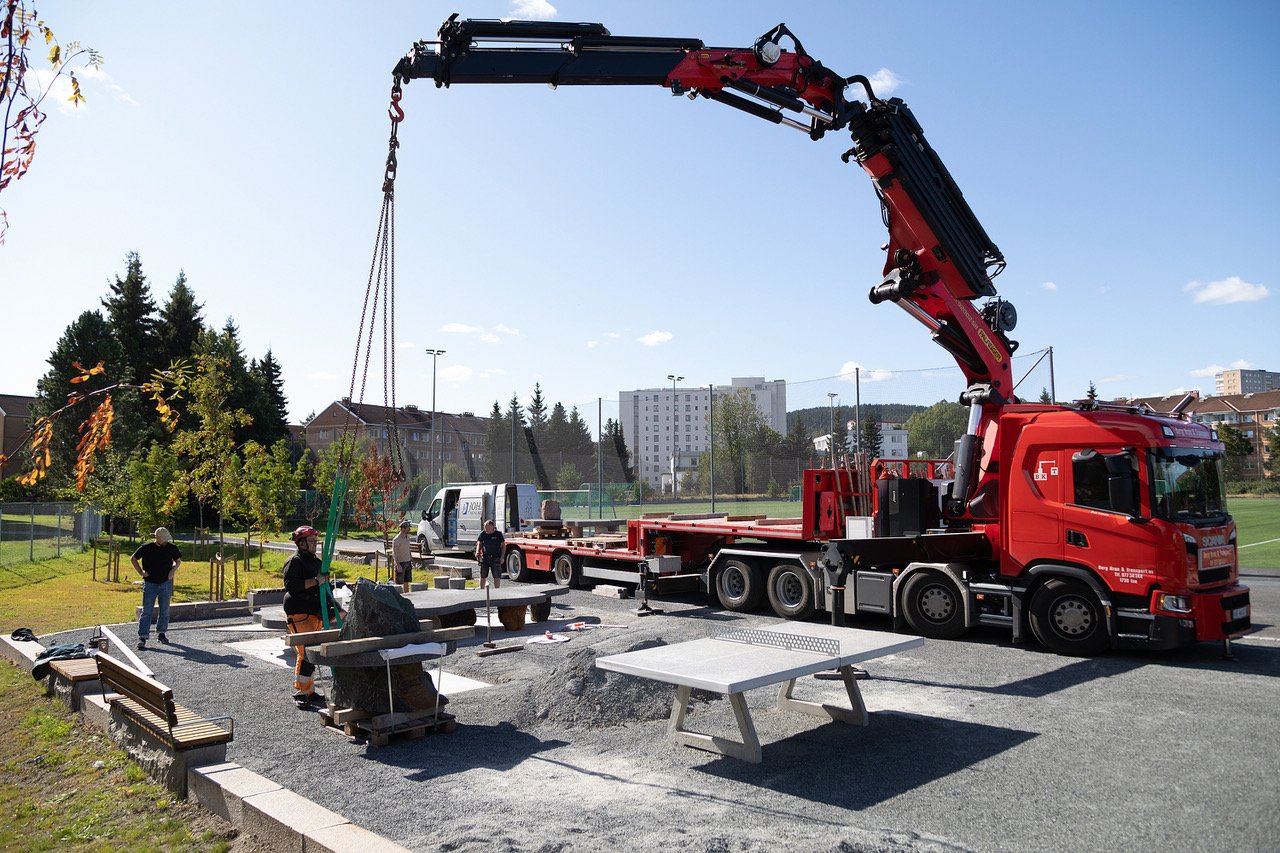
To bring all these elements together, with natural stone boulders added to the mix, Johansen Monumenthuggeri was an essential collaborator. A workshop for stone sculpture dating back to 1946, legends roam plenty among customers and staff. In the Østfold area where they reside, the ground consists of a wide variety of rocks, transported there in the last ice age. Monoliths and stone carvings dating back to the bronze age attest to the historic significance stone has in the area, so picking out boulders seemed a natural thing to do.
A special thanks to art consultant Anders Valde for calling to check in on the process regularly. Thanks to landscape architect Maria Thøgersen Eide (In Situ) for always offering her help, and to Marianne Hall and the committee for seeing the potential of my tiny clay models.