TACTILE OBJECTS FOR THE NATIONAL MUSEUM
SEATED PLAY
Throughout the National Museum of Art in Oslo, there are benches for the visitors to rest, view the works and, if willing, interact with small objects - usually placed in a square box at the end of the bench. They can be relating to the art on display, or do their own thing.
In 2025 I was asked to design new objects for two different rooms: kinetic and tactile, yet without any loose parts. I ended up making two objects which presents various ways of organizing rotating objects, geared towards visual matching - such as completing flowing lines and circles or pairing symmetrical shapes.
Curators: Mariken Kramer and Anna Carin Hedberg.
Studio photos: Anne Valeur. Museum photos: Ina Wesenberg.
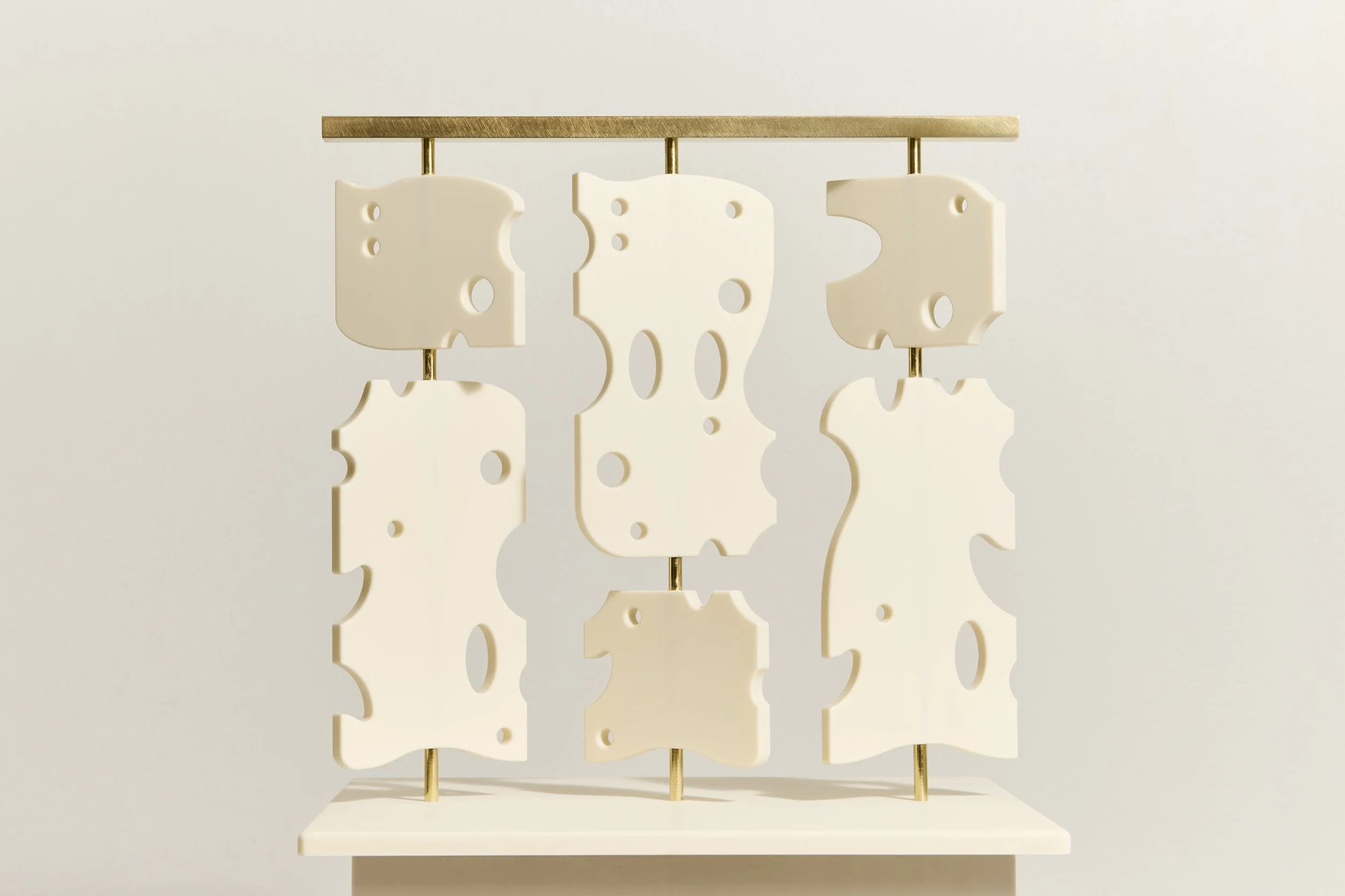
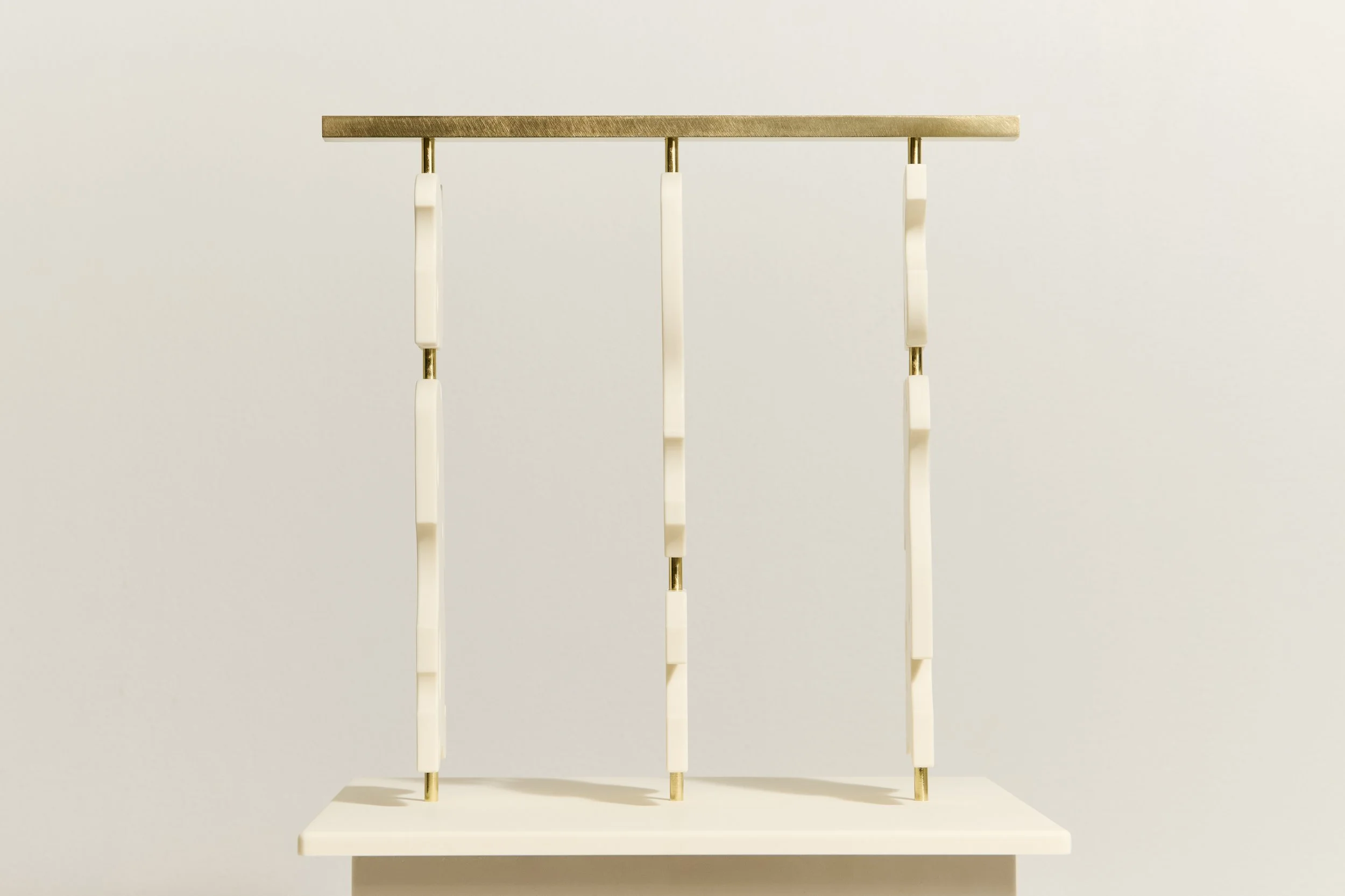
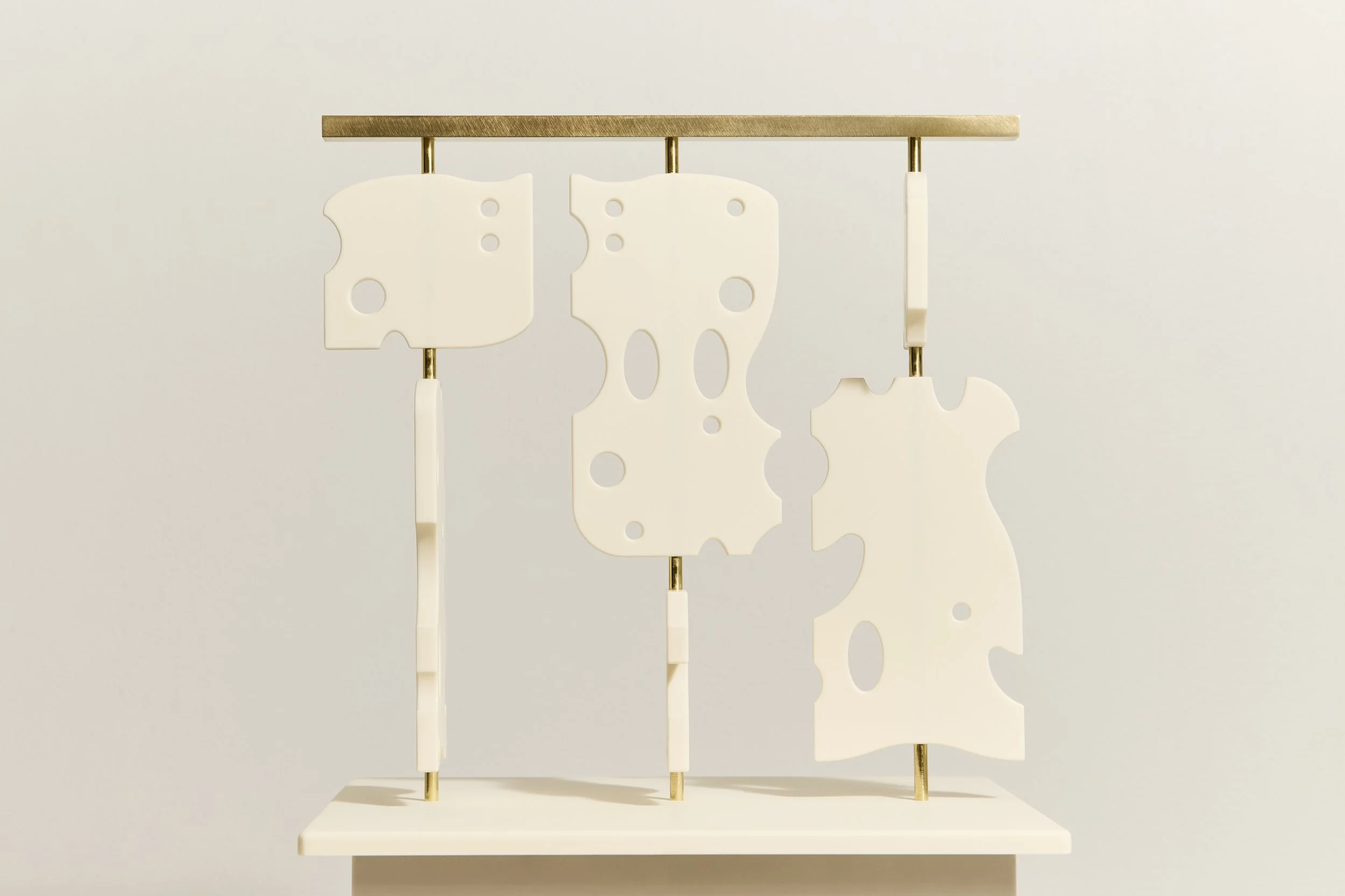
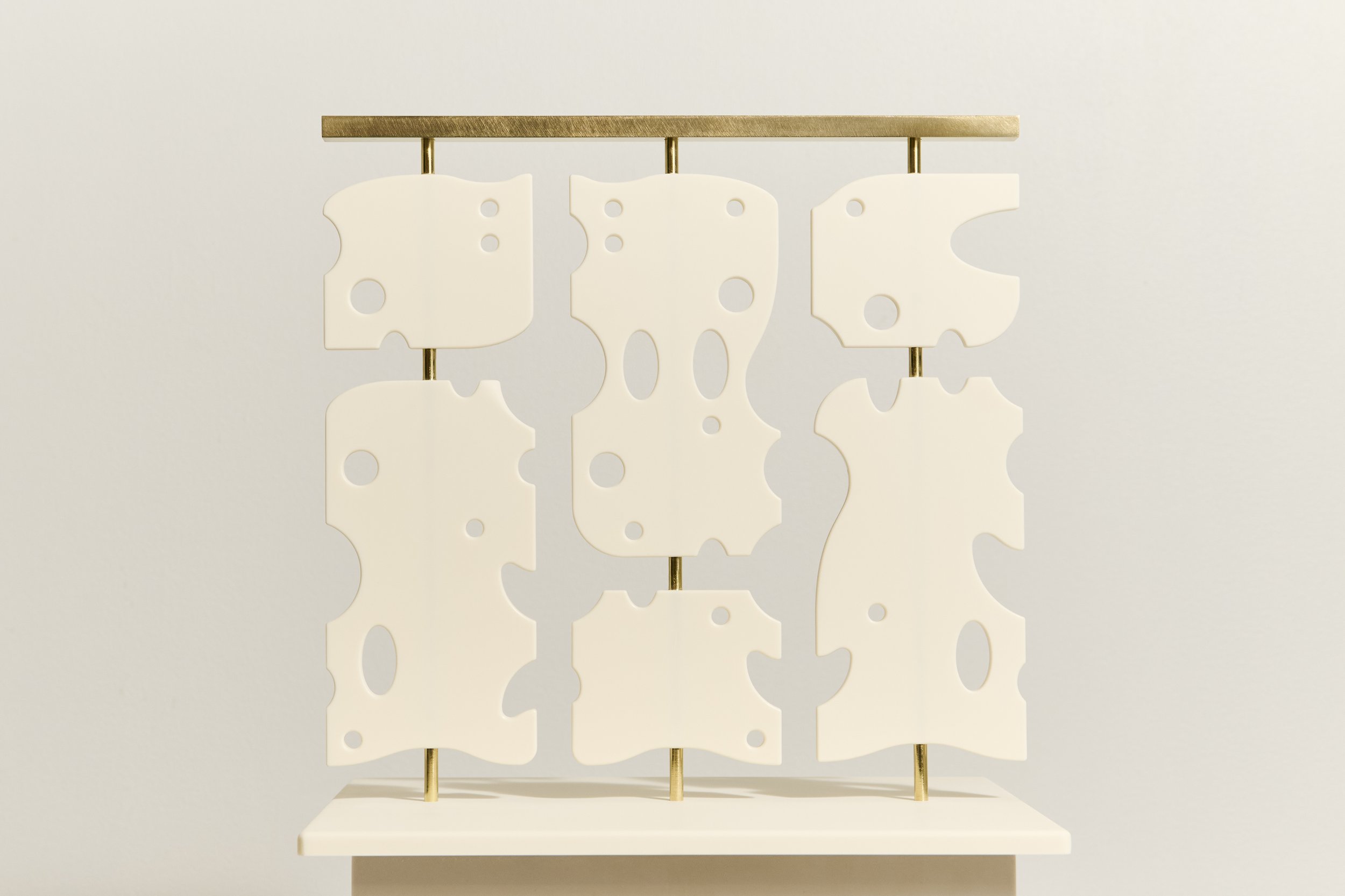
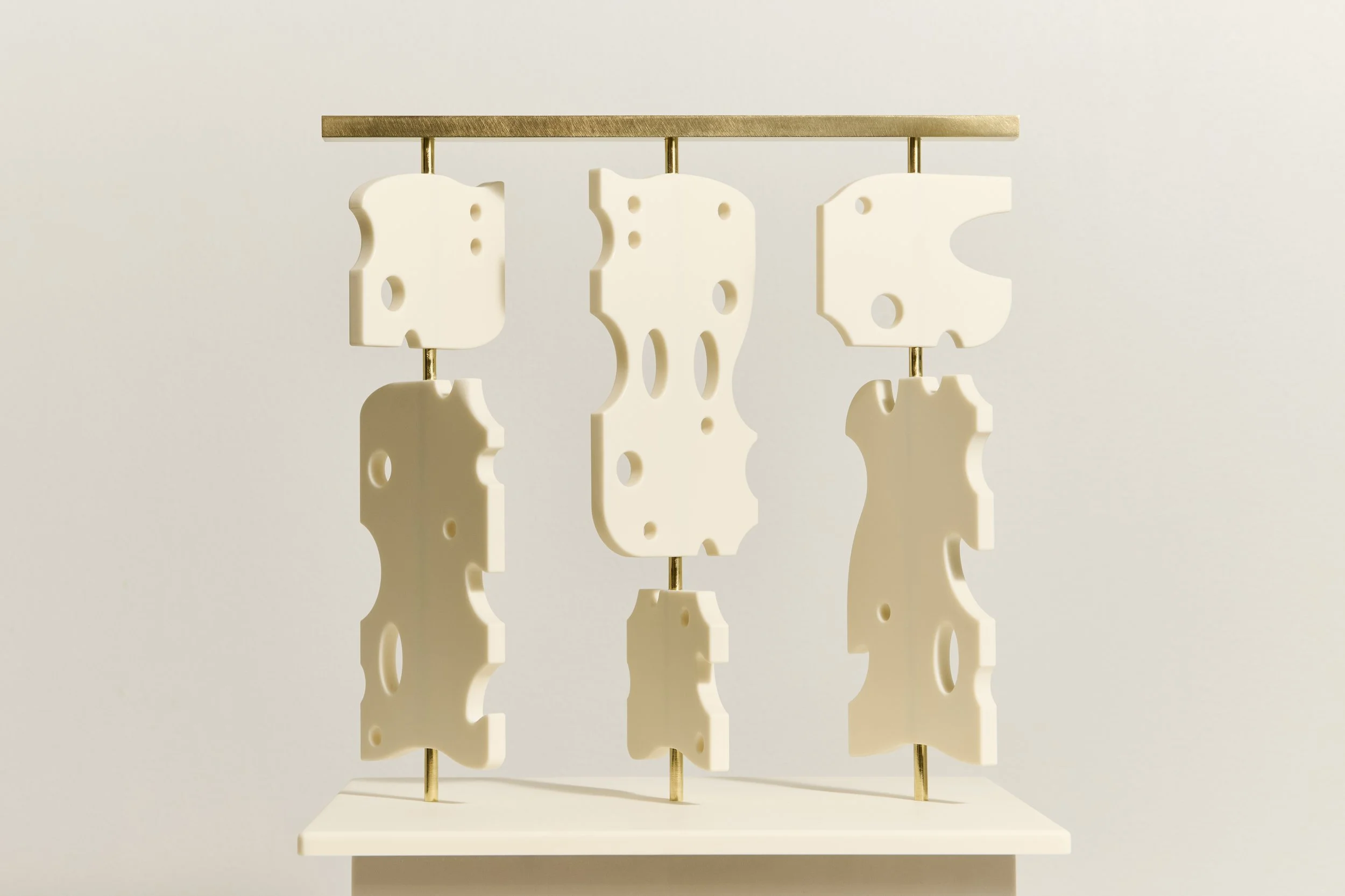
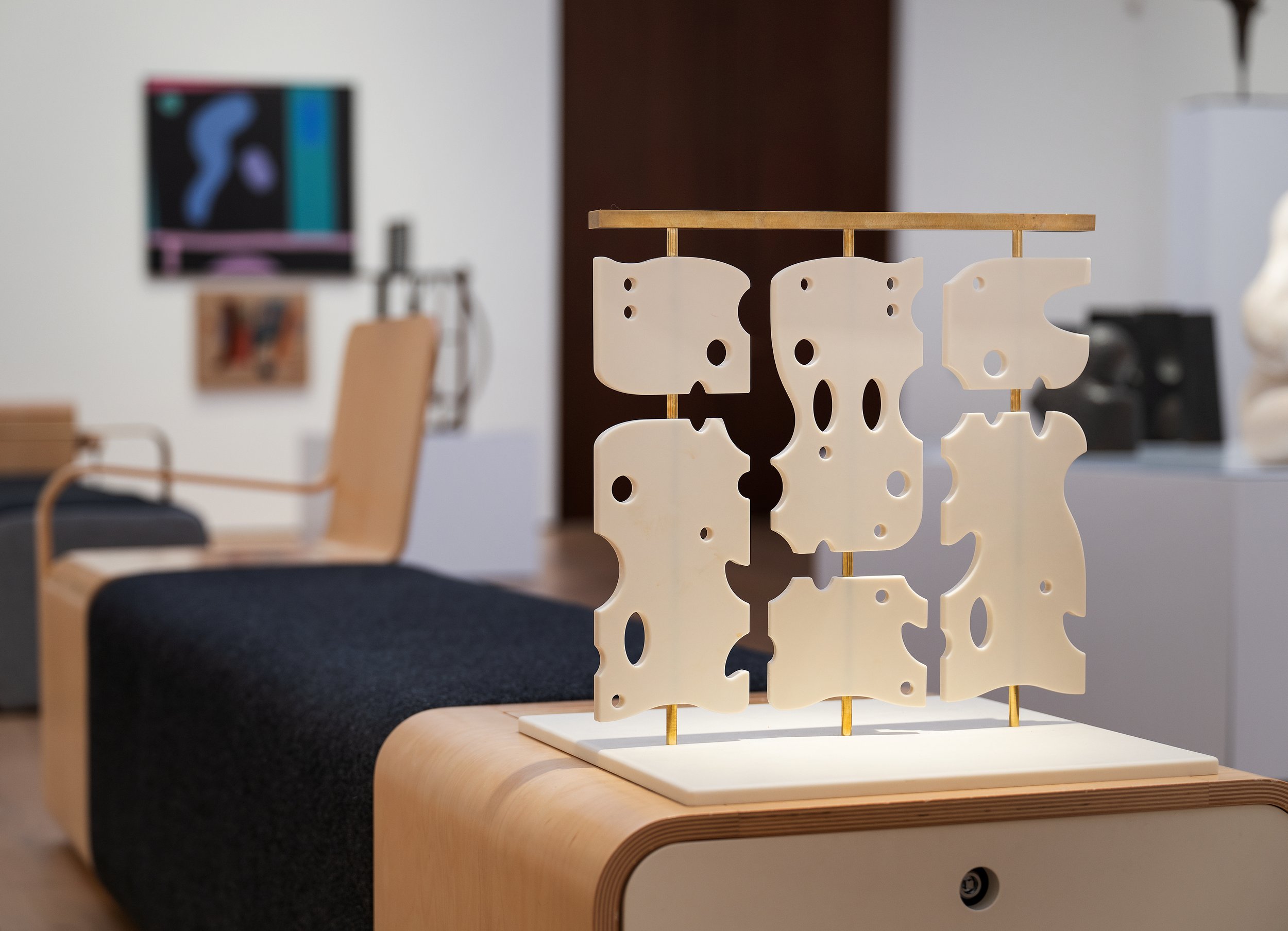
Open Puzzle, 2025. Corian, steel and brass.
ROOM 75 - OPEN PUZZLE
Room 75 houses a collection of modernist paintings and small sculptures placed on a podium. I wanted to make a standing object to connect to the surrounding work.
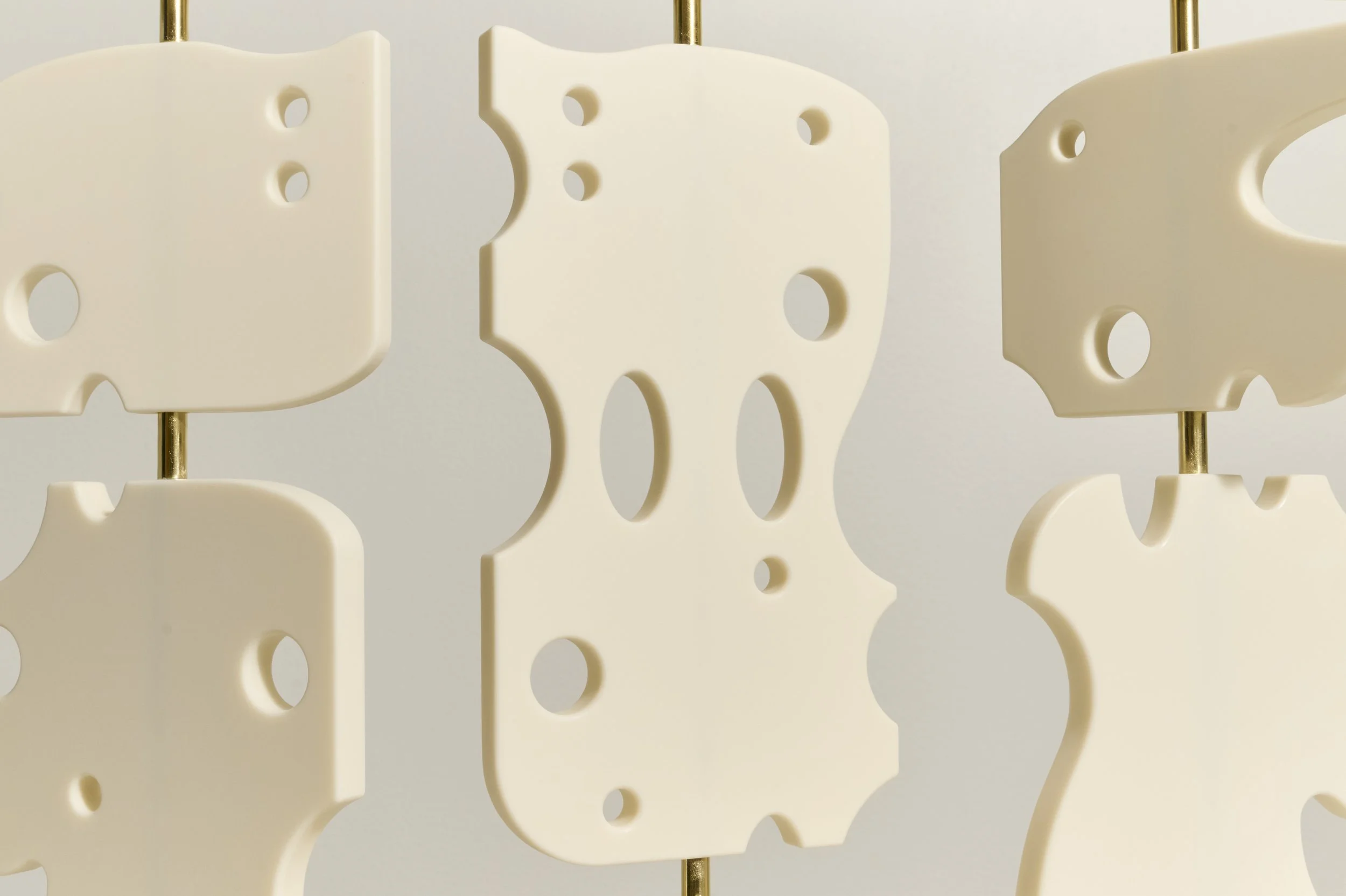
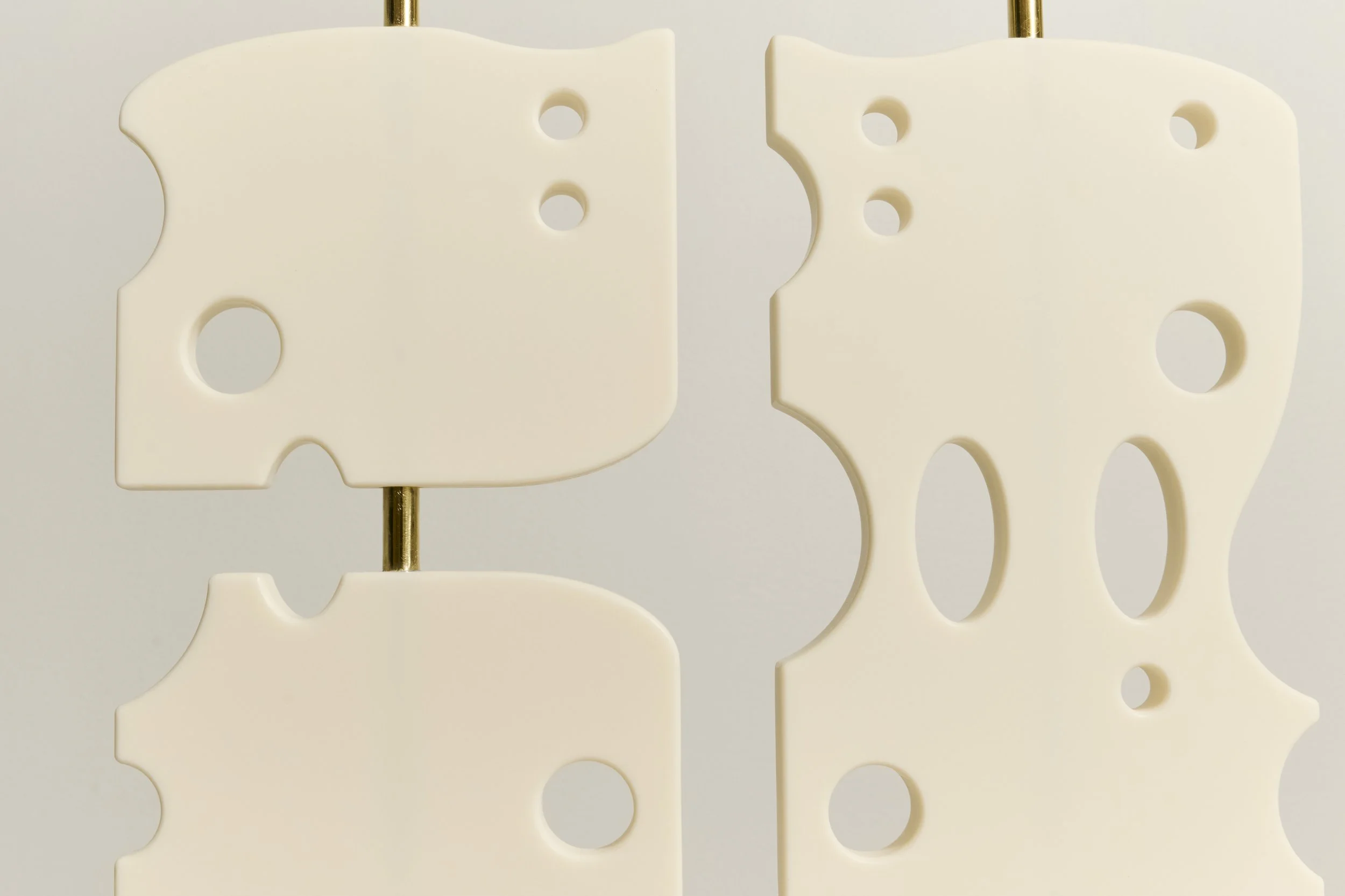
Open Puzzle is a kinetic, abstract puzzle consisting of six white shapes placed on three rods. Each shape is unique and can rotate on its own. The negative spaces between the shapes allude to circles, ellipses and curves, offering visual, cognitive “matches” in all of its configurations.
As such there is no final and correct arrangement – instead it is a game of association and discovering visual sorting mechanisms.
Custom brass parts from Stian Korntvedt Ruud.
Routing and drilling at Fellesverkstedet.
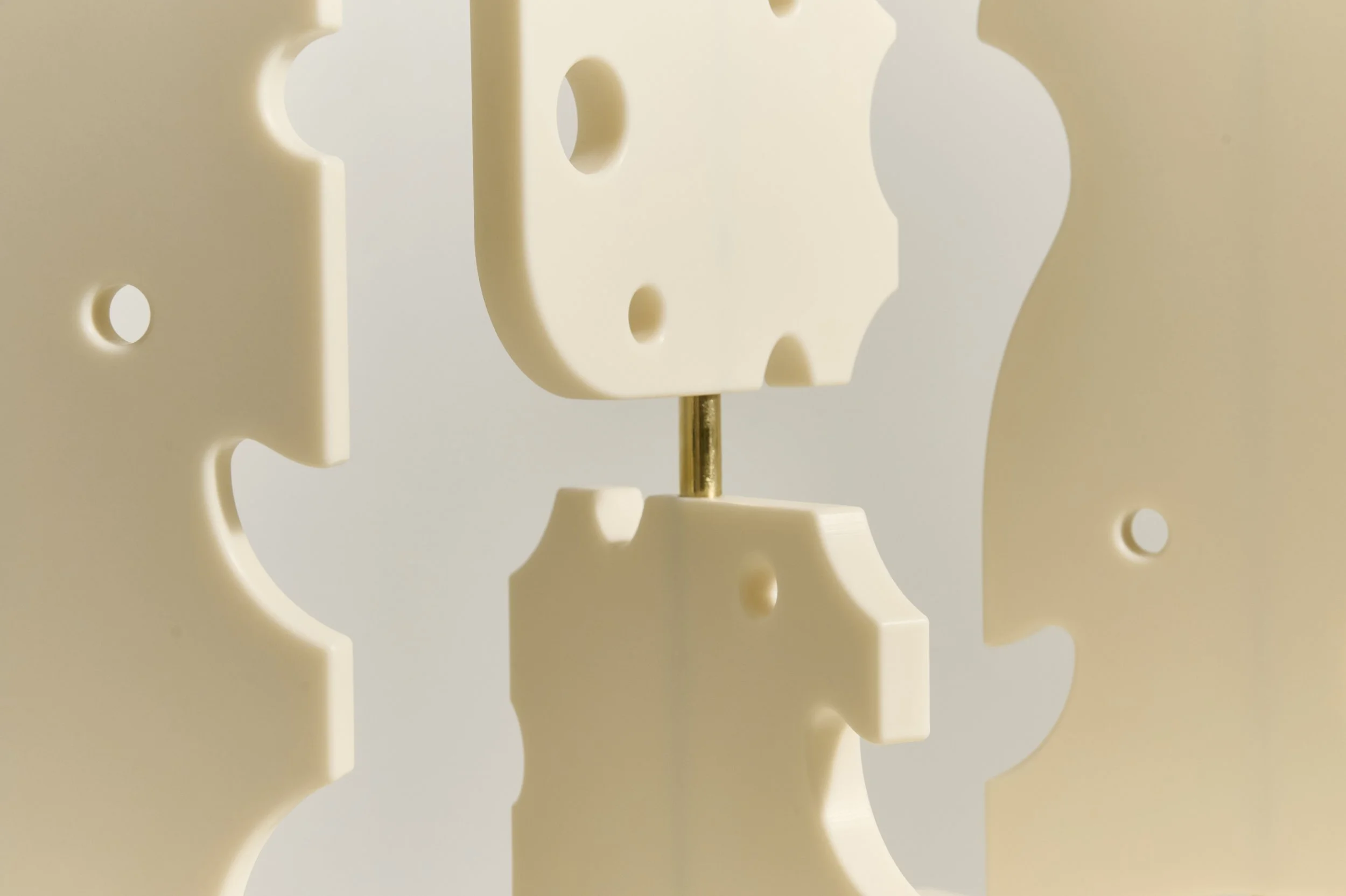
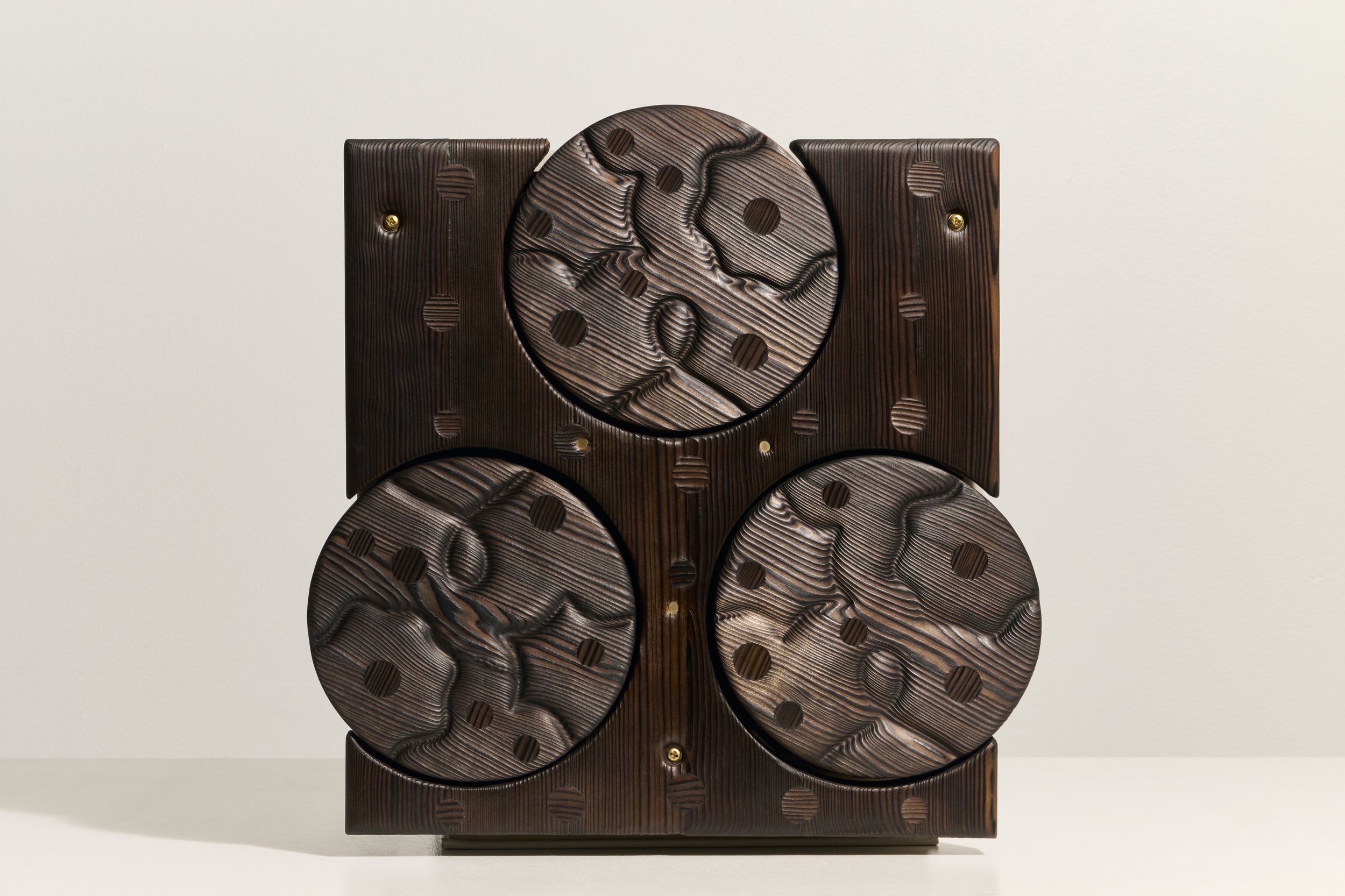
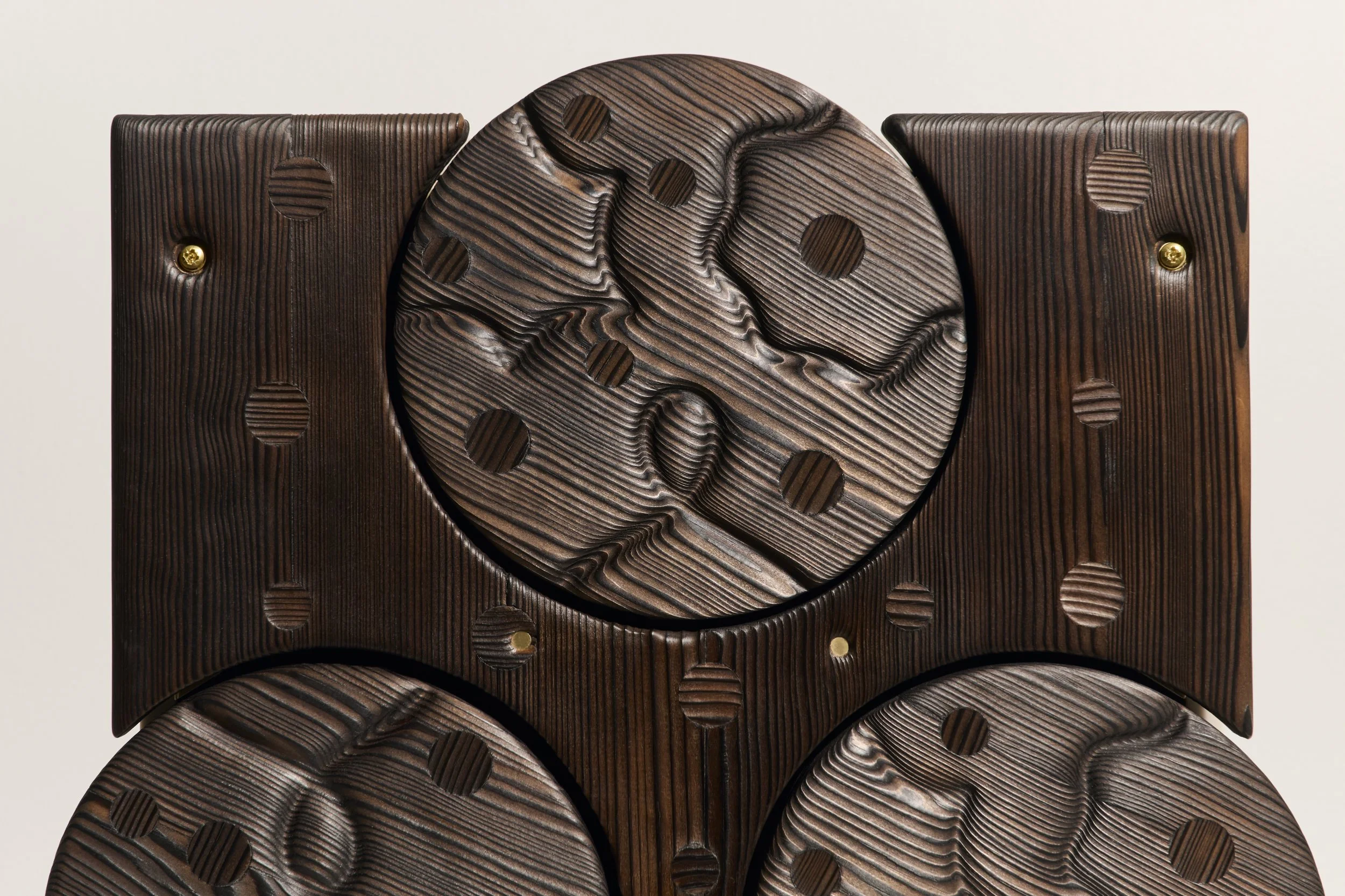
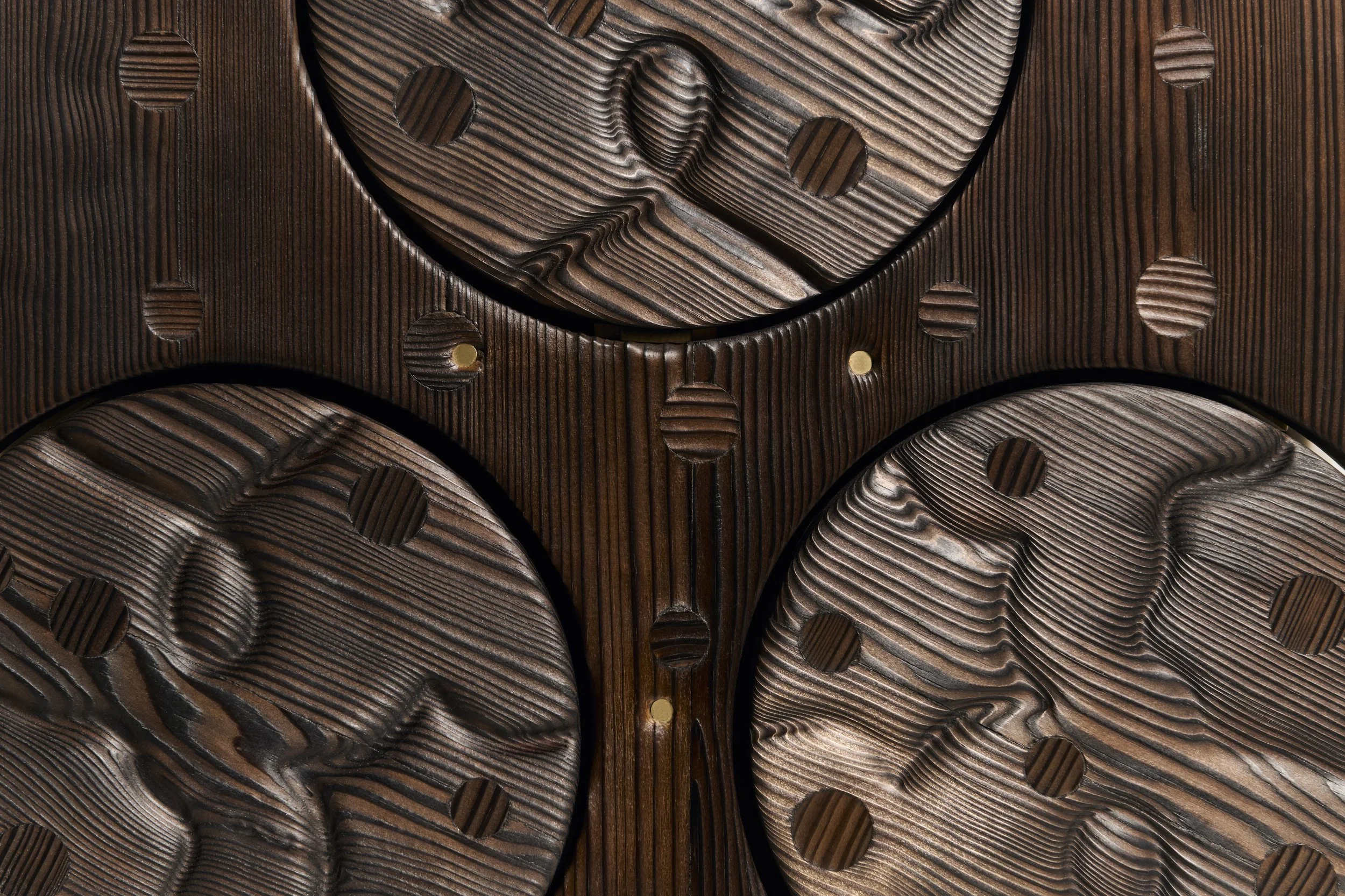
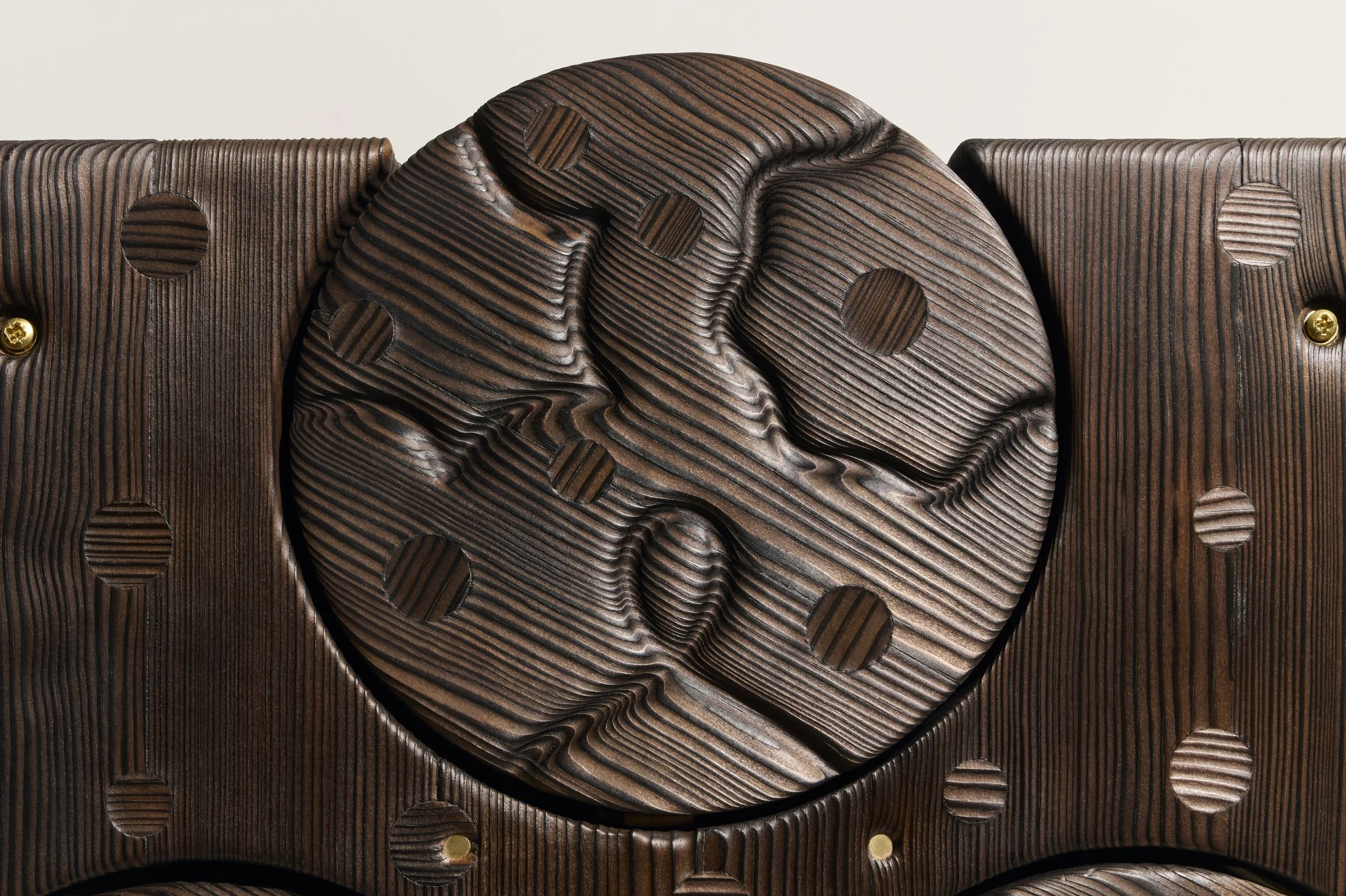
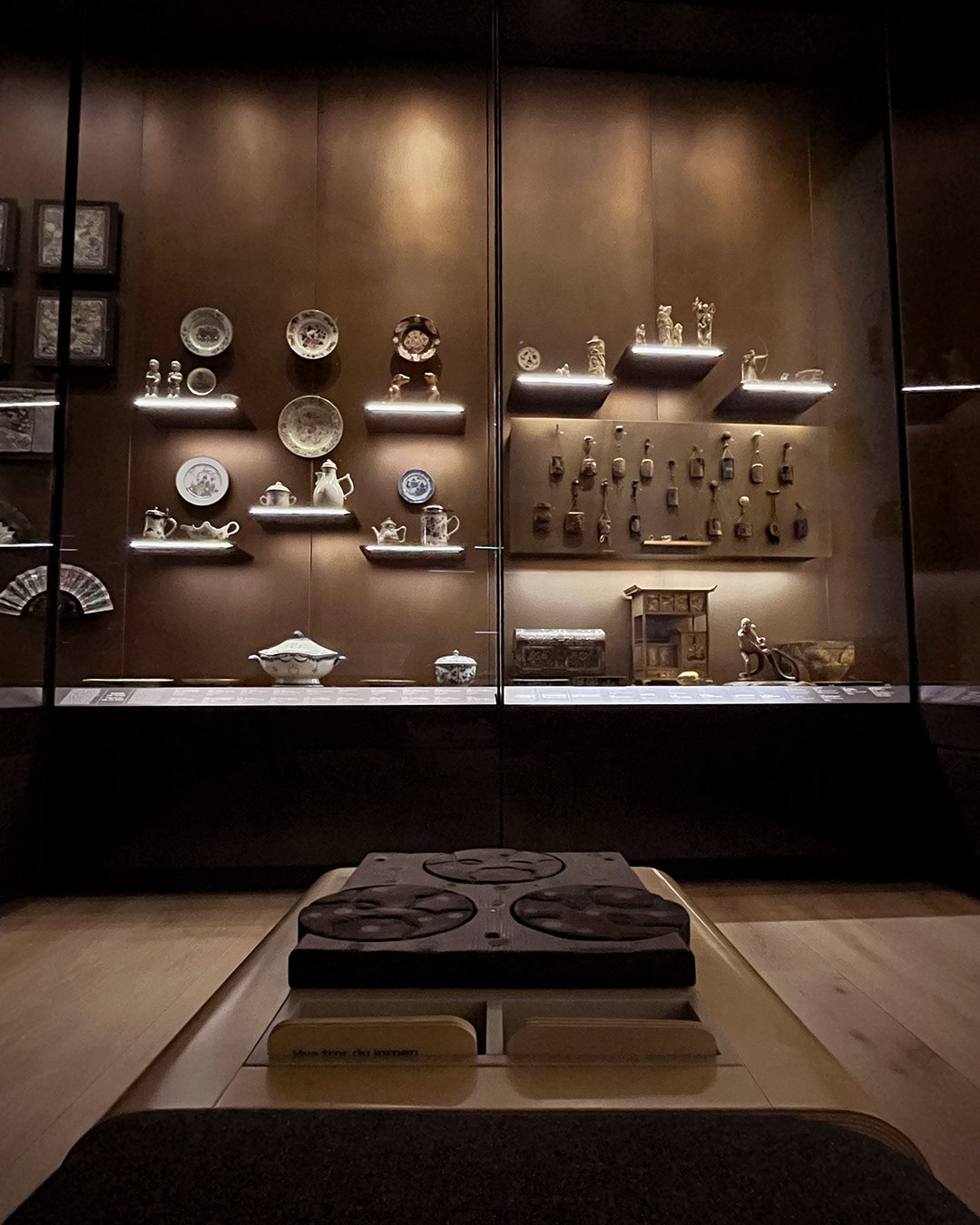
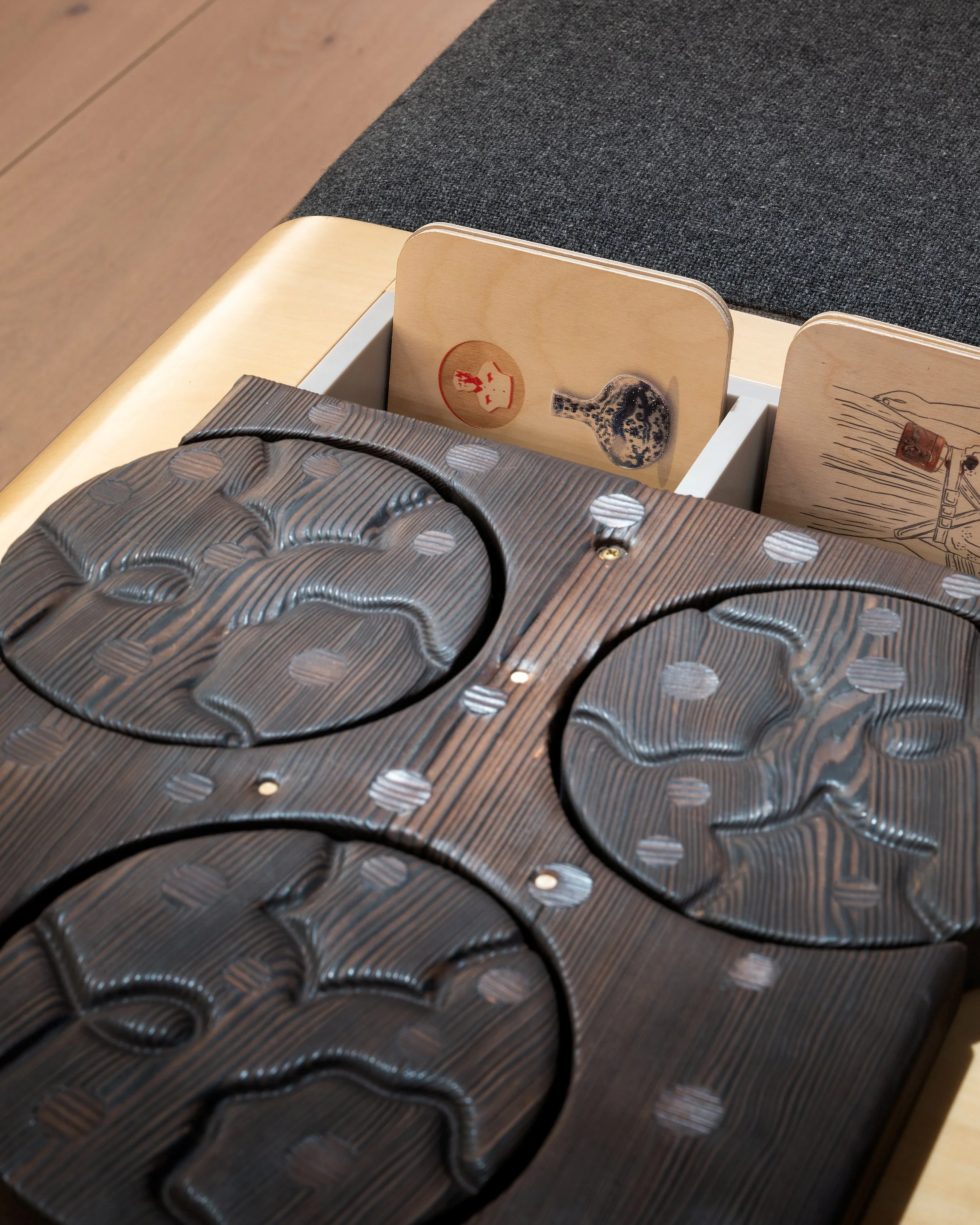
Tri, 2025. Wood, brass and mechanical parts.
ROOM 7 - TRI
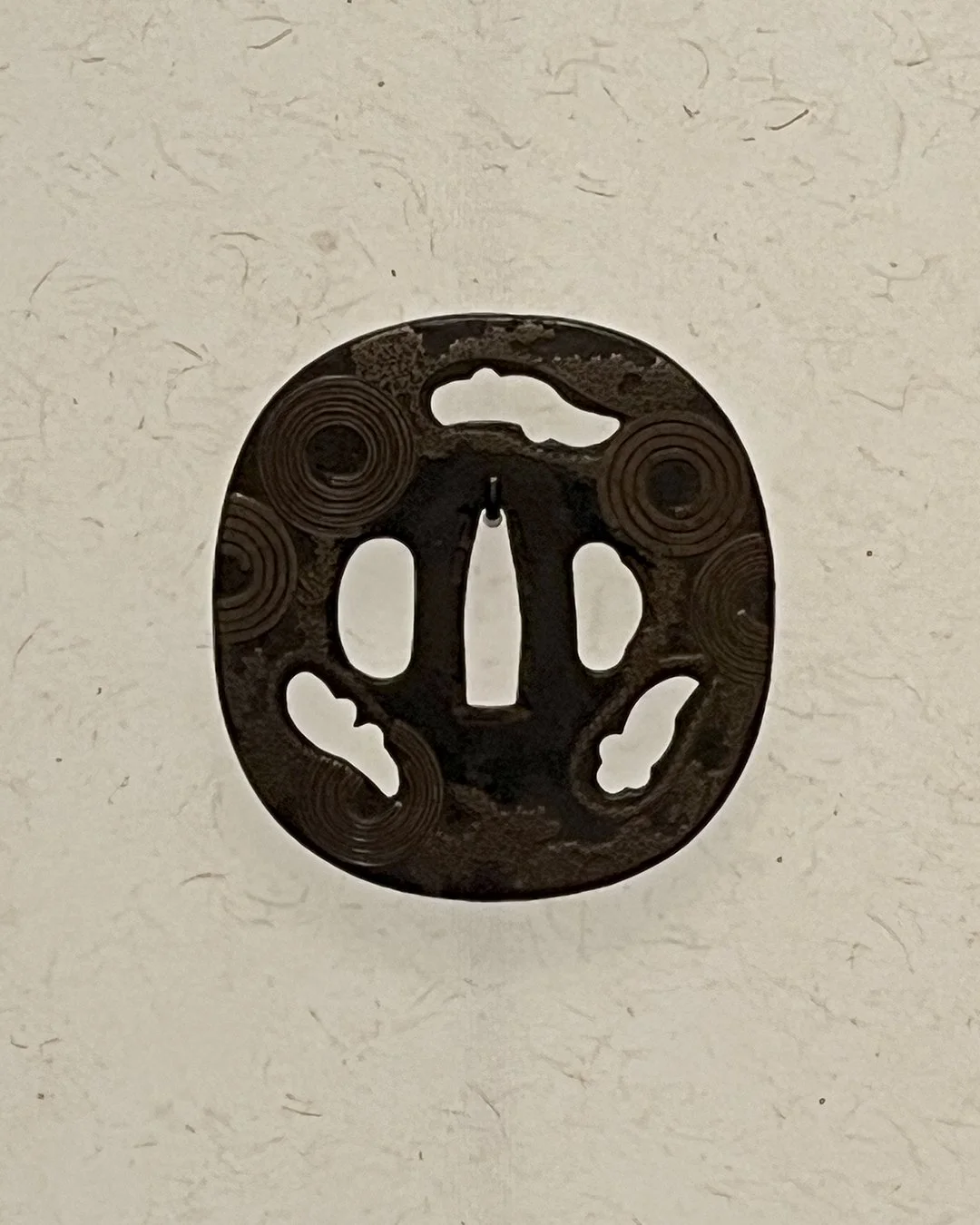
Room 7 houses the Asian collection of textiles, ceramics, baskets, swords and much more. The darkly lit, intimate space is situated in the far end corner of the design exhibitions.
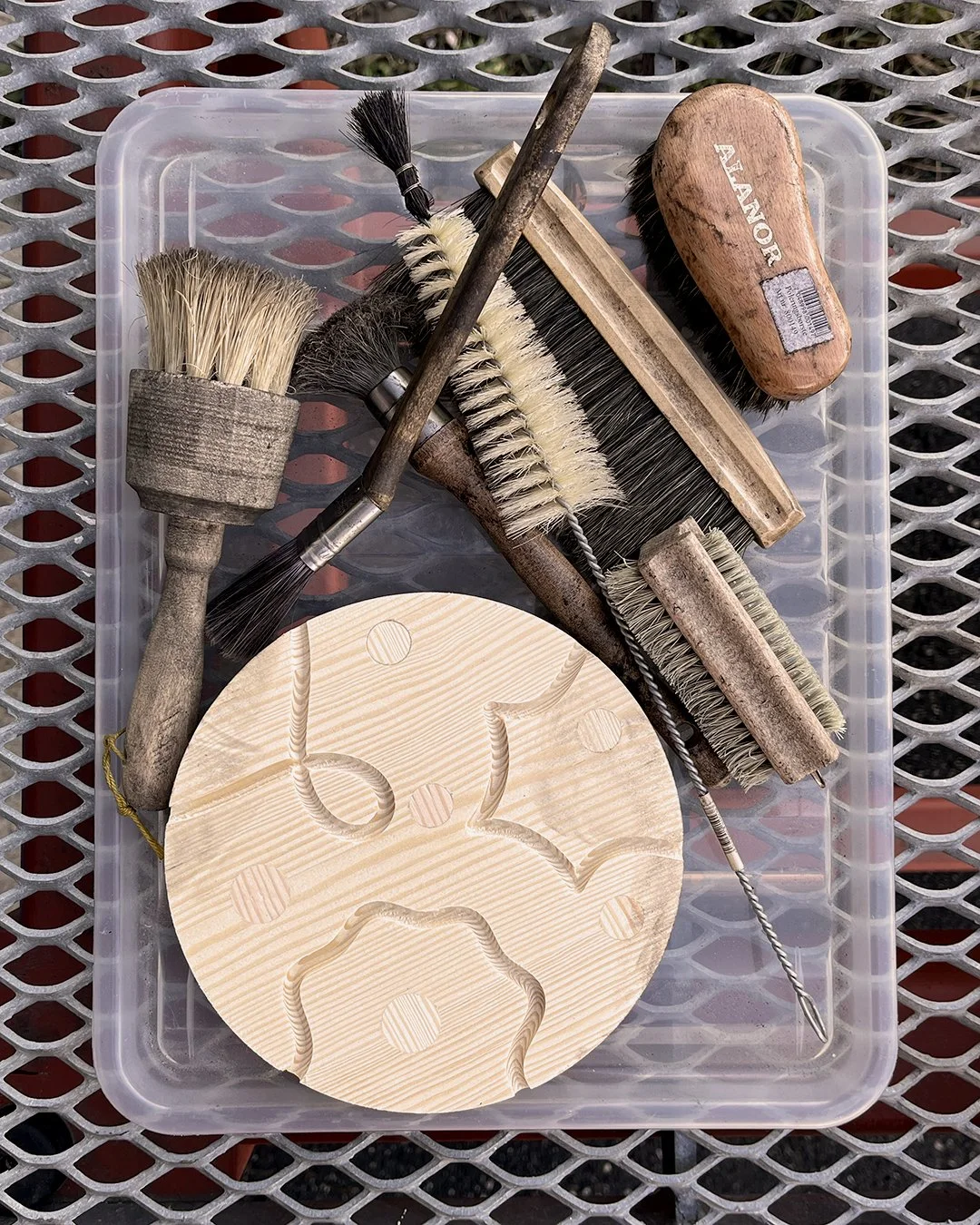
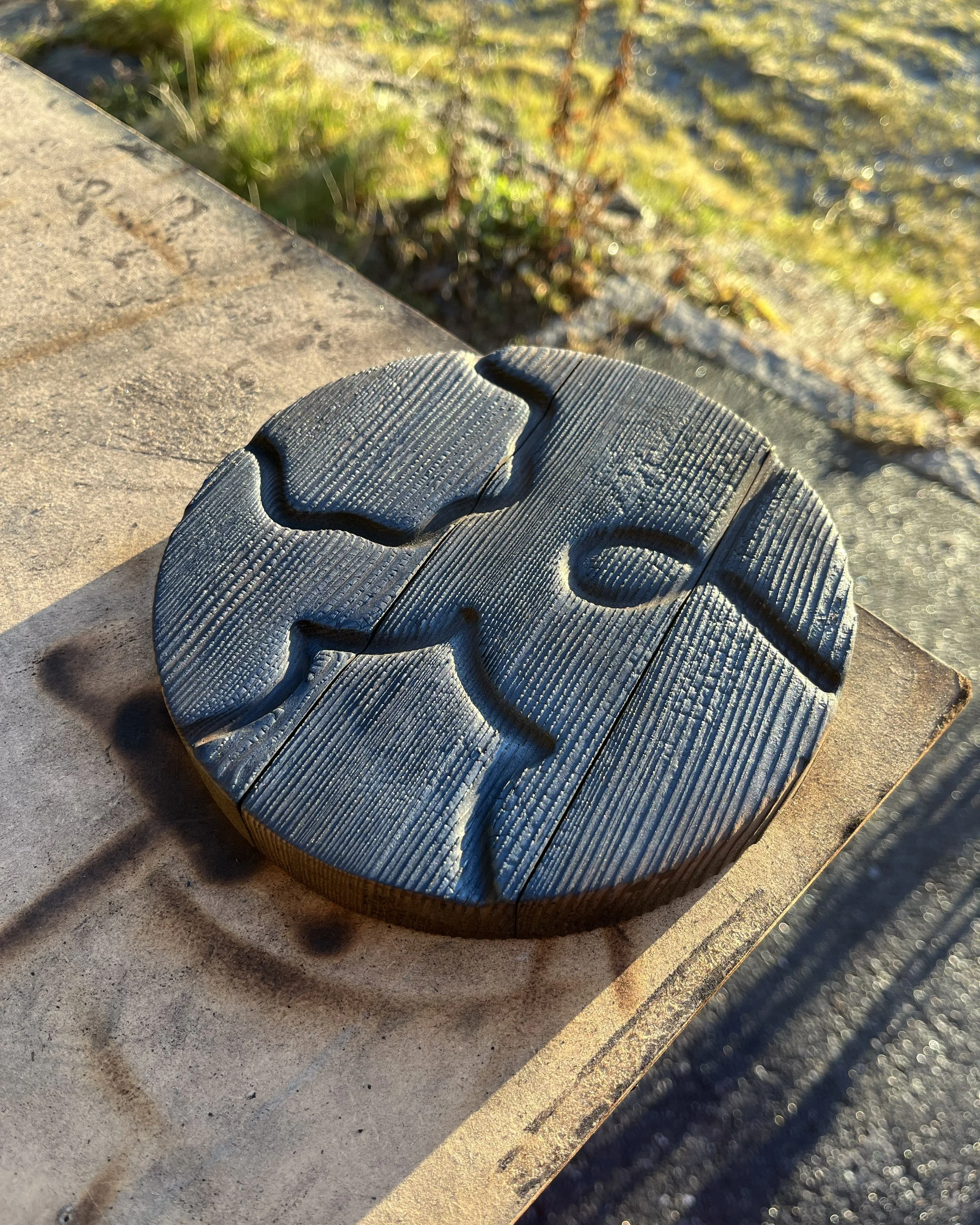
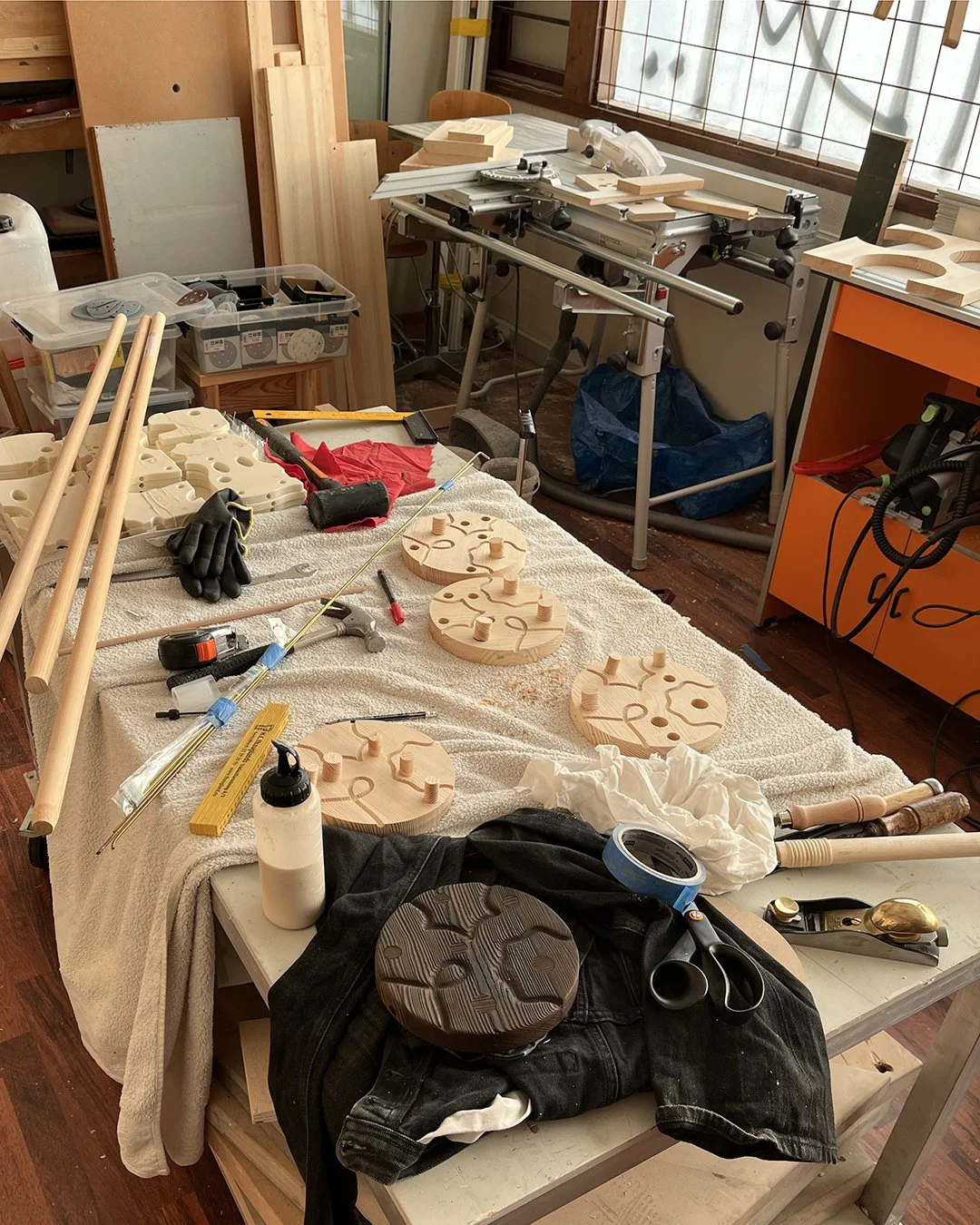
I made a board with brass details and three rotating disks, in burnt, brushed and waxed wood. The disks can be rotated individually, allowing for the carved lines on their surfaces to be lined up in various ways, in an associative, open-ended way.
The grain of the wood is made visible and tangible by the burning process, blending in with the carved lines.
Round, wooden plugs are placed with its grain placed perpendicular to its ground. When moving around the objects, or spinning any of the disks, the reflection of the light in the wood grain changes, from a dark surface to a bright reflection, offering an additional, visual feature by which to organize the disks.